
Refrigerated and frozen products need careful handling during in-home usage tests (IHUTs). Brands must ensure products arrive in good condition and that participants store and use them correctly.
Below, we cover how to design the IHUT test, what to measure, and how to manage refrigerated and frozen products throughout the study.
Why Should You Use IHUTs for Refrigerated and Frozen Products?
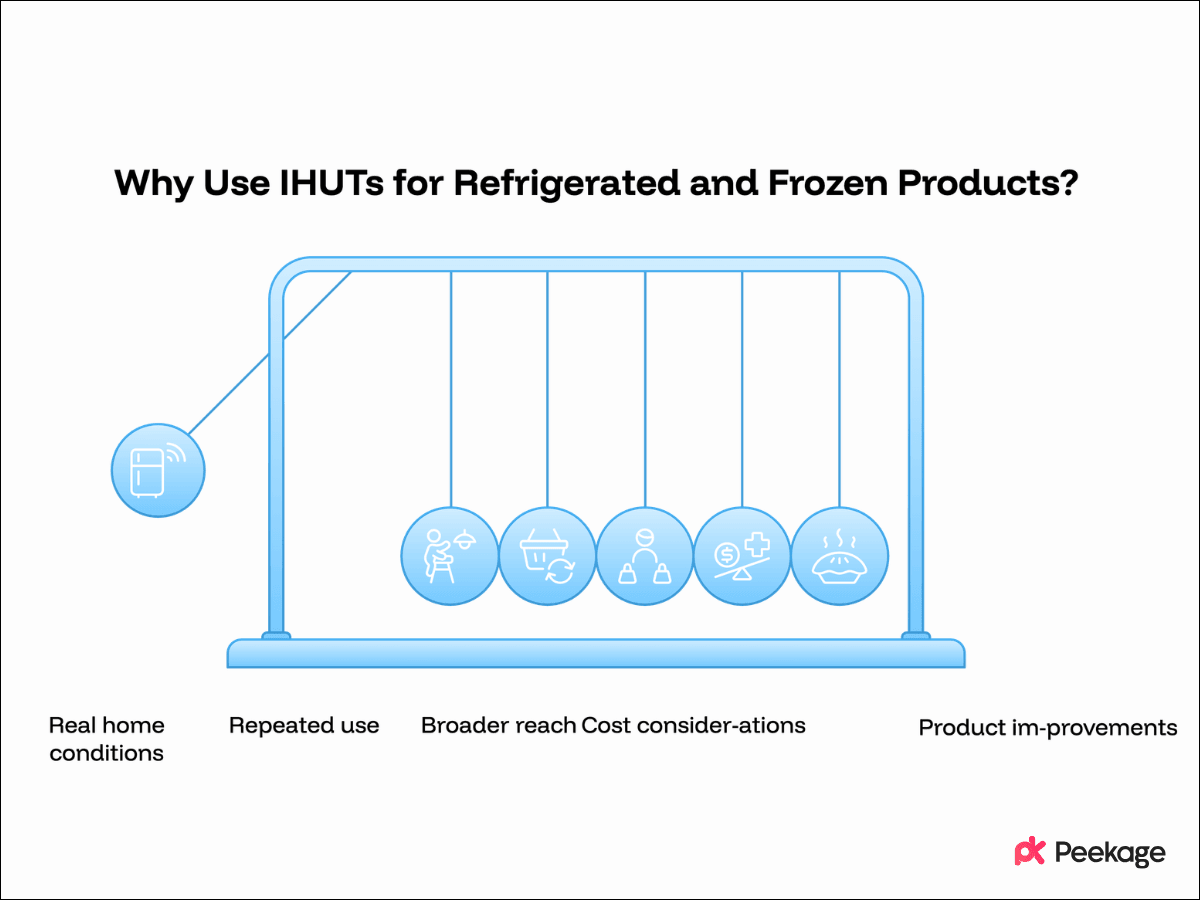
As part of food and beverage IHUT testing, consumers store, prepare, and use products with their usual appliances and routines, which can reveal issues that may not appear in a controlled research setting.
There are several reasons to use an IHUT for these products:
- Real home conditions: Participants store and prepare the product using their normal routines. This can reveal issues with storage, preparation, texture, taste, or overall product performance that may not appear in controlled testing.
- Repeated use: The first use can show initial appeal, while later uses can reveal whether consumers continue to enjoy the product and would consider buying it again.
- Broader reach: An IHUT can include consumers from different regions, which is useful when storage conditions, shopping habits, or product preferences vary by market.
- Cost considerations: IHUTs can cost less than bringing participants into a central testing facility. Refrigerated and frozen products do require additional planning and budget for cold shipping, so these costs should be considered from the start.
For example, we worked with Bellwether Farms to test its A2 Organic Whole Milk Yogurt with 170 consumers selected from a high-potential customer segment. Participants evaluated 24 attributes, including flavor, texture, digestibility, ingredient transparency, and packaging.
For frozen products, an IHUT can be adapted to assess similar factors, along with storage, thawing, and preparation where relevant. The study plan should account for delivery timing and clear handling instructions so participants can store and use the product as intended.
What Can You Test With an IHUT for Frozen and Refrigerated Products?
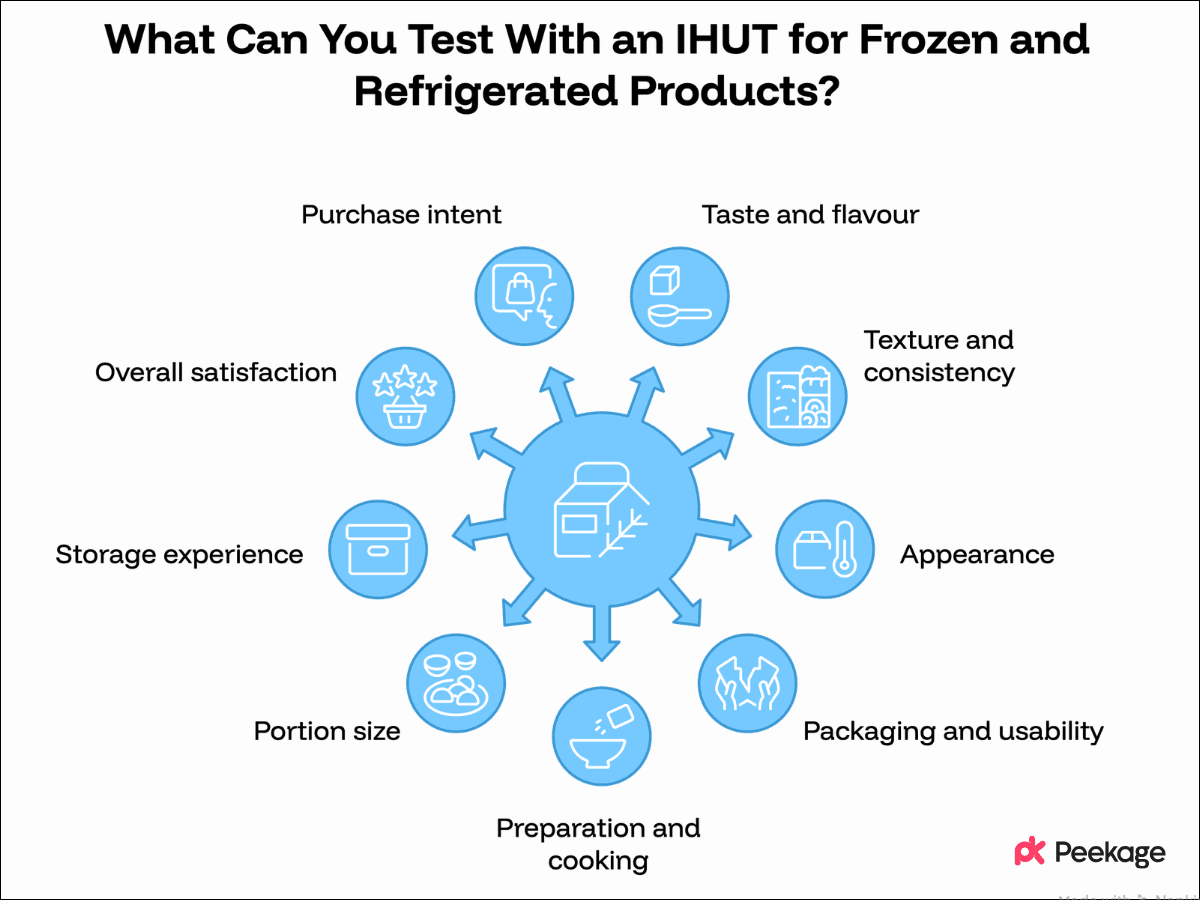
An IHUT can reveal much more than whether consumers like the taste. For refrigerated and frozen products, it can show how the product looks, stores, cooks, and fits into everyday routines. When deciding between a CLT (central location test) and an IHUT, consider whether you need feedback in a controlled setting or insights from real home use.
Key areas to test include:
- Taste and flavor: Does the product taste as expected after home preparation?
- Texture and consistency: Is it crisp, soft, soggy, icy, or different from what consumers expect?
- Appearance: Does the product look as expected after preparation?
- Packaging and usability: Is the package easy to open, store, reseal, and understand?
- Preparation and cooking: Which methods do consumers use, and do the instructions work as expected?
- Portion size: Is the serving size right for the intended occasion or household?
- Storage experience: Is the product easy to store in the refrigerator or freezer? Does the packaging hold up during storage?
- Overall satisfaction: How satisfied are consumers, and how does the product compare with alternatives they currently buy?
- Purchase intent: Would consumers buy the product after trying it, and what price would they expect to pay?
Why Are IHUT Studies for Refrigerated and Frozen Products Challenging?
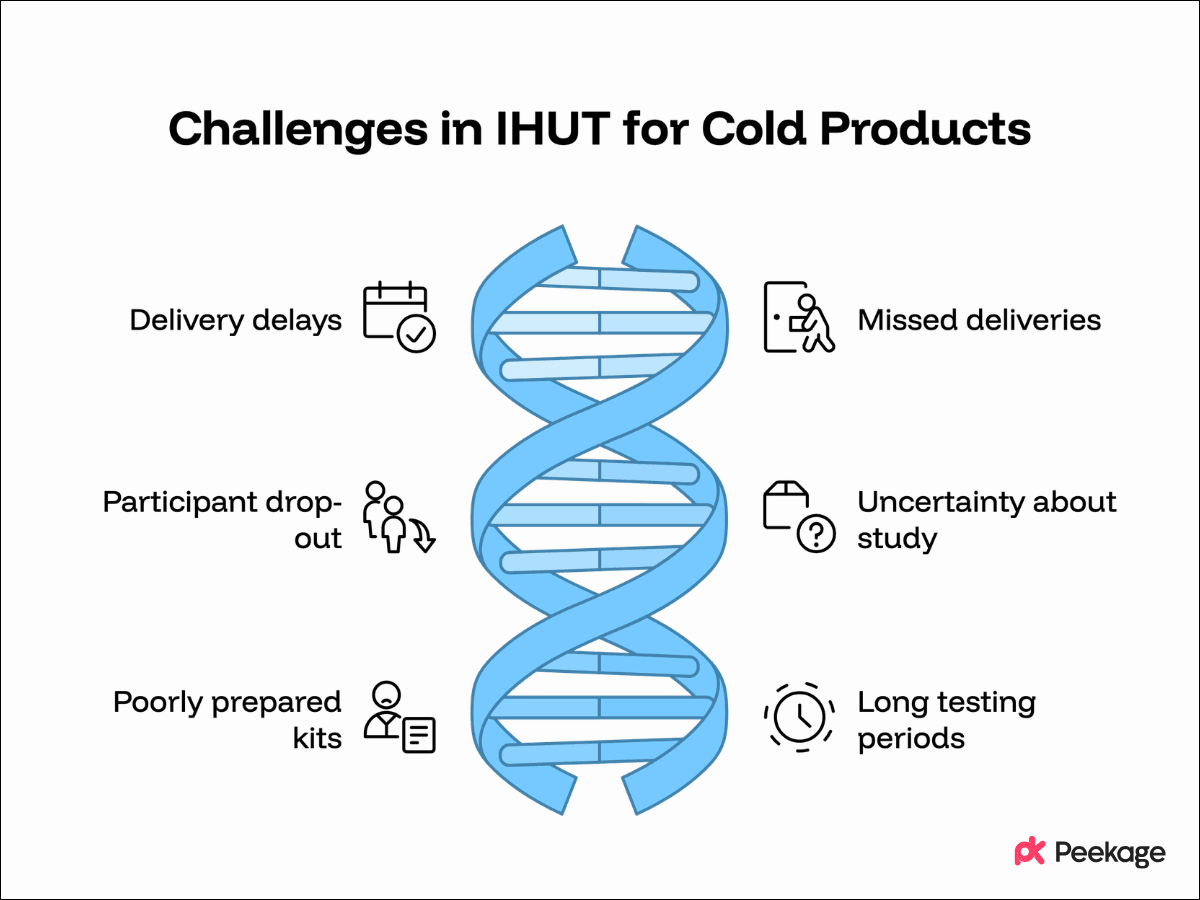
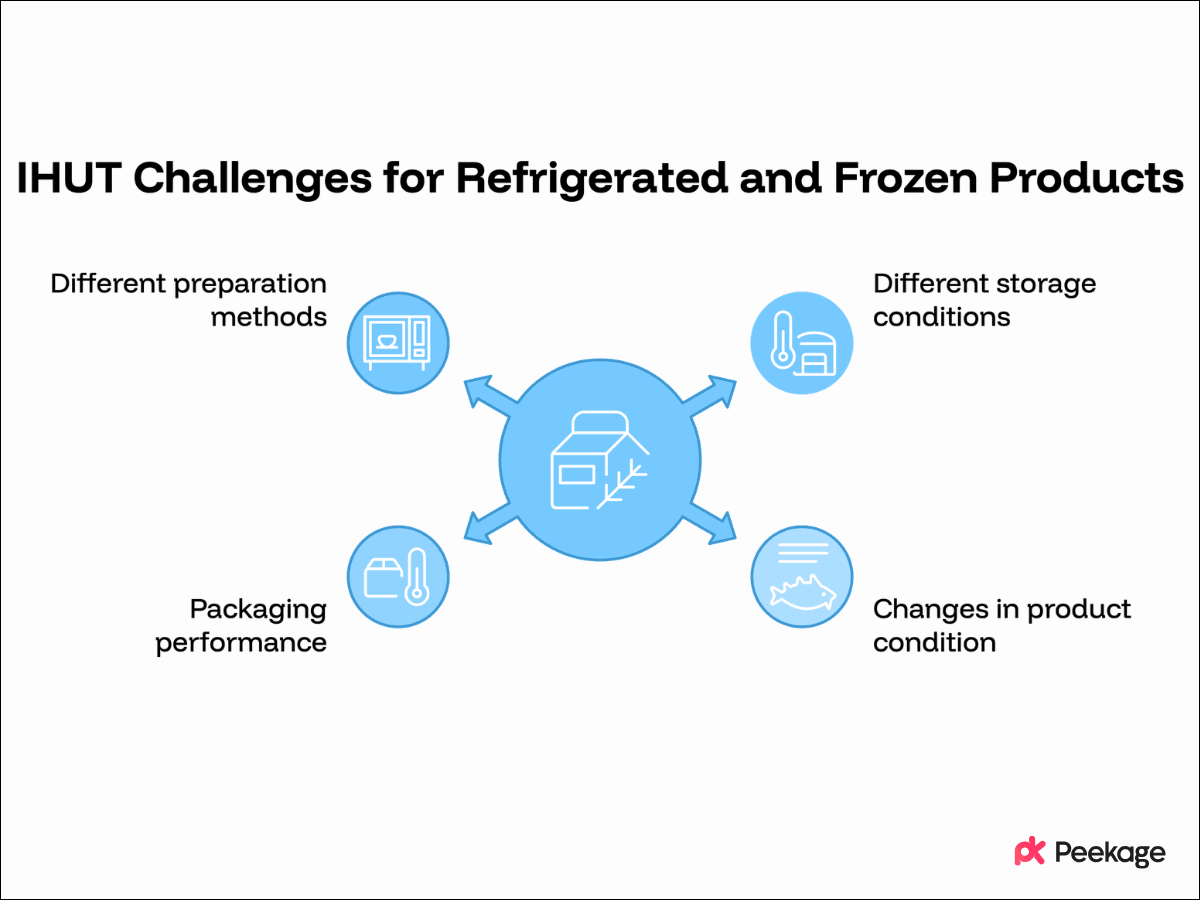
Refrigerated and frozen products introduce variables that shelf-stable products do not. Temperature, storage time, product condition, packaging, and preparation methods can all affect the consumer experience.
The main challenges include:
- Different refrigerator and freezer conditions: Consumers do not always store products at the same temperature. USDA FSIS recommends keeping freezers at 0°F and refrigerators at 40°F or below. It also notes that a freezer compartment inside a refrigerator may not consistently reach 0°F, particularly when the door is opened frequently.
- Changes in product condition: Partial thawing, refreezing, and freezer burn can affect taste and texture. USDA classifies freezer burn as a quality issue rather than a food safety issue. Participants may therefore rate a product differently if it has developed dry or damaged areas during storage.
- Packaging performance: Seals, labels, tear notches, and other packaging features may be harder to use at low temperatures. These factors should be included in the test when packaging is part of the consumer experience.
- Different preparation methods: One participant may use an oven, while another uses a microwave or air fryer. These differences can affect the final product and should be recorded as part of the study. The C+R Research frozen pie study, for example, tracked the preparation methods participants used.
These variables do not make refrigerated or frozen IHUTs impractical. They simply mean the study needs to capture the conditions under which participants store and prepare the product.
How to Design an In-Home Usage Product Test for a Frozen Food Product?
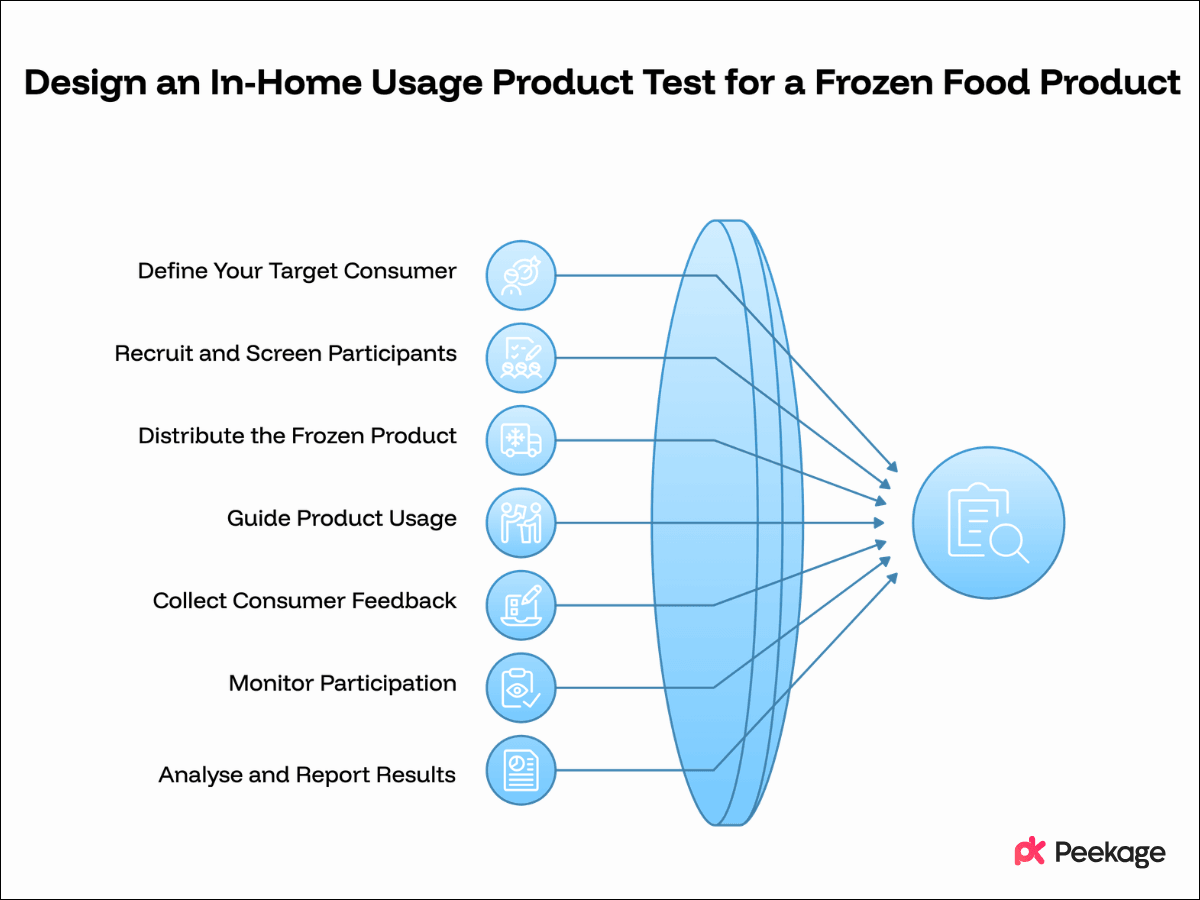
An in-home usage product test for a frozen food brand needs to account for the full consumer experience. That includes finding the right participants, getting the product to them in suitable condition, guiding product use, collecting feedback, and analyzing the results.
1. Define Your Target Consumer
Start with a clear research question. For example, you may want to know whether a new frozen food recipe performs as well as the current version.
Next, define the consumers who can best answer that question. Depending on the study, this could include heavy category users, current customers, lapsed buyers, or people who regularly purchase competing products.
For frozen food, screening can also consider factors such as category usage, purchase habits, and access to a suitable freezer or refrigerator.
2. Recruit and Screen Participants
Use screening questions to find consumers who match the study requirements. These can cover demographics, category usage, shopping habits, brand preferences, and other relevant characteristics.
Peekage can help brands recruit participants for an IHUT based on these types of criteria. Its consumer panel includes more than 5M consumers and supports targeting across 200+ attributes.
The sample size should reflect the research objective, study design, and type of analysis required. It is also useful to account for potential dropouts when setting the recruitment target.
3. Distribute the Frozen Product
Product fulfillment and shipping are important parts of a frozen IHUT. The product needs to reach participants in suitable condition, with clear instructions on what to do when it arrives.
For cold products, the study plan should account for shipping time, temperature requirements, delivery tracking, and storage after delivery. Participants should also have a way to report delivery or product issues.
4. Guide Participants Through Product Usage
When you test CPG products with real customers, give participants clear instructions on how to store, prepare, and use each product. For refrigerated and frozen items, explain the required storage conditions, preparation method, testing schedule, and how to complete the surveys.
If participants are testing multiple products, vary the testing order where appropriate. This helps reduce order effects and makes comparisons more reliable.
5. Collect Consumer Feedback
Collect feedback soon after product use while the experience is still fresh. For repeated-use tests, surveys can be scheduled around each use so consumers can report how their experience changes over time.
Questions can cover taste, texture, appearance, preparation, packaging, satisfaction, purchase intent, and other measures linked to the research objective.
Open-ended questions can be included alongside rating scales. This gives brands both measurable results and the reasons behind consumer responses.
6. Monitor Participation and Responses
Participant engagement should be monitored throughout the fieldwork period. This can help identify incomplete responses, missed tasks, or other issues while the study is still running.
For longer IHUTs, reminders and participant communication can help keep the study on track and improve completion.
7. Analyze and Report the Results
The final report should bring the main findings together and connect them to the original research questions. It can include key metrics, consumer feedback, segment analysis, product comparisons, and recommendations.
For frozen products, it can also be useful to look at results by factors such as preparation method or product condition on arrival when this information has been collected.
Peekage's AI Analytics can help identify patterns in testing data, group common themes in consumer comments, and highlight areas for improvement. When you interpret IHUT results, use these findings to decide what to change, what to keep, and what to test next.
How to Manage Refrigerated and Frozen Product Distribution for an IHUT?
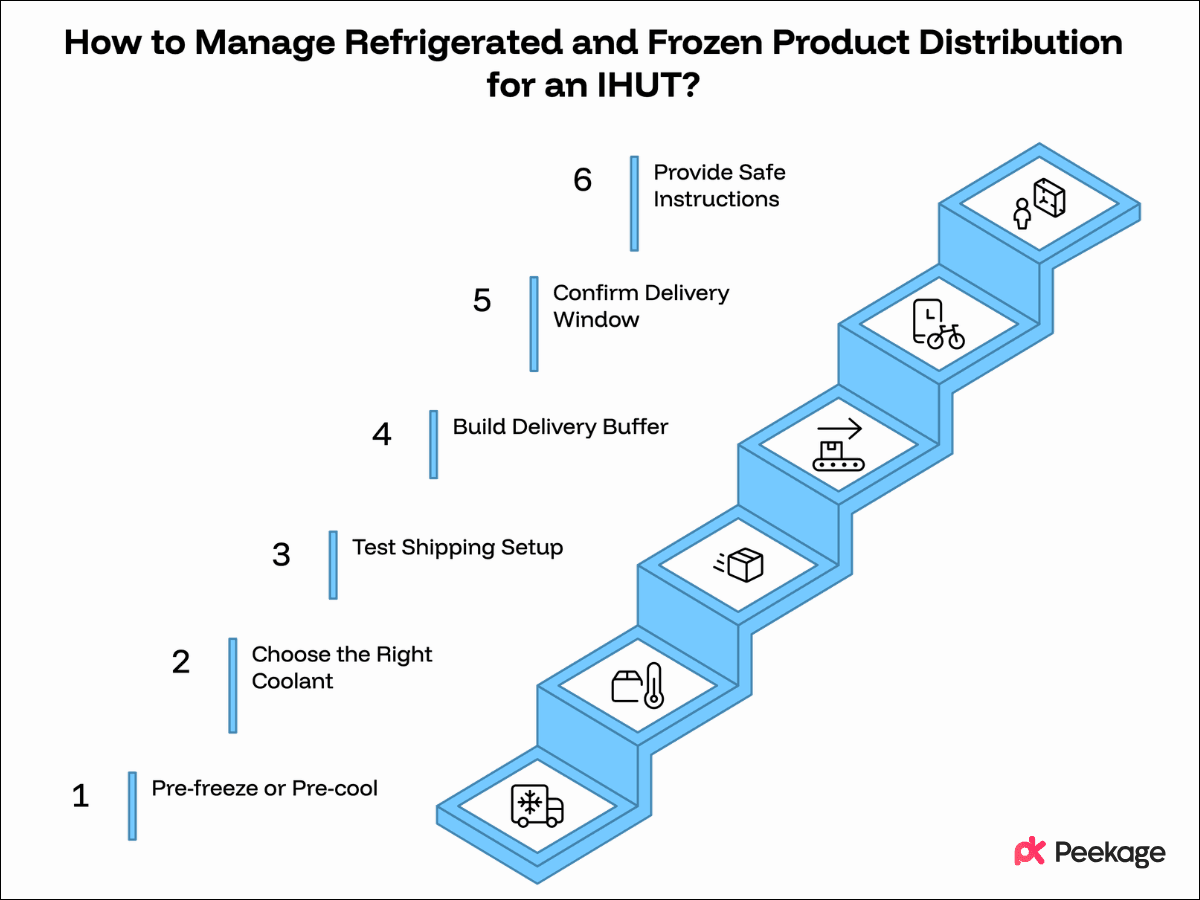
Cold shipping needs to be planned around the product, packaging, delivery route, and required temperature. There is no single shipping setup that works for every refrigerated or frozen IHUT. The right approach should be tested before the study begins.
Key considerations include:
- Pre-freeze or pre-cool the product: Frozen products should be fully frozen before packing, while refrigerated products should be kept at the required temperature. The exact preparation time depends on the product and shipping setup.
- Choose the right coolant: Dry ice can help keep frozen products at freezing temperatures during transit, while gel packs are commonly used for refrigerated shipments. The choice depends on the product's temperature requirements and expected transit time.
- Test the complete shipping setup: Do not rely only on the published hold time of a cooler or insulated container. Test the exact product, packaging, coolant, and box together. Transit time, empty space, outside temperature, and delivery route can all affect temperature control.
- Build in a delivery buffer: Plan for possible delays rather than assuming the package will arrive exactly on schedule. Avoiding weekend delivery can also reduce the risk of a package sitting in transit or at a facility for longer than expected.
- Confirm the delivery window: Participants should know when to expect the product and what to check when it arrives. Recording the product's condition on arrival can help identify shipping issues before the participant begins the test.
- Provide safe handling instructions: If dry ice is used, participants need clear instructions for handling and storage. Shipping requirements can also vary by carrier and destination, so the relevant rules should be confirmed before the study begins.
For refrigerated and frozen IHUTs, distribution is part of the research design, not just a fulfillment task. If the product arrives in poor condition, the results may reflect the shipping process rather than the product itself.
What Challenges Can Affect an IHUT for Frozen and Refrigerated Products?
Cold products can create practical challenges that are less common in shelf-stable product tests. Planning for these issues early can help protect both the product and the quality of the research.
- Delivery delays: A delayed shipment can affect the condition of a refrigerated or frozen product. Build a transit buffer into the shipping plan and, where possible, schedule deliveries early in the week.
- Missed deliveries: Participants may not be available when the product arrives. Confirm the expected delivery window in advance and give participants clear instructions on what to do if they miss the delivery.
- Participant drop-out: Some participants may stop responding before completing the study. Set the recruitment target with potential dropouts in mind and monitor participation throughout the fieldwork period.
- Uncertainty about the study: Participants may hesitate to accept or use an unexpected product shipment. Clear study information, instructions, and a contact for questions can help participants understand what to expect.
- Poorly prepared kits: Missing instructions, unclear labels, or disorganized materials can make the study harder to complete. Check every kit before distribution and make the participant journey easy to follow.
- Long testing periods: Longer studies can increase participant fatigue and make it harder to maintain engagement. Set the testing period based on the product's normal usage cycle and the research questions rather than extending the study unnecessarily.
Fixing these issues before the study starts helps prevent problems and ensures the feedback reflects the product, not difficulties with the testing process.
How Can Brands Get More Reliable Results From Frozen Food IHUT Studies?
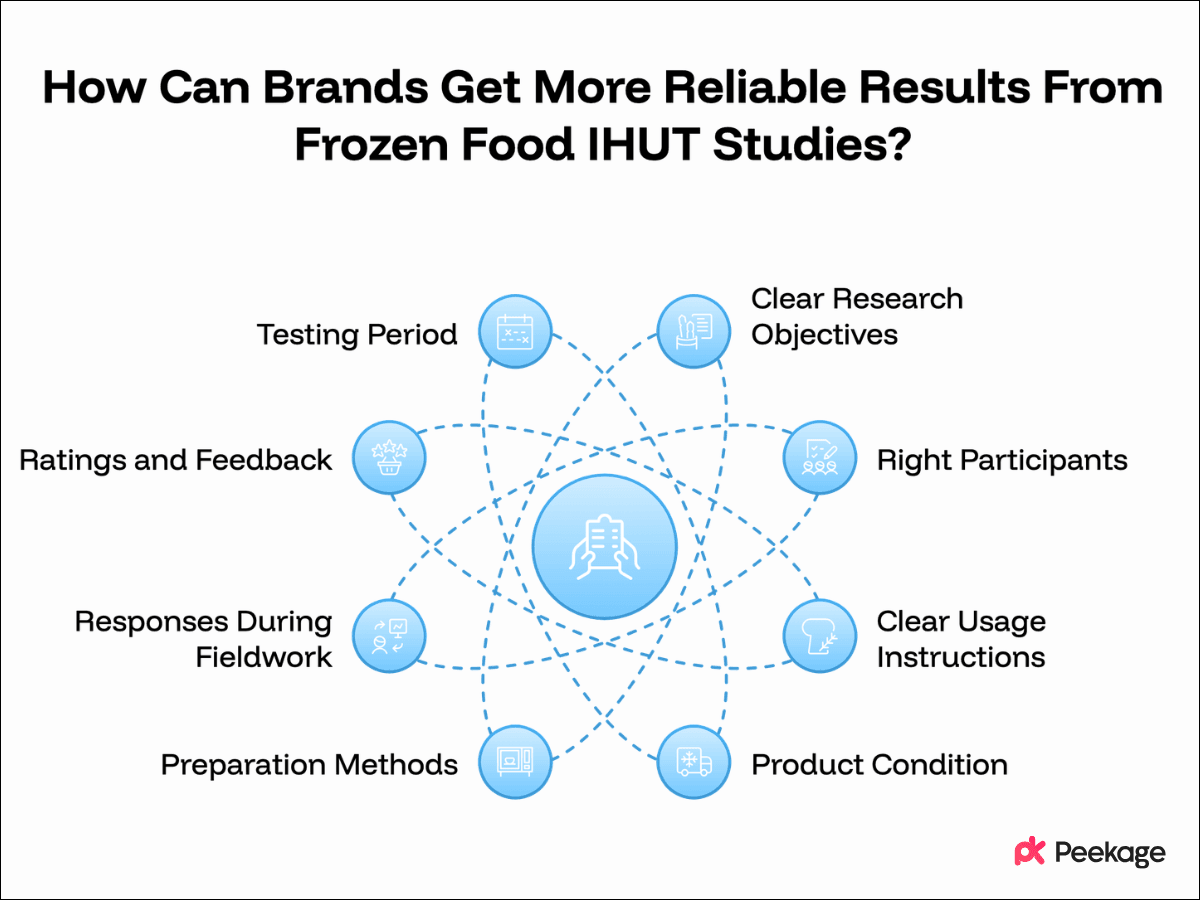
Reliable IHUT results depend on a clear study design and good tracking throughout the test. For frozen food, it is especially important to record factors that could affect the product experience at home.
These practices can help improve data quality:
- Set clear research objectives: Decide what you need to learn before choosing the sample, IHUT survey questions, and testing design.
- Recruit the right participants: Screen for relevant demographics, category usage, purchase habits, and any product-specific requirements.
- Give clear usage instructions: Explain how participants should store, prepare, and use the product. Keep the instructions specific enough to support consistent testing without making the experience unnatural.
- Track product condition: Record the condition of the product when it arrives. If a product arrives partially thawed or otherwise damaged, flag that response so it can be considered during analysis.
- Record preparation methods: Ask participants how they prepared the product. Differences between an oven, microwave, and air fryer can affect the final experience.
- Monitor responses during fieldwork: Review participation and incoming responses while the study is running. This makes it easier to identify missing data, unclear responses, or other issues before the test ends.
- Combine ratings with open-ended feedback: Quantitative scores show how consumers rated the product, while open-ended responses can explain what drove those ratings.
- Match the testing period to the product: Set the usage period based on how often consumers normally use the product and what you need to learn. A short test may be enough for a single-use experience, while repeated-use research may require a longer period.
These steps help separate genuine product feedback from issues caused by shipping, storage, preparation, or the research process itself.
How Does Peekage Help You Run an IHUT Research for Frozen and Refrigerated Products?
Peekage helps CPG brands to run in-home usage tests. Brands can define their research objectives, recruit participants, collect feedback, and analyze the results in one research workflow.
For frozen and refrigerated products, the main areas of support include:
- Targeted participant recruitment: Peekage has a consumer panel of more than 5M consumers and supports targeting across 200+ attributes. Brands can recruit based on demographics, shopping habits, category usage, and other relevant criteria.
- In-home product testing: Peekage's IHUT testing services allow brands to test products in consumers' homes and collect feedback on the experience of storing, preparing, and using them.
- Flexible research formats: In addition to IHUTs, our consumer product testing platform supports concept, packaging, pricing, messaging, and taste and sensory research. This allows brands to test different parts of the product and launch strategy.
- Study creation: Brands can build studies with AI, use templates, or create them from scratch based on their research goals.
- Consumer feedback and analysis: Peekage collects testing data and can analyze open-ended responses to identify patterns and themes. Its AI Analytics capability can also highlight areas where the product may need improvement.
Cold-chain requirements depend on the product, packaging, destination, and delivery setup. These details should be planned as part of the study before products are sent to participants.
If you are planning an in-home usage product test for a frozen food brand, you can talk to the Peekage team about your research goals, participant requirements, and study setup.