About one in four new CPG products stops selling within a year, while roughly 40% are gone by year two, according to research published in Marketing Letters.
An in-home usage test (IHUT) puts your product in the hands of real consumers and lets them use it in their own homes over several days or weeks. Instead of relying only on first impressions or stated preferences, you can see how the product performs in everyday conditions.
In this guide, we'll explain what an IHUT is, when to use one, how to design and run an IHUT, and how many participants you need. We'll also talk about costs and how to use the results to improve your product before launch.
What Is an In-Home Usage Test (IHUT)?
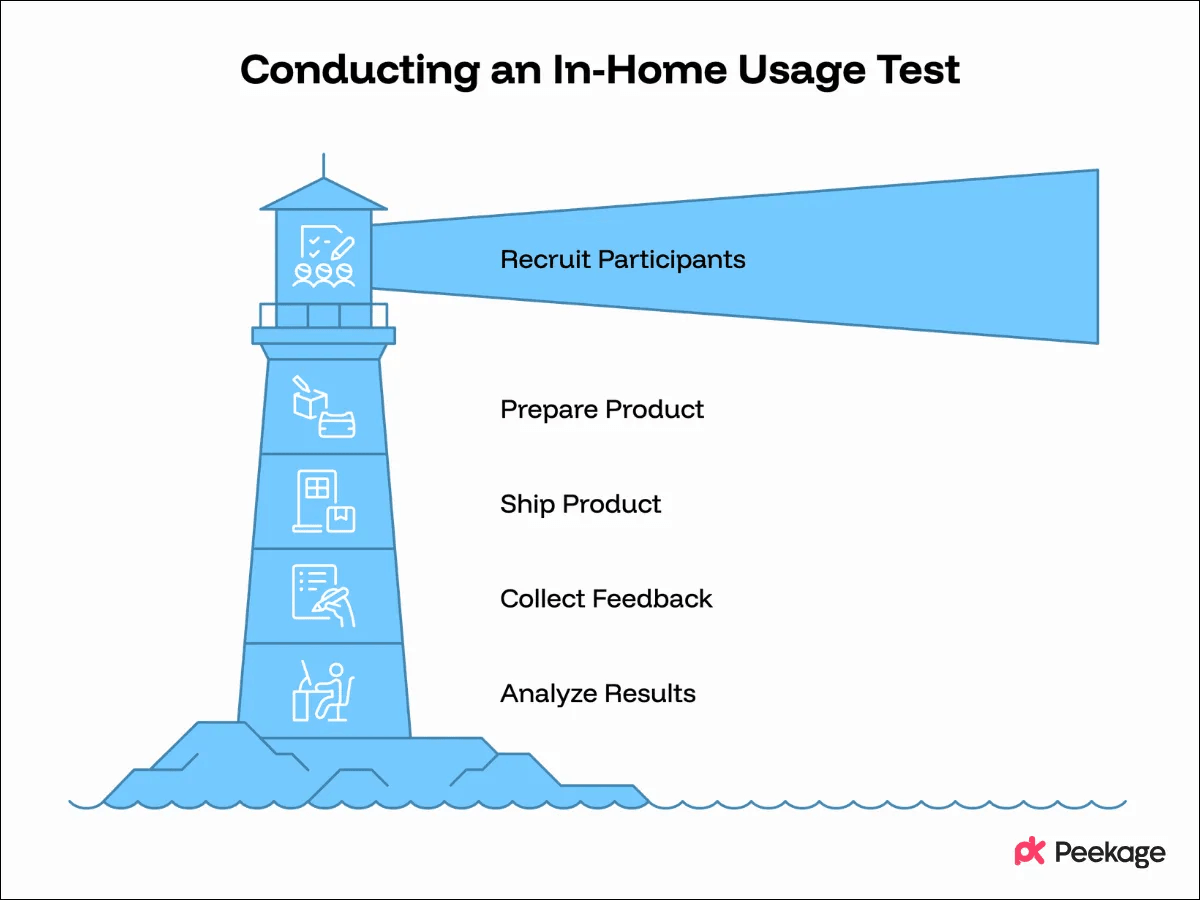
An in-home usage test (IHUT) is a research method where screened consumers receive your product, use it at home over a set period, usually 1 to 4 weeks. They then report their experience through surveys, diaries, photos, or follow-up questions.
IHUT feedback typically falls into three areas:
- Sensory Testing: Taste, smell, texture, appearance, and other product attributes
- Behavioral: How often consumers use the product, when they use it, and how it fits into their routines
- Attitudinal: Satisfaction, purchase intent, likelihood to recommend, and overall product perception
The key difference is the testing environment, especially when comparing a Central Location Test vs IHUT. For example, a fabric softener may perform differently in hard water than in soft water. A snack may taste different after a package has been open for several days.
An IHUT captures these everyday conditions, giving brands insight into how a product performs outside a controlled testing facility.
If you're planning your first IHUT, the logistics can quickly become complicated. You need to find consumers who match your target profile and screen them before the study begins. Then, you need to get the product to them, collect feedback throughout the study, and bring the results together. An IHUT product testing platform can bring these steps into one workflow, making it easier to manage the study from recruitment through analysis.
When Should You Use an IHUT for Your CPG Product?
An IHUT can answer different questions depending on your product and research goals. The table below shows the situations where in-home testing is most useful and what you can learn from each one.
| Use an IHUT When You Need To... | What It Helps You Learn |
|---|---|
| Evaluate real-world performance. | How the product performs under normal household conditions. |
| Understand repeated use. | How the experience changes after several uses or over several weeks. |
| Test routine fit and convenience. | Whether the product fits naturally into consumers' existing habits. |
| Identify usage or handling problems. | Issues with preparation, storage, packaging, or everyday use. |
| Get feedback from target consumers. | How your intended buyers respond to and use the product. |
How to Design Your IHUT Study
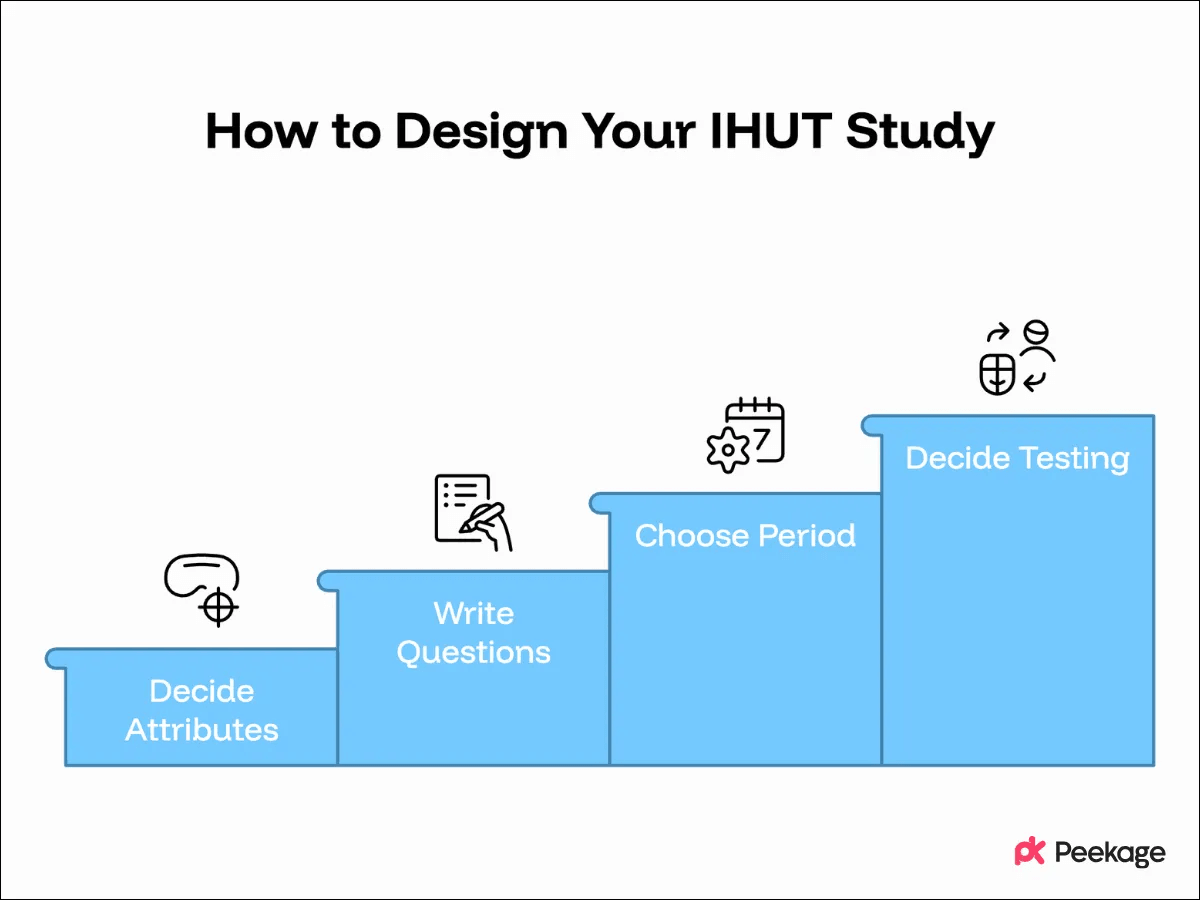
Good IHUT design starts before you recruit participants or ship the first product. Four decisions have the biggest impact on what you learn.
Decide What Product Attributes to Measure
Start with the attributes that could affect purchase, satisfaction, or repeat use. For a potato chip, that might include saltiness, crispiness, flavor, aftertaste, appearance, and aroma. Include the attributes that matter to your research objective rather than trying to measure everything.
Write Questions Around the Actual Product Experience
Make questions specific to how and when consumers use the product. Instead of asking, "How did you like the product?" ask participants to rate specific attributes after a defined use. This makes responses easier to compare across participants.
Choose the Right Testing Period
The field period should give consumers enough time to experience the product without creating unnecessary dropout risk.
- Food and beverages: Often around one to two weeks
- Personal care products: Often two to four weeks
- Household products: Often one to four weeks, depending on usage frequency
Products that require repeated use need more time than products that can be evaluated after one or two occasions.
Decide Whether to Use Branded or Blind Testing
- Choose blind testing when you want to isolate the product experience without the influence of brand recognition.
- Use branded testing when you want to understand how the product performs with its packaging, brand name, and existing consumer expectations.
For reformulations or competitive comparisons, blind testing can help determine whether consumers prefer the product itself rather than the brand behind it.
How to Run an IHUT for a CPG Product: The Step-by-Step Process
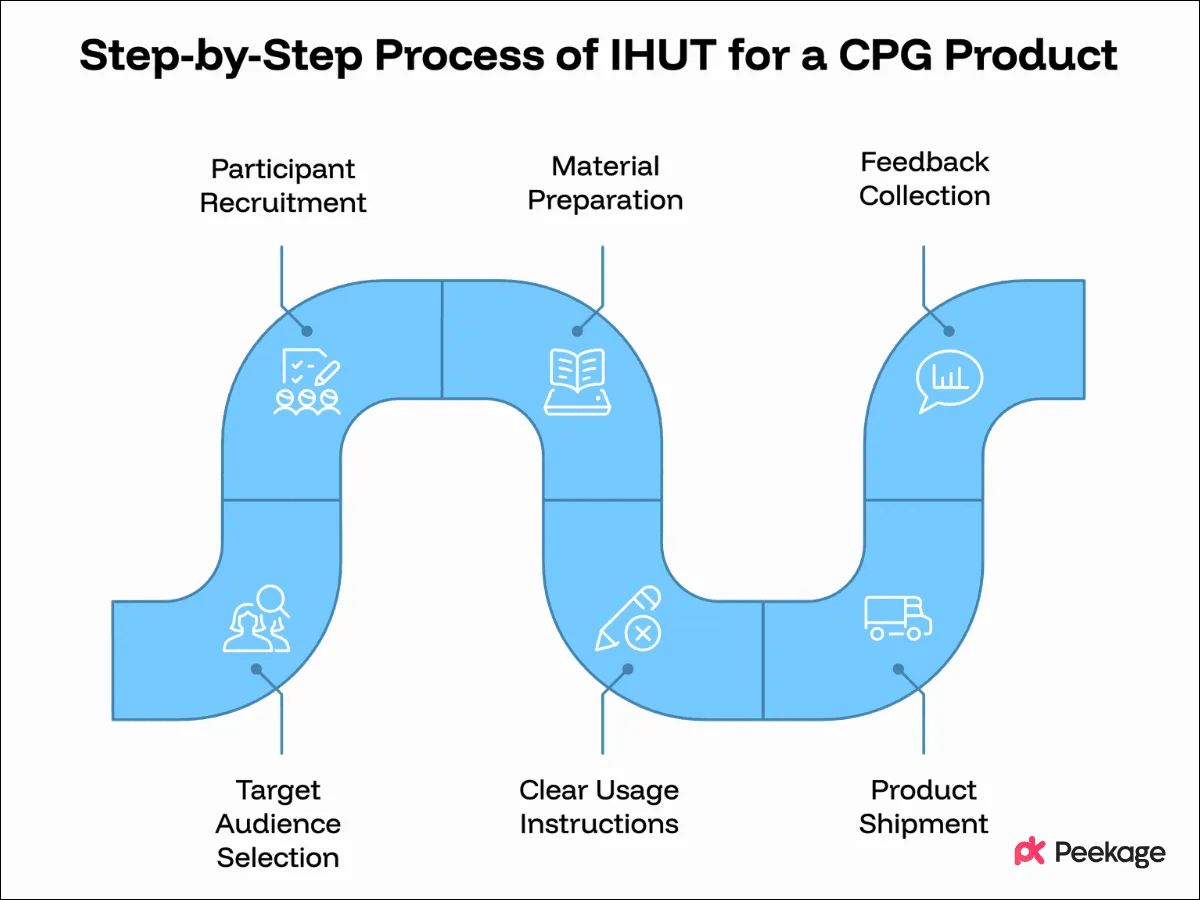
A successful IHUT follows a clear process, from defining your target audience to turning participant feedback into product decisions.
1. Choose Consumers Who Match Your Target Audience
Start with the consumers you actually want to understand. Define key criteria such as category usage, purchase frequency, household composition, location, and relevant product preferences.
For example, a pet food study may need dog owners who regularly buy premium food, rather than dog owners in general.
2. Recruit and Screen IHUT Participants
Use your target profile to recruit participants, then screen them against the criteria. Ask about actual purchase and usage behavior rather than relying only on demographics.
Keep the screener focused so you can find qualified participants without making the sign-up process unnecessarily long.
3. Prepare the Product and Study Materials
Decide how participants will receive and use the product. Use the normal packaging if you're testing the full consumer experience, or use consistent blind packaging if you're measuring the product without brand influence.
Prepare all surveys, usage instructions, diaries, and other materials before the study begins.
4. Give Participants Clear Usage Instructions
Tell participants how much to use, how often to use it, when to use it, and when to provide feedback. Clear instructions help ensure that participants follow the same basic protocol while still using the product in their normal environment.
5. Ship the Product to Participants
Package and ship products according to their storage and handling requirements. Food, beverages, and other temperature-sensitive products may require special packaging or delivery.
Build some extra time into the schedule for delayed deliveries or participants who don't receive their products as expected.
6. Collect Feedback During and After Product Use
Use check-ins throughout the study rather than waiting until the end. Early surveys can capture first impressions and initial problems, while final surveys show how the experience holds up after repeated use.
Collect both structured ratings and open-ended feedback so you can measure changes and understand why they happened.
7. Analyze the Results and Identify Product Insights
Combine quantitative scores with participants' comments to understand both what happened and why. Look for recurring issues across segments, changes over repeated use, and differences between important consumer groups.
The goal isn't simply to collect feedback. It's to identify specific product, packaging, or positioning changes you can make before launch.
IHUT Logistics: Participants, Timeline, and Cost
Before you start an IHUT, three practical questions need clear answers:
- How many consumers do you need?
- How long will the study take?
- What will drive the cost?
How Many Participants Do You Need for an IHUT?
The right sample depends on what you need the study to tell you:
- 10–20 participants: Useful for early directional feedback and identifying obvious product issues.
- 30–50 participants: A stronger base for internal product decisions when you need to identify recurring patterns.
- 100–300+ participants: More appropriate when you need to compare consumer segments, quantify differences, or support broader market conclusions.
If you're testing several consumer segments separately, make sure each segment has enough participants to produce a meaningful read. You can also include both category users and non-users when first-trial experience matters alongside feedback from experienced buyers.
How Long Does an IHUT Take?
Most IHUTs take around 3 to 8 weeks from planning to final results, depending on recruitment, shipping, and the required usage period.
| Phase | Typical duration |
|---|---|
| Objective-setting and survey design | 3–7 days |
| Recruitment and screening | 5–10 days |
| Product shipping and setup | 3–7 days |
| In-home usage period | 7–28 days |
| Data collection and analysis | 5–10 days |
| Total | 3–8 weeks |
The usage period is usually the least flexible part of the timeline because shortening it can mean missing important repeat-use feedback.
How Much Does an IHUT Cost?
There isn't one standard IHUT price. The total cost depends on the number of participants, product, study length, and logistics.
| Cost driver | What affects the cost |
|---|---|
| Participant count | More participants mean more incentives, products, and shipments. |
| Product and packaging | Product value, packaging requirements, and number of units needed. |
| Shipping and logistics | Weight, delivery location, temperature requirements, and special handling. |
| Study length | Longer studies may require higher participant incentives and more management. |
| Survey and study complexity | More surveys, checkpoints, and custom questions require more setup. |
| Number of product variants | Testing multiple versions increases product and shipping requirements. |
| Analysis and reporting | Basic dashboards cost less than detailed custom analysis and reporting. |
The key point: Plan your sample size and field period around the decision you need to make. A small exploratory IHUT and a large quantitative validation study have very different resource requirements.
What Can You Learn From an IHUT?
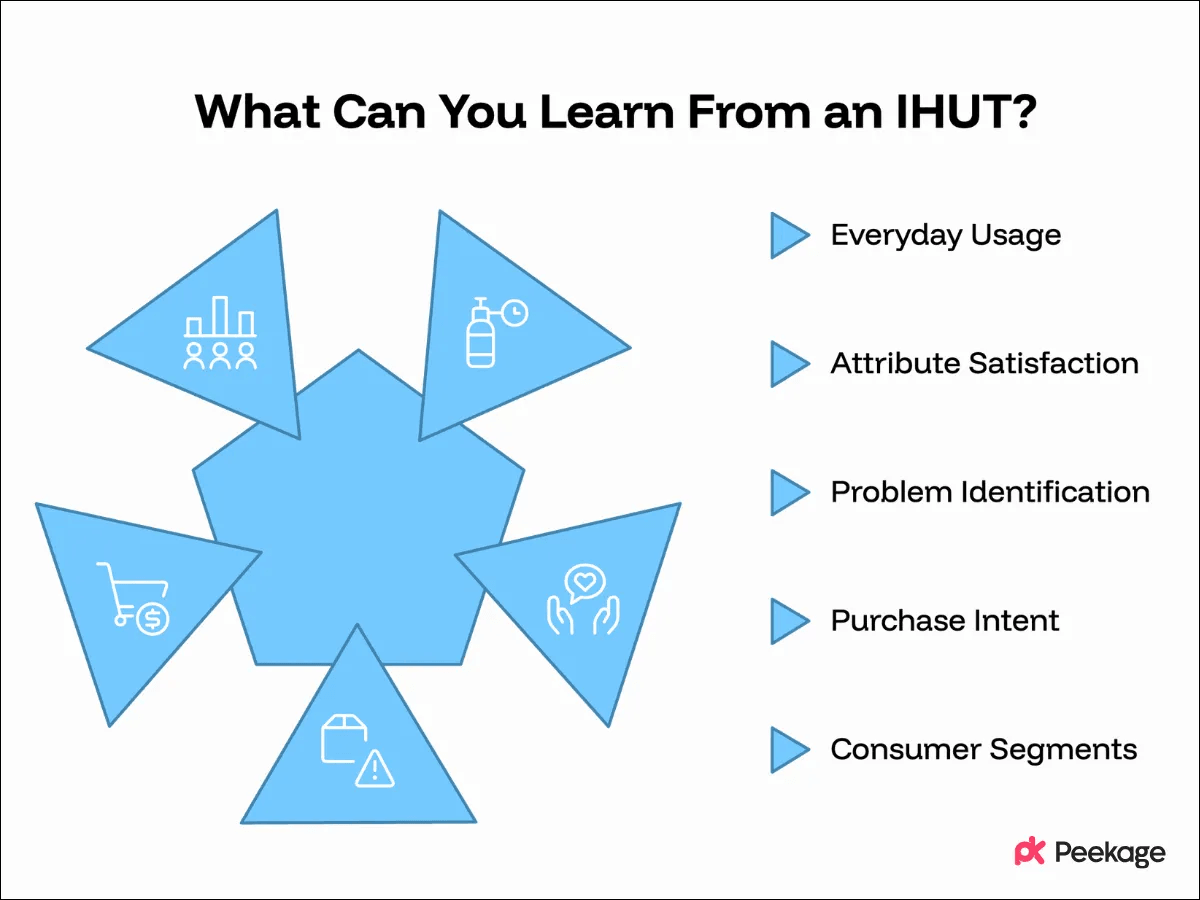
A well-designed IHUT can help answer several questions that are difficult to answer through a one-time test or survey:
- How do consumers use the product in everyday life? Learn how often they use it, when they use it, how much they use it, and whether they find other ways to use it.
- Which product attributes drive satisfaction? Measure overall liking alongside specific attributes such as taste, texture, scent, appearance, ease of use, or performance. You can also identify whether an attribute feels too strong, too weak, or about right.
- Where do consumers experience problems? Identify issues with dispensing, packaging, storage, preparation, residue, instructions, or other parts of the product experience.
- Would consumers buy or recommend the product? Measure purchase intent, repurchase intent, recommendation likelihood, and overall satisfaction to understand whether the product is likely to earn repeat demand.
- How do different consumer segments respond? Compare results across groups such as category users and non-users, households with and without children, or different usage levels. A product that performs well with one segment and poorly with another may need a different target rather than a complete reformulation.
The real value of an IHUT is connecting product feedback to real usage. You can see not only whether consumers like the product, but what they do with it, where they struggle, and what could make them choose it again.
How Peekage Helps CPG Brands Run IHUTs
Peekage is a consumer product testing platform that supports all stages of an IHUT in one platform, from recruiting the right consumers to collecting feedback and analyzing results.
Set Up the Campaign
Brands can create an IHUT campaign with the target audience, products, testing instructions, research goals, images, and a survey. This gives participants everything they need to understand and complete the test.
Recruit the Right Consumers
Brands can target consumers using 50+ criteria, including age, location, income, dietary preferences, allergies, shopping habits, and product usage. If more specific screening is needed, brands can add up to 15 custom questions. Sample balancing across up to two demographic criteria can also help maintain the right audience mix.
Add Products and Build the Survey
Brands can add physical products, coupons, or multiple product variants for comparative testing. Products can also be presented as blind samples when brand identity should not influence responses.
The survey builder supports rating scales, multiple-choice and open-ended questions, conditional logic, and measures such as product liking, taste, texture, packaging, purchase intent, and product preference.
Guide Consumers Through the Test
Eligible consumers see the study requirements before joining, then receive the product and clear instructions for completing the test. After using the product at home, they submit their feedback through the Peekage experience.
Monitor and Analyze Results
Brands can track participation, ratings, survey responses, product comparisons, and open-ended feedback as the study progresses.
Once complete, Peekage's AI analytics help analyze the responses, surface key patterns, summarize open-ended feedback, and highlight differences between products or consumer segments. The results are organized into a structured report, making it easier to identify key findings and product improvement opportunities.
Discover Peekage's in-home product testing or contact the Peekage team to discuss your next IHUT.
Final Thoughts
An IHUT gives you a direct, structured read on how your product performs once it leaves the lab and enters a real home. Get the design right, recruit consumers who actually match your target buyer, and turn what you learn into concrete product, packaging, or positioning changes before launch. Brands that test in-home before they ship are working from real evidence instead of assumptions, and that's what separates a confident launch from a costly guess.