
Taste can make or break a food product, but consumers also care about texture, convenience, and how a product fits into their daily routines. Research on new wine products found that sensory benefits were the strongest factor explaining purchase intention in both concept and product testing.
In-home usage testing services allow brands to see how consumers respond to food and beverages in their own homes. This article explains how IHUTs work, what to measure, which questions to ask, and how to get reliable feedback before launch.
How Can Food and Beverage Products Benefit from IHUT Research?
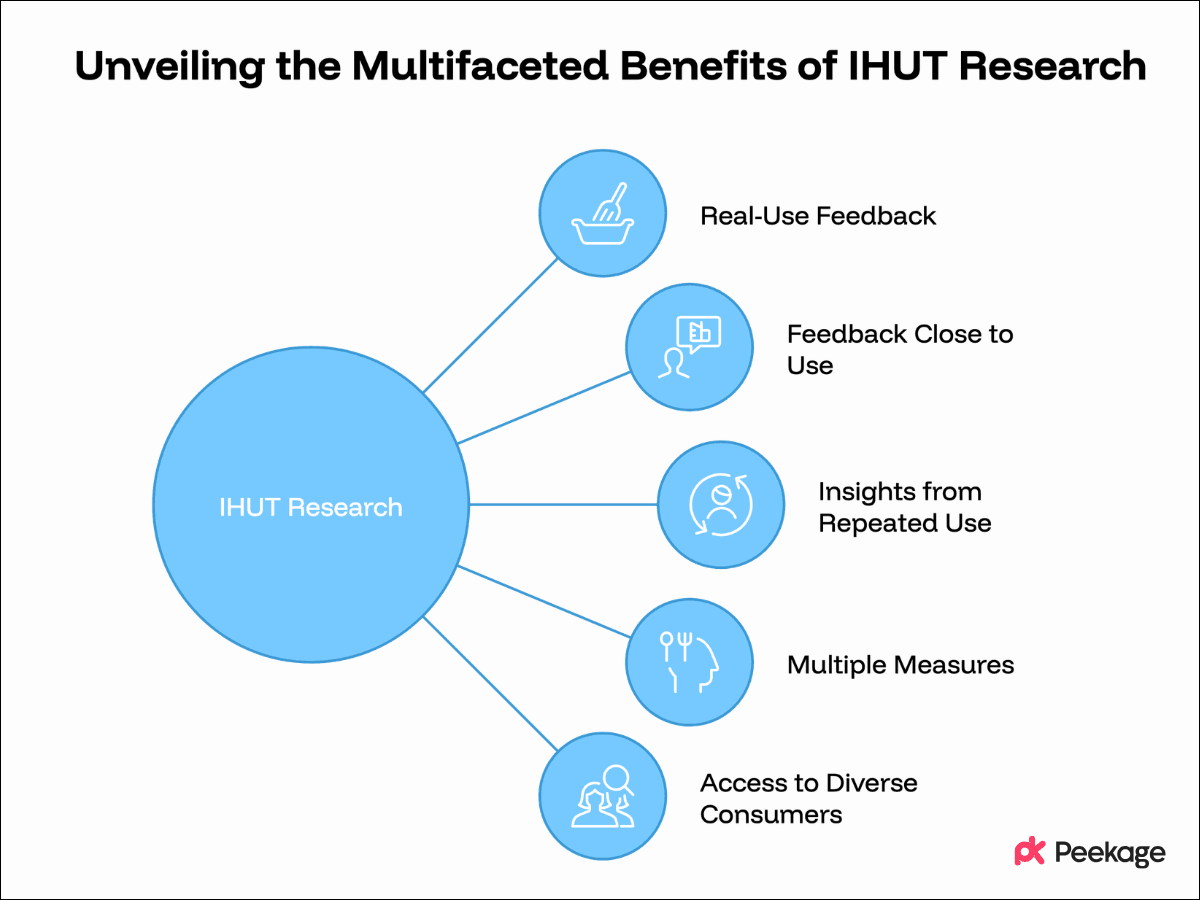
An IHUT shows how a food or beverage product performs in the setting where consumers actually use it. Unlike a central location test (CLT), which takes place in a controlled environment, an IHUT lets brands evaluate how storage, preparation, serving, and everyday routines affect the consumer experience at home.
For food and beverage teams, the main benefits include:
- Real-use feedback: Participants cook, pour, serve, and consume products using their normal routines. This can reveal how the product tastes, whether preparation instructions are easy to follow, and whether the packaging works well at home.
- Feedback close to the moment of use: Participants can complete surveys shortly after trying the product, so their responses are based on a recent experience rather than relying on memory.
- Insights from repeated use: A product may be highly appealing on the first use but become less interesting over time. Multiple feedback rounds can show whether satisfaction, usage, or purchase intent changes throughout the test.
- Multiple measures in one study: You can run a sensory test with IHUT to measure aroma, taste, texture, satisfaction, along with appearance, perceived value, and purchase intent, depending on your research objectives.
- Access to consumers in different locations: Because participants test products at home, brands can recruit consumers across different regions rather than limiting the study to people who can visit a research facility.
What Food and Beverage Products Can You Test With an IHUT?
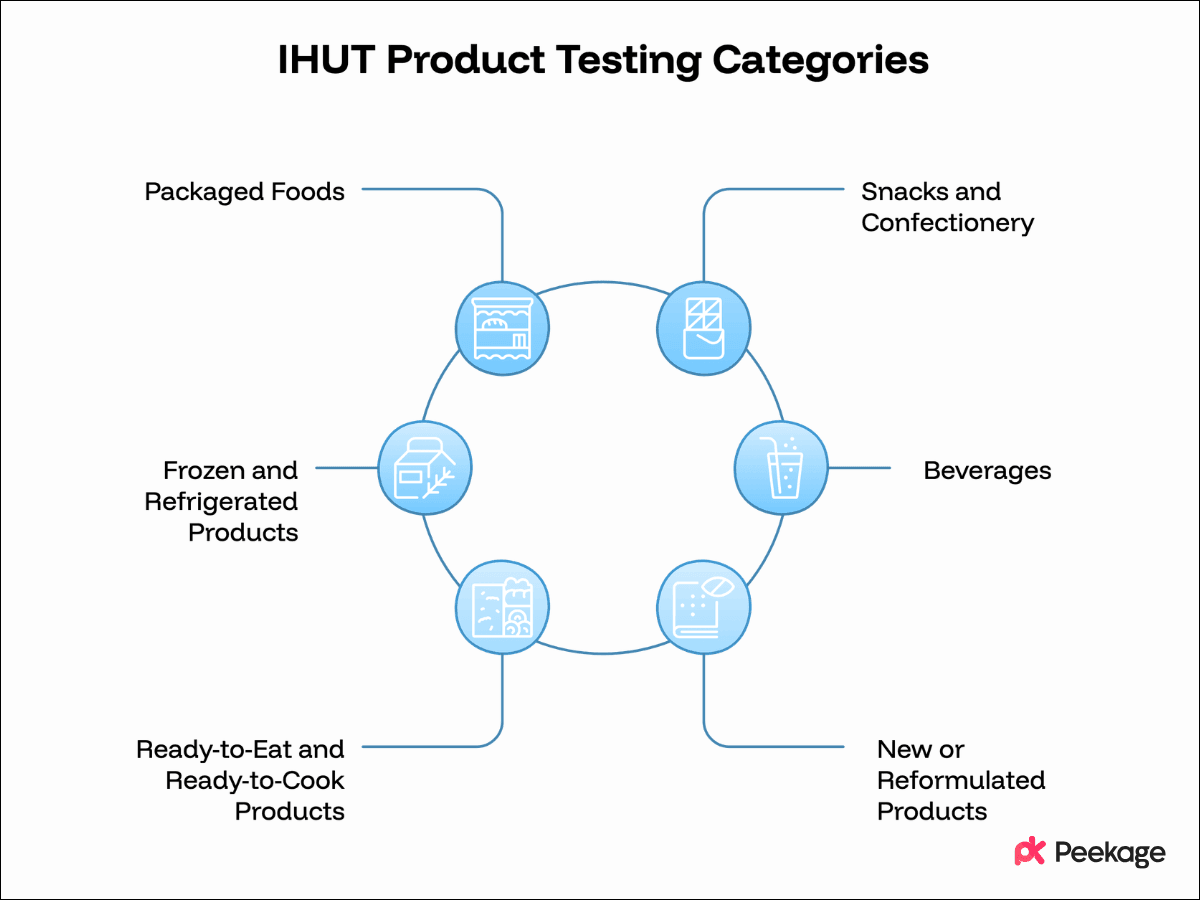
Many food and beverage products can be tested through an IHUT when consumers can realistically store, prepare, and use them at home. The study design can then be adapted to the product and the experience you want to measure.
Common categories include:
- Packaged foods: Pasta sauces, nut butters, boxed pasta, cereals, and other pantry products can be tested for taste, texture, ease of use, packaging, and overall satisfaction.
- Snacks and confectionery: Chips, protein bars, chocolates, and similar products can be tested for taste, texture, appearance, portion size, satisfaction, and purchase intent.
- Frozen and refrigerated products: Frozen pizza, dumplings, ice cream, yogurt and milk, fresh dips, and other chilled products can be tested in the conditions where consumers normally store and prepare them. Cold-chain requirements should be planned around the product, packaging, transit time, and required storage temperature.
- Beverages: Ready-to-drink coffee, functional drinks, juices, and other beverages can be tested for taste, aroma, packaging, convenience, and overall appeal.
- Ready-to-eat and ready-to-cook products: Microwave meals, meal kits, and heat-and-serve sides can be evaluated for taste and texture as well as preparation time, instructions, convenience, and serving experience.
The study design should reflect the product's specific requirements, including how it is stored, prepared, consumed, and evaluated.
What Can Food and Beverage Brands Test With an IHUT?
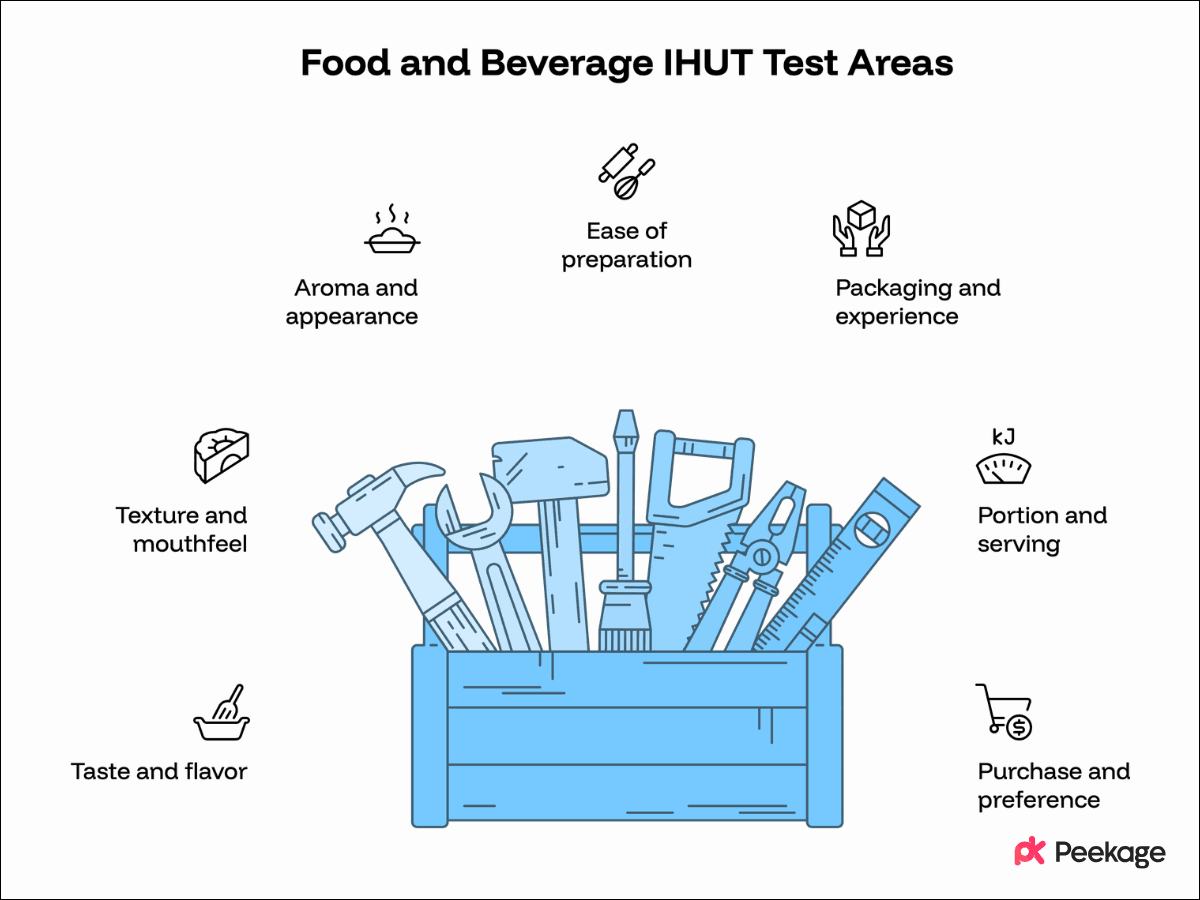
An IHUT can measure the consumer experience from opening the package to deciding whether to buy the product again. The exact questions depend on the product and research objectives, but common areas include:
- Taste and flavor: Overall liking, flavor strength, sweetness or saltiness, and any aftertaste.
- Texture and mouthfeel: Crunch, creaminess, thickness, softness, and whether the texture changes after preparation or reheating.
- Aroma and appearance: How the product smells when opened and how it looks when served.
- Ease of preparation: Whether the instructions are clear, how long preparation takes, how much effort it requires, and which equipment consumers use.
- Packaging and product experience: How easy the package is to open, reseal, store, and use, as well as whether the packaging communicates the product clearly.
- Portion size and serving experience: Whether the portion feels sufficient and matches the stated serving size. For example, a frozen entrée labeled "serves two" may not feel sufficient to consumers who expect larger portions. This feedback can help brands identify potential issues before launch.
- Purchase intent and overall preference: Whether consumers would buy the product, how it compares with products they already use, and how they perceive its price.
How to Run an IHUT Study for a Food and Beverage Product?
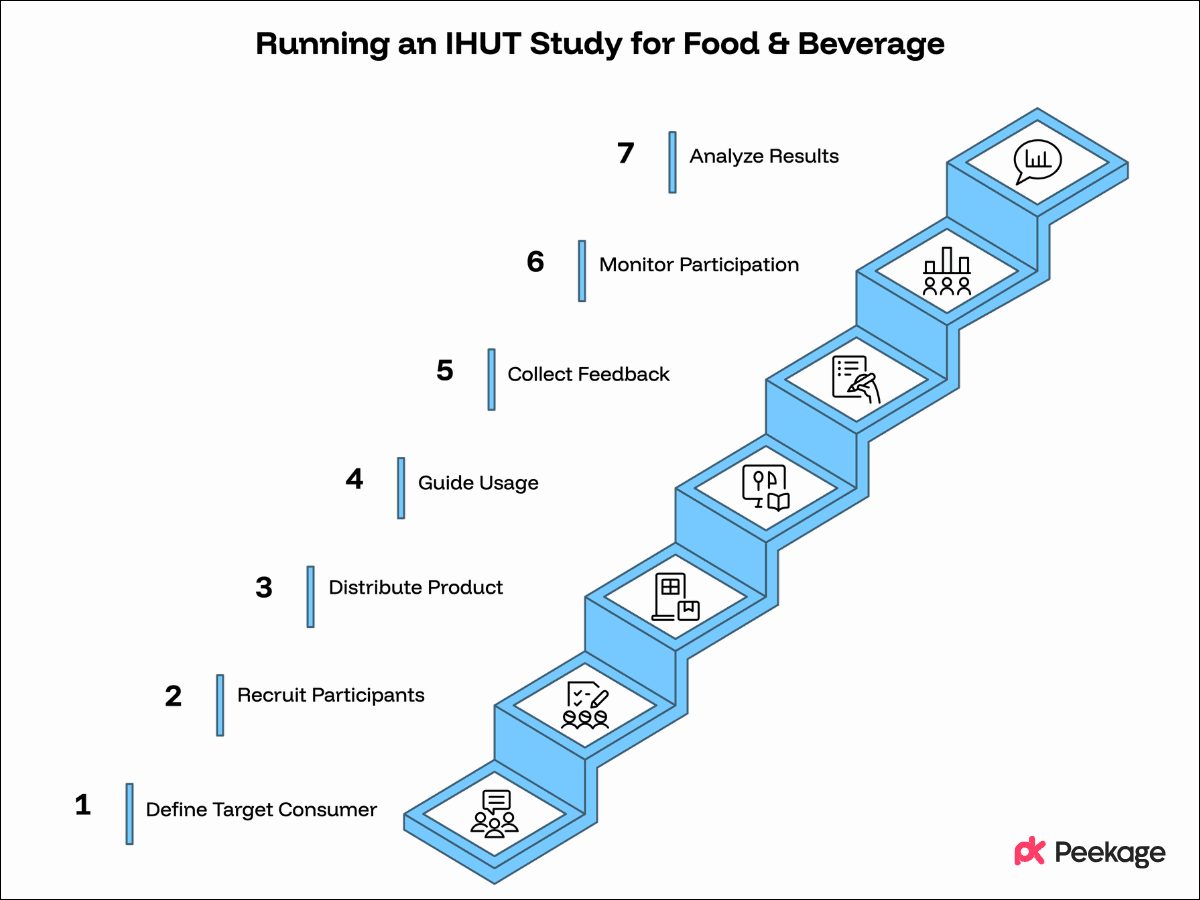
Here is how to run an IHUT for a food and beverage product, from defining the target consumer to analyzing the results. The exact setup depends on the product, research goal, and type of feedback the brand needs.
Define Your Target Consumer
Start with the decision the study needs to support. You may be comparing two recipes, evaluating new packaging, testing a reformulation, or measuring purchase intent.
Your research goals will also help determine how many participants you need for the IHUT and which consumer groups you need to include.
Then define the consumers who can provide useful feedback. Category habits can be more relevant than demographics alone. For example, someone who regularly buys frozen pizza may provide more useful feedback on a new frozen pizza than someone who rarely eats it.
Recruit and Screen Participants
To recruit participants for IHUT, start by defining the criteria that match your research goals. IHUT screening questions can cover category usage, purchase habits, brand preferences, demographics, and other relevant characteristics.
For example, a participant who never buys frozen meals may not be suitable for a study comparing two frozen meal options. The recruitment target should also account for potential dropouts so the final sample is large enough for the research objectives.
Distribute the Product
Participants need clear information about the product and how to use it. Depending on the study, this may include product instructions, storage guidance, survey instructions, and contact information for questions.
For blind tests, branding and other identifying cues can be removed or concealed where appropriate. Refrigerated and frozen products require additional planning for packaging, temperature control, transit time, and delivery. When sending product prototypes to consumers for IHUT, you should consider product packaging, delivery times, and storage requirements, etc.
Guide Participants Through Product Usage
Give participants enough information to use the product correctly without making the experience feel artificial. Preparation instructions should cover any important steps, such as cooking method, serving instructions, or storage.
The study can also ask participants to use the product as they normally would. This can reveal how the product fits into everyday occasions, such as a weeknight dinner, breakfast, or an afternoon snack.
Collect Consumer Feedback
Collect feedback close to the moment of use so participants can report on the experience while it is still fresh. Online surveys can measure areas such as taste, texture, appearance, satisfaction, and purchase intent.
For repeated-use studies, additional surveys can capture whether perceptions change over time. Open-ended questions can also help explain why participants gave particular ratings and what they would change about the product.
Monitor Participation and Responses
Monitor participation throughout the study rather than waiting until the fieldwork ends. Reminders and participant communication can help keep the research on schedule and identify incomplete responses or other issues early.
For longer studies, regular communication can also help participants understand what they need to do at each stage and where to get help if they have a question.
Analyze the Results and Make Decisions
Analyze the results against your research objectives and relevant benchmarks. Depending on the study, this may mean comparing a new recipe with the current product, a competitor, or different product variants.
When you interpret IHUT reports, look beyond overall liking to identify which attributes drive consumer responses. Taste, texture, packaging, preparation, satisfaction, and purchase intent can reveal different parts of the product experience.
For example, a product may receive strong overall ratings but score lower on freshness or saltiness. Identifying these gaps can help the brand decide whether to reformulate the product, conduct further testing, or adjust its positioning.
Planning a food and beverage product test? Talk to the Peekage team about your research goals, target consumers, and study setup.
What Should You Ask Consumers in a Food and Beverage IHUT?
The questions in a food and beverage IHUT should match what you want to learn about the product. A mix of rating questions and open-ended questions can help you measure the experience and understand what is behind the ratings.
Common question areas include:
- Overall product satisfaction: "Overall, how satisfied are you with this product?"
- Taste and flavor: "How would you rate the saltiness of this product?"
- Texture and consistency: "How would you rate the texture after preparing the product at home?"
- Packaging and usability: "How easy was the package to open, reseal, and store?"
- Preparation experience: "How easy were the cooking or preparation instructions to follow?"
- Comparison with products they normally buy: "How does this product compare with the brand you usually buy?"
- Likelihood to purchase: "How likely are you to buy this product at its listed price?"
- Likelihood to recommend: "How likely are you to recommend this product to a friend or family member?"
- What they would change: "If you could change one thing about this product, what would it be?"
Keep the questions focused on the research goals. For example, a frozen meal study may need more questions about preparation and portion size, while a snack study may focus more on taste, texture, and packaging.
Use rating scales for measurable attributes and include a few open-ended questions to capture details that fixed responses may miss. Feedback on concept testing questions can also provide useful wording ideas that can be adapted for food and beverage studies.
What Challenges Can Affect an IHUT for Food and Beverage Products?
Testing food and beverages at home gives brands feedback from real-life use, but it also introduces variables that can affect the results. Common challenges include:
- Differences in storage conditions: Refrigerators, freezers, and pantry conditions vary between households. Poor storage can affect a product's freshness, texture, taste, or quality before testing.
- Inconsistent preparation: Consumers may use different appliances, cooking times, temperatures, or preparation methods. These differences can affect the final product and make responses harder to compare.
- Changes in product quality during delivery: Heat-sensitive, frozen, or refrigerated products may be affected by shipping delays or unsuitable packaging. Brands need to plan fulfillment around the product's storage requirements.
- Taste and preference differences: Consumers have different expectations for sweetness, saltiness, texture, flavor, and portion size. A product may appeal strongly to one group but receive mixed feedback from another.
- Product fatigue: Repeatedly consuming the same product can affect ratings, particularly for snacks, beverages, or products tested over several days. Participants may also use the product less often than expected.
- Limited control over the testing experience: Unlike a controlled tasting session, an IHUT cannot fully standardize the environment, serving conditions, or distractions. Clear instructions and questions about how participants used the product can help researchers interpret the results.
- Incomplete or delayed feedback: Participants may forget to complete a survey immediately after eating or drinking the product. Short surveys and timely reminders can help capture feedback while the experience is still fresh.
These challenges can be managed through appropriate product handling, clear instructions, relevant participant screening, and a study design that reflects how the product will be used at home.
How Can Food and Beverage Brands Get Reliable Results From an IHUT?
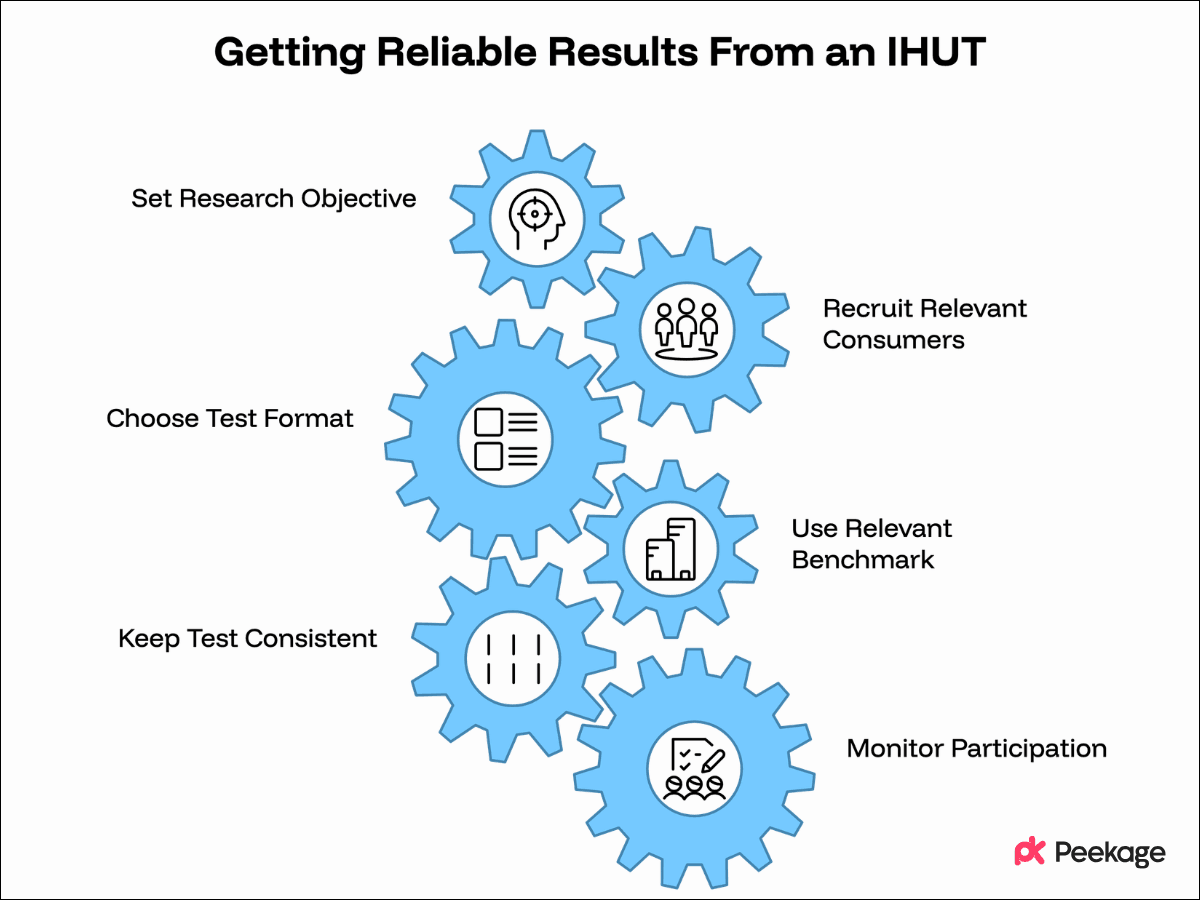
Reliable IHUT results depend on the decisions made before participants receive the product. A few practices can help make the findings more consistent and useful:
- Set a clear research objective. Decide what the study needs to measure and how you will evaluate the results before fieldwork begins.
- Recruit relevant consumers. Screen for category usage, purchase habits, and other criteria that match the research goal. People who regularly buy the product category can provide more relevant feedback.
- Choose the right test format. Blind testing can help reduce the influence of brand familiarity when the goal is to evaluate the product itself. Branded testing may be more appropriate when you want to measure the complete product experience.
- Use a relevant benchmark. When appropriate, compare the product with a current recipe, competitor, or another product variant to give the results useful context.
- Keep the test consistent. Give participants the same product, instructions, and survey questions unless the study is specifically designed to test different conditions.
- Monitor participation. Send reminders when needed and track incomplete responses during fieldwork. If the findings need to represent a broader market, consider whether additional research is needed to support that goal.
Good planning will not make a weak product perform better. It can, however, help brands identify what is working, where the product falls short, and what needs to change before launch.
How Peekage Helps Food and Beverage Brands Run In-Home Product Tests
Peekage supports food and beverage brands that want to test CPG products with real consumers. Our IHUT testing services cover participant recruitment, product fulfillment, feedback collection, and analysis. This gives research teams one place to manage the main parts of an in-home product test.
Peekage has access to a panel of 5M+ consumers across the U.S. and Canada, with 200+ targeting attributes. Brands can use these criteria to recruit consumers based on demographics, shopping habits, and product usage.
Food and beverage brands can use the consumer product testing platform for blind taste tests, competitive benchmarking, concept testing, taste and formula testing, packaging research, and pricing research. Its AI Analytics can also help identify patterns and themes in open-ended feedback, making large sets of consumer responses easier to review.
Wise Snacks worked with Peekage to improve its potato chip recipe before launch. In five weeks, 600 consumers tested eight versions of the chips in blind taste tests, providing more than 80,000 data points. The feedback helped Wise identify areas to improve, including crunchiness, freshness, and aroma. The study also helped the brand cut research costs by 70%.
If you are planning an in-home product test, talk to the Peekage team about your target consumers, research goals, and study requirements.