An In-Home Usage Test (IHUT) report can contain ratings, written feedback, usage data, and other findings from consumers who tested a product at home. Understanding how IHUT works can help you see where this data comes from and how to use it.
In this guide, we'll explain what an IHUT report contains, which metrics to focus on, and how to interpret open-ended feedback. We'll also cover how to prioritize product changes based on what consumers tell you.
What Does an IHUT Report Tell You?
An IHUT report shows how consumers experienced a product in their own homes over the testing period. A consumer product testing platform can bring together this feedback with product ratings, usage data, and other study results. Unlike a central location test, which usually captures feedback in a controlled setting, an IHUT can show how a product performs during normal use.
Most reports include both quantitative and qualitative findings:
- Quantitative data: Satisfaction ratings, purchase intent, overall product scores, and attribute ratings such as taste, scent, texture, or ease of use.
- Qualitative feedback: Open-ended comments, photos, diary entries, and other details that explain why participants gave certain ratings.
The specific findings depend on the research questions. For example, a team testing a new yogurt formula may focus on sweetness, texture, and overall liking, while a packaging study may focus on appearance, usability, and purchase interest.
The goal is to use the report to answer two key questions: How did consumers respond to the product, and what can you change based on their feedback?
Which IHUT Metrics Should You Focus On?
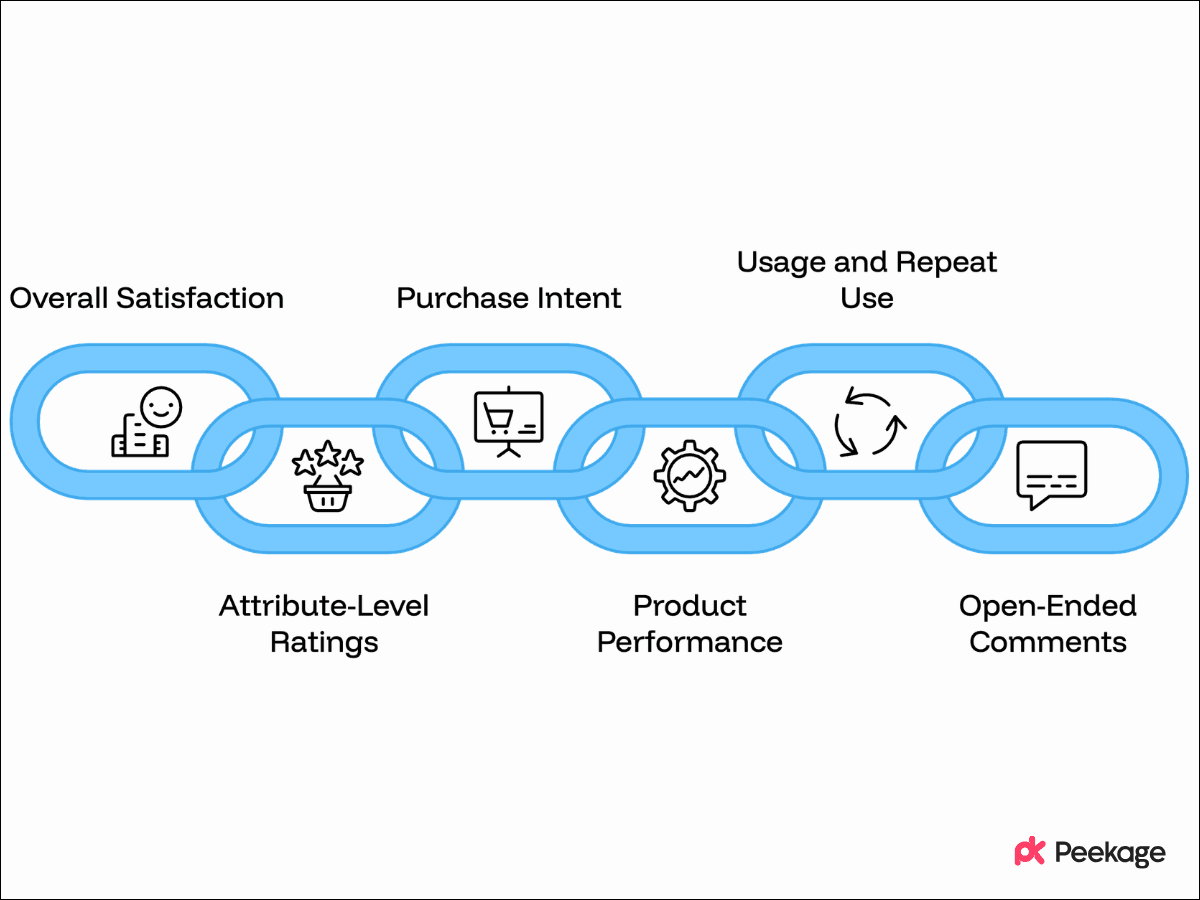
Not every metric in an IHUT report has the same value. Focus first on the measures that show overall product performance, explain what is driving the results, and indicate whether consumers are likely to use or buy the product.
- Overall Satisfaction: Gives you a quick measure of how consumers feel about the product. Top-box and top-two-box scores can make results easier to compare, but they should be reviewed alongside the full rating distribution.
- Attribute-Level Ratings: Show which specific product characteristics are performing well or poorly. Depending on the product, these might include taste, scent, texture, freshness, durability, or ease of use. Just-about-right (JAR) analysis can also show whether consumers find an attribute too weak, too strong, or just right.
- Purchase Intent: Shows how likely participants say they are to buy the product. It can help you understand commercial potential alongside satisfaction and other product measures.
- Product Performance: Measures whether the product delivers the expected result under normal conditions. For example, you might look at stain removal for a laundry product, brewing performance for coffee, or results after repeated use.
- Usage and Repeat Use: Shows how consumers actually use the product during the study and whether they continue using it. This can reveal problems that are not obvious from first-use feedback.
- Open-Ended Comments: Explain the reasons behind the scores. If purchase intent is low and several participants mention the same problem, the comments can help identify what needs to change.
How to Interpret Quantitative IHUT Results
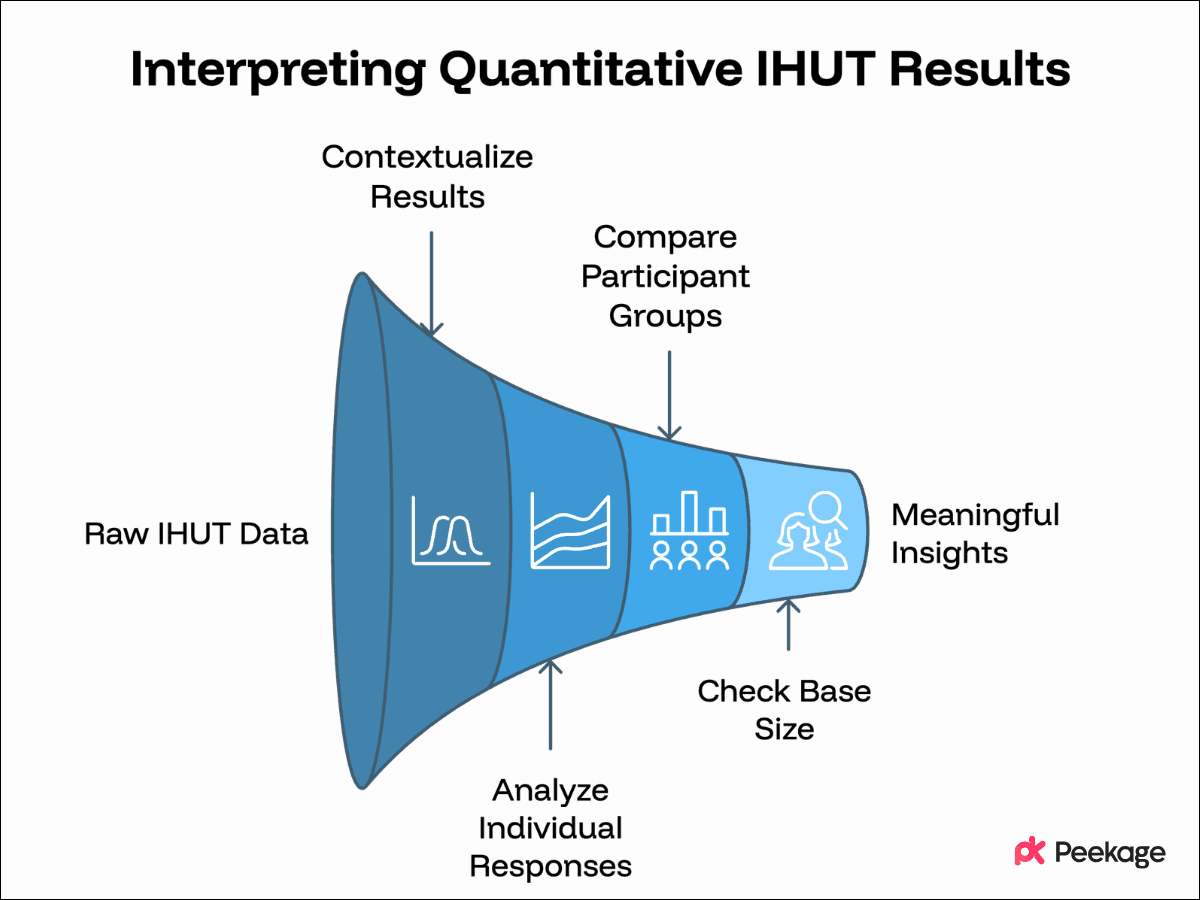
Put Results Into Context
A score means more when you compare it with a previous test, relevant benchmark, or another product tested under similar conditions. For example, a 58% top-two-box purchase intent score is more useful when you know how the previous product version performed.
Look Beyond the Headline Score
Combined scores can hide important differences. Two products could both have 40% top-two-box purchase intent, but one may have more participants who say they would definitely buy it. Check the individual response levels to understand the strength of the result.
Compare Relevant Participant Groups
Look at differences between groups such as new and existing users, frequent and occasional category users, or different demographic groups. A product that performs well with one group may need changes if another important group responds poorly.
Check the Base Size
Small subgroups can produce less stable results, so be careful when interpreting differences between groups. Consider the sample size and statistical significance before treating a small gap as a meaningful finding.
How to Analyze Open-Ended IHUT Feedback
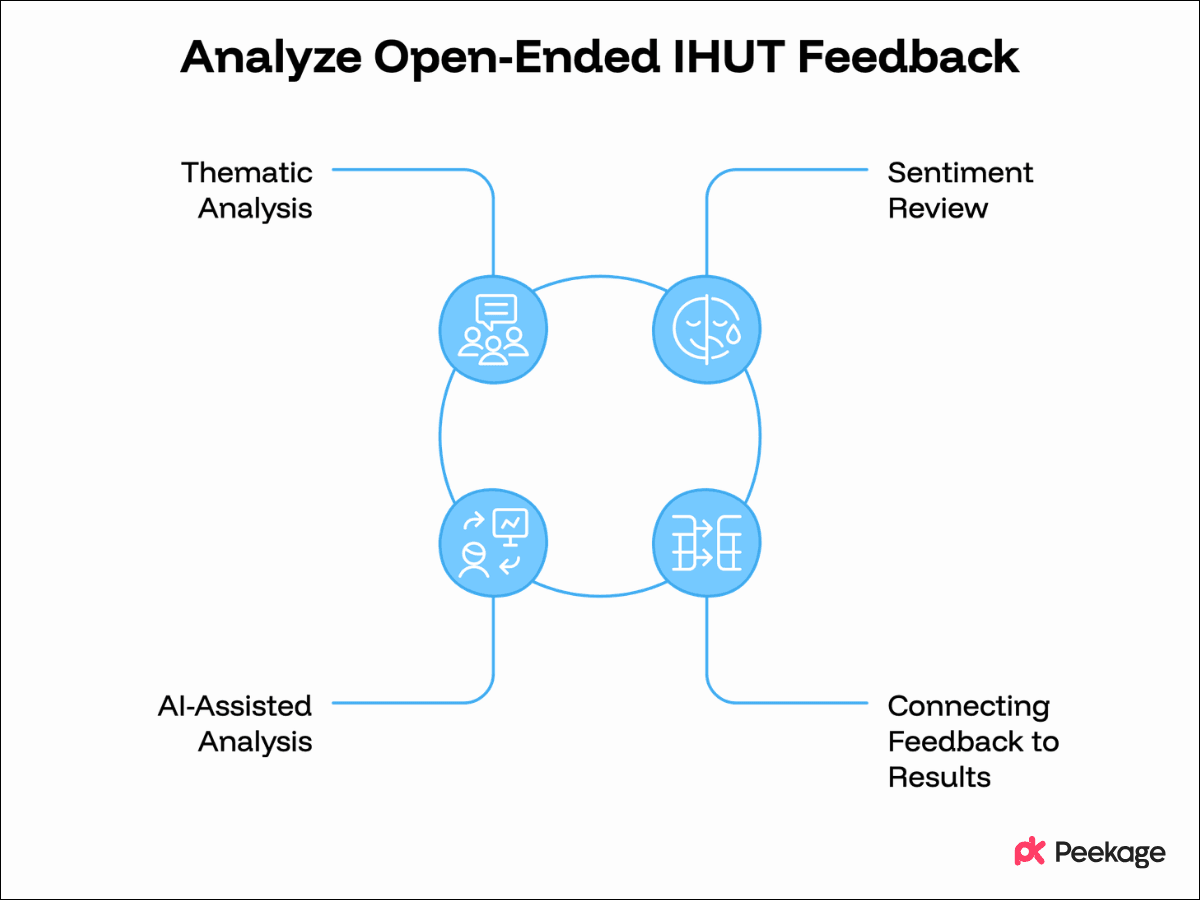
Open-ended responses explain the reasons behind your quantitative results. A low freshness score, for example, tells you there may be a problem, while participant comments can show what consumers disliked about the product. IHUT testing services can help collect and analyze this feedback alongside other study results.
Group Comments Into Themes
Start by reviewing responses and grouping similar comments under common themes. These might include taste, packaging, scent, ease of use, or product performance. Thematic analysis helps turn hundreds of individual comments into a smaller set of recurring issues and positive experiences.
Review Sentiment Within Each Theme
Look at whether comments within each theme are mainly positive, negative, or mixed. This helps distinguish a frequently mentioned issue from a frequently mentioned strength.
Use AI to Organize Large Volumes of Feedback
AI-assisted analysis can help group similar responses, identify recurring topics, and summarise large volumes of open-ended feedback. Peekage's AI analytics feature can help analyze IHUT testing data and surface patterns in consumer feedback, giving teams a faster way to identify areas that may need attention.
Human review is still important for checking context and interpreting findings before making product decisions.
Connect Comments to Quantitative Results
The strongest findings usually appear when written feedback supports a measurable result. For example, if many participants say a product does not feel fresh enough and its freshness score is also low, the two findings point to the same product issue.
How Do You Turn IHUT Findings Into Product Decisions?
The process should move from finding to hypothesis to decision. A finding might show that purchase intent is lower among new users. A hypothesis could explain why, such as the product scent being unfamiliar to people who have not used the brand before. The decision is the action you take based on that evidence.
Identify the Type of Problem
Start by deciding what kind of issue you are seeing. It could relate to the product formula, packaging, messaging, or price perception. This helps the right team address the problem and prevents teams from making changes in the wrong area.
Prioritize the Most Important Findings
Not every finding requires a product change. Look at the size of the gap, how often an issue appears in consumer comments, and whether it affects important measures such as satisfaction or purchase intent. Separate changes that need to happen before launch from improvements that can wait.
Bring Teams Together Around the Findings
Review the results with the teams responsible for the product, marketing, packaging, and research. Looking at the quantitative results and consumer comments together makes it easier to agree on which findings require action.
Turn Findings Into Specific Actions
A good IHUT report should lead to clear next steps. For example, if a product scores poorly on freshness and consumers repeatedly mention the same issue in their comments, the team might prioritize a formulation change and test the revised product again.
Peekage research can support this process by bringing consumer ratings and feedback together in one place, making it easier to identify the issues that need attention.
How Should You Prioritize Changes From an IHUT Report?
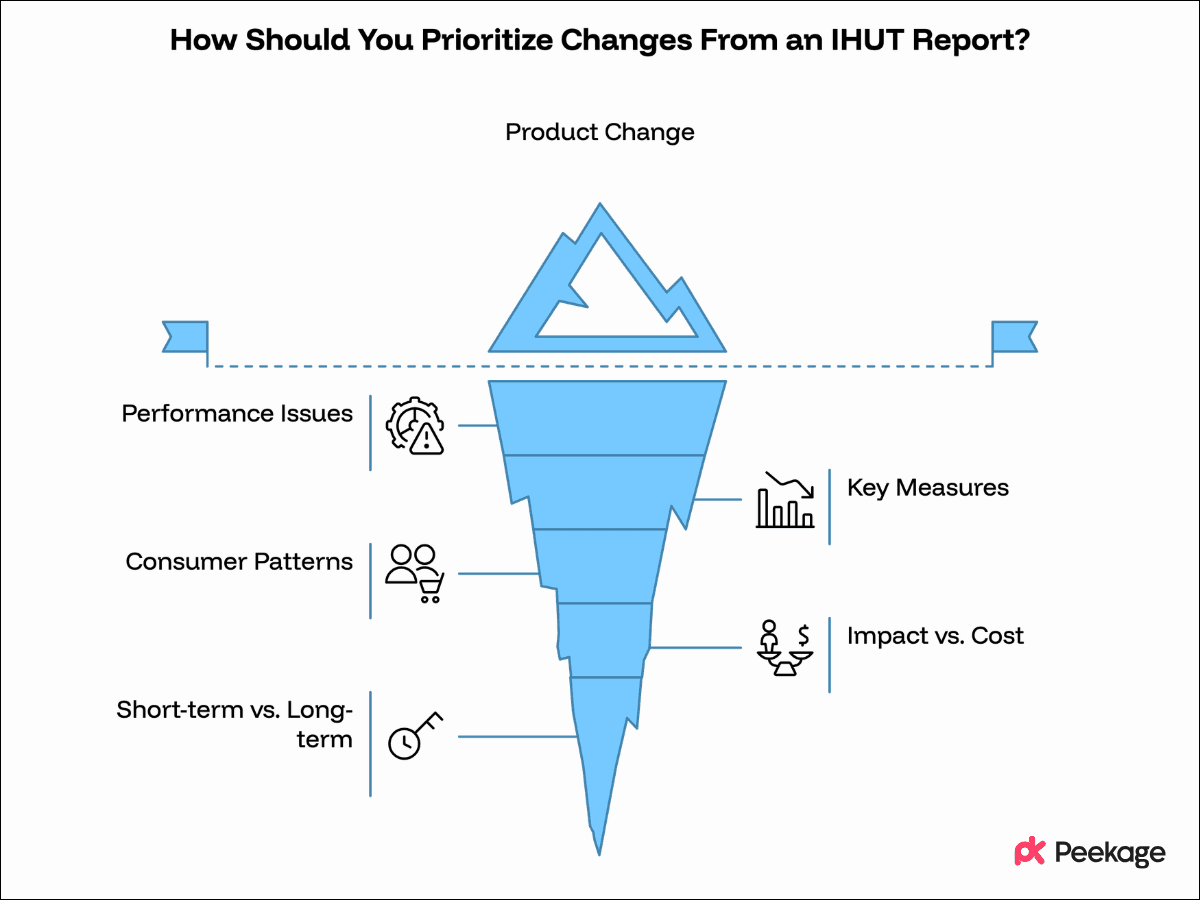
Not every finding needs an immediate product change. Use a few practical criteria to decide which issues deserve attention first.
- Fix product performance issues first. If the product does not deliver the expected result, address that before focusing on secondary improvements such as packaging or messaging.
- Prioritize issues linked to key measures. Problems that affect satisfaction, purchase intent, or other important study measures may deserve more attention than issues with little effect on the overall experience.
- Look for patterns across consumer groups. An issue reported by several different participant groups may indicate a broader product problem. Issues limited to one segment may require a more targeted response.
- Consider impact and cost. Weigh how many consumers are affected and how strongly they feel about the issue against the time and resources required to fix it.
- Separate immediate changes from longer-term improvements. Some findings can be addressed before launch through packaging, instructions, or messaging. Others, such as reformulation or new tooling, may need to go into a later development cycle.
How Can IHUT Reports Support Different Product Decisions?
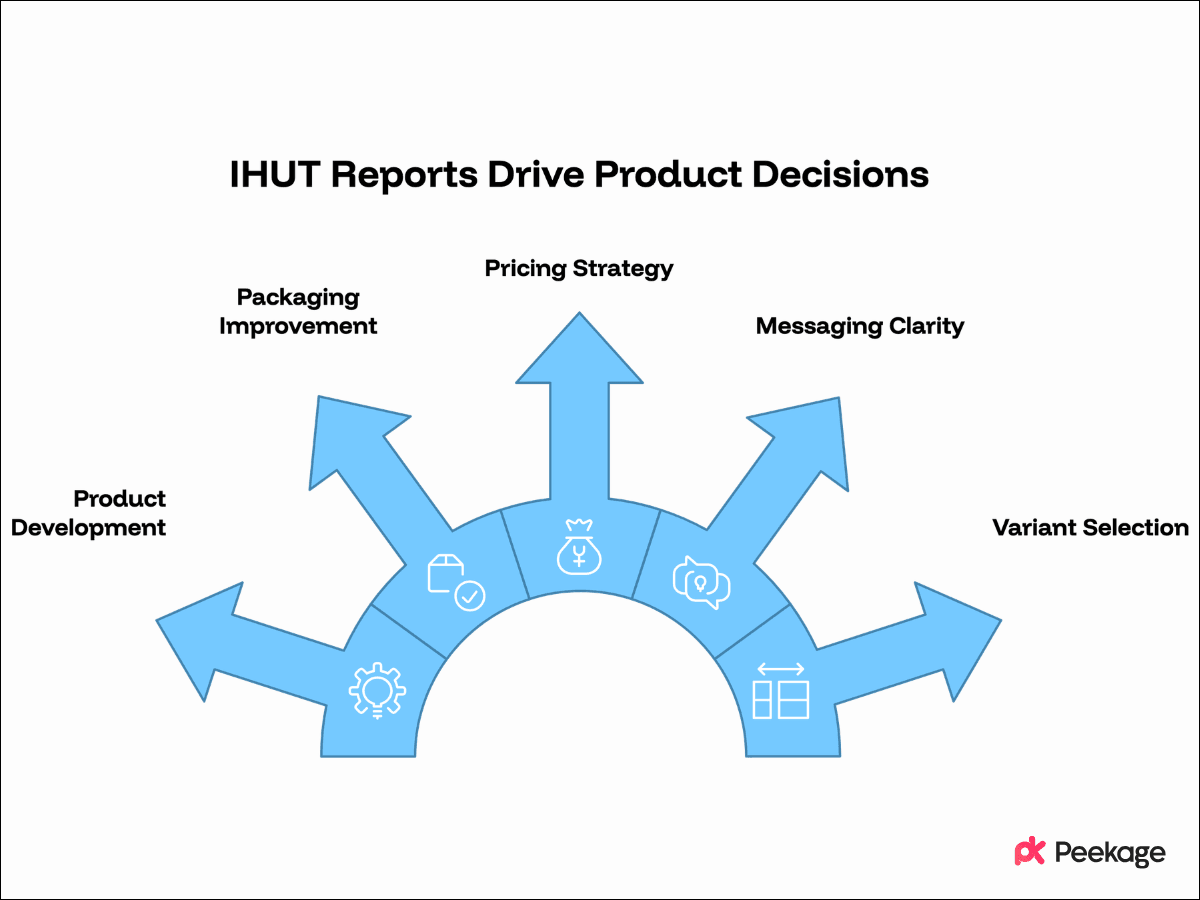
An IHUT report can support more than a simple go or no-go decision. Depending on what you test, the findings can inform:
- Product development: Identify changes to the formula, features, taste, scent, texture, or performance.
- Packaging: Show whether consumers understand the pack, find it easy to use, or see areas that need improvement.
- Pricing: Identify whether consumers see the product as good value and whether price affects purchase interest.
- Messaging and claims: Show which product benefits consumers notice and which claims may need clearer communication.
- Variant selection: Compare multiple products or formulas to identify which performs best and which needs further development.
When several variants are tested together, the report can also help teams decide which product is ready to move forward, which needs another round of testing, and which should be dropped.
What Should You Do After Interpreting an IHUT Report?
Interpreting the report is only the first step. Once you know what the findings mean, turn them into clear actions.
- Document the key findings and decisions. Keep the findings, supporting data, and agreed actions in one place so the reasoning behind product changes is easy to review later.
- Assign an owner and deadline. Each priority should have someone responsible for taking the next step and a clear timeframe for completion.
- Decide whether another test is needed. Minor changes may only need a short follow-up survey, while major changes such as reformulation may require another IHUT to confirm that the problem has been resolved.
- Use the findings in future research. Carry important learnings into future study designs. If consumers repeatedly raise concerns about a specific attribute, include it in the next test from the beginning.
How Peekage Helps Brands Turn IHUT Feedback Into Product Insights
Peekage supports IHUT studies end-to-end, from showing how to recruit participants to product fulfillment, feedback collection, and reporting. Brands can recruit from a 5M+ consumer panel using 200+ targeting attributes, manage product delivery, and collect feedback throughout the study.
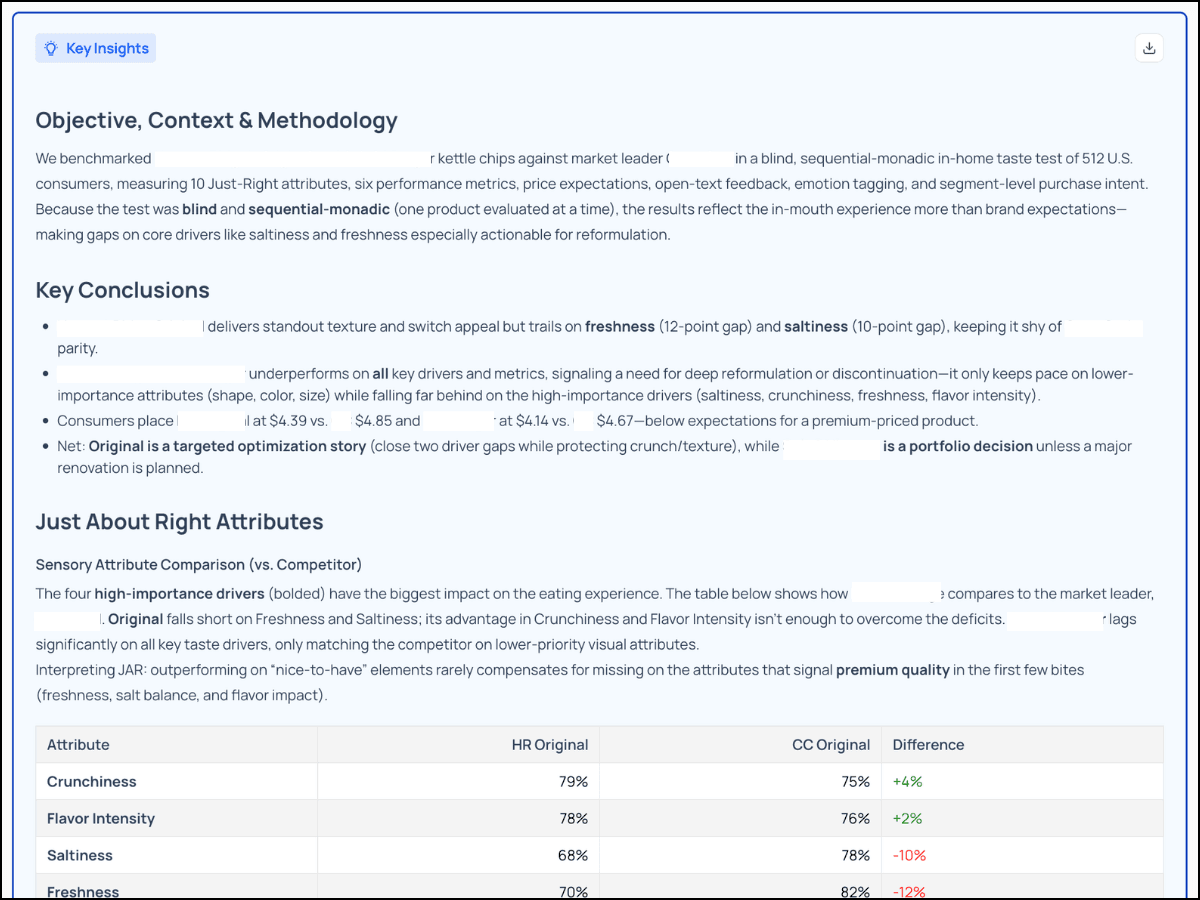
We recently ran an in-home usage test for a kettle chip brand that wanted to compare two of its products with a leading competitor. Testing with 512 U.S. consumers, we measured taste, texture, freshness, saltiness, crunch, flavor intensity, purchase intent, price expectations, emotions, and written feedback.
That's the raw data layer of the report. It shows the score for every attribute, side by side with the competitor, so you can see exactly where each product wins and where it falls short. For this brand, one product led on crunch and texture but sat 10 points behind on saltiness and 12 points behind on freshness. The written comments and emotion tags showed how people felt about each bite.
But the raw numbers are only part of it. The report also has a Key Conclusions section that reads the data for you and turns it into a clear takeaway. Here, it explained that the first product was a targeted fix (close the saltiness and freshness gaps while protecting its crunch), while the second product needed a deeper reformulation or a portfolio decision. It also flagged the strongest openings: 85% purchase intent for parties and social occasions, and as high as 94% among warehouse-club shoppers.
That is what turns feedback into product decisions. The raw data tells you what consumers thought. The key conclusions tell you which product to fix, which to rethink, and where each one has the best chance to win.
Contact Peekage to run your next IHUT and turn consumer feedback into clear product decisions.