
The cost of an In-Home Usage Test (IHUT) depends on factors such as the number of participants, product and shipping costs, incentives, recruitment, and study length.
IHUT testing services can cover different parts of the process, from participant recruitment and product fulfillment to feedback collection and reporting. A small test with a simple product can cost much less than a large study involving hundreds of participants, multiple product variants, or special shipping requirements.
In this guide, we'll break down the main costs of an IHUT, explain which factors have the biggest impact on your budget, show how to calculate ROI, and cover practical ways to reduce costs without compromising the quality of your research.
How Much Does an IHUT Cost?
There is no fixed price for an IHUT. The total depends on the number of participants, recruitment requirements, product costs, shipping, and incentives. It also depends on the consumer product testing platform you use to run and analyze the study.
| Cost factor | Typical cost or benchmark | What it covers |
|---|---|---|
| Participant recruitment | $20–$100 per participant | Finding and screening consumers who match your target audience |
| Participant incentives | $25–$75 per hour | Compensation for participants' time and effort |
| Niche audience incentives | $50–$200+ per participant | Higher incentives for harder-to-reach audiences |
| Product samples | Varies | Product or prototype provided to each participant |
| Packaging and shipping | Varies | Packaging, fulfillment, delivery, and replacement shipments |
| Survey and research tools | Varies | Survey creation, participant management, and study administration |
| Analysis and reporting | Varies | Data analysis, response review, and reporting |
These figures are general consumer research benchmarks rather than fixed IHUT rates. Understanding how IHUT works can help you see why costs vary based on the product, audience, sample size, study length, and research requirements.
The key is to budget for the complete study rather than looking only at participant incentives. Product samples, shipping, recruitment, and analysis can all add to the final cost.
What Factors Affect the Cost of an IHUT?
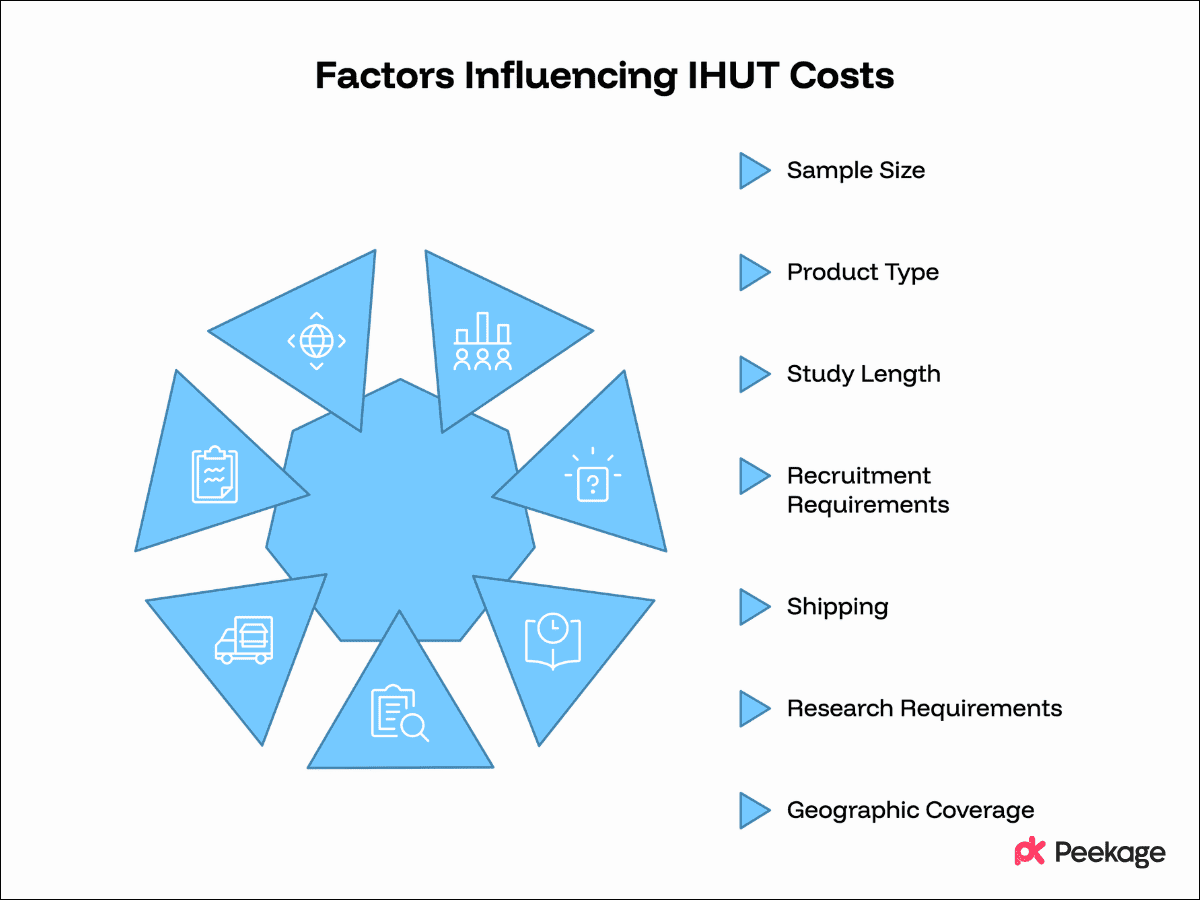
Several factors can increase or reduce the cost of an IHUT. The main ones are sample size, product type, study length, recruitment requirements, shipping, research requirements, and geographic coverage.
Number of IHUT Participants
Each additional participant usually adds costs for incentives, product samples, shipping, and data collection. Larger samples can also require more time to recruit and manage.
Product Type and Product Value
Product size, weight, value, and handling requirements can all affect the budget. A small shelf-stable product is generally simpler and cheaper to ship than a large, fragile, or high-value item. For expensive products, consider whether an IHUT is the most practical testing method for your research goal.
Study Length and Number of Usage Periods
A single-use test with one survey requires less participant management than a study that runs for several weeks. Longer studies may require multiple surveys, reminders, and incentives to keep participants engaged.
Participant Screening Requirements
The more specific your target audience, the more difficult recruitment can become. Narrow criteria can reduce the number of eligible consumers, which may require screening more people to reach your target sample.
Shipping and Product Fulfillment
Shipping costs depend on factors such as package size, weight, destination, and delivery speed. Fragile, refrigerated, or frozen products may also require special packaging and handling. Budget for replacement shipments in case products are lost or damaged.
Survey and Research Requirements
The number of surveys and feedback points affects both participant management and analysis. A study with pre-use, during-use, and post-use surveys requires more work than a single post-use questionnaire.
Geographic Coverage
A study in one market is generally simpler to manage than a multi-country IHUT. International studies may involve higher shipping costs, customs requirements, different currencies, and survey localization.
How Do You Calculate IHUT ROI?
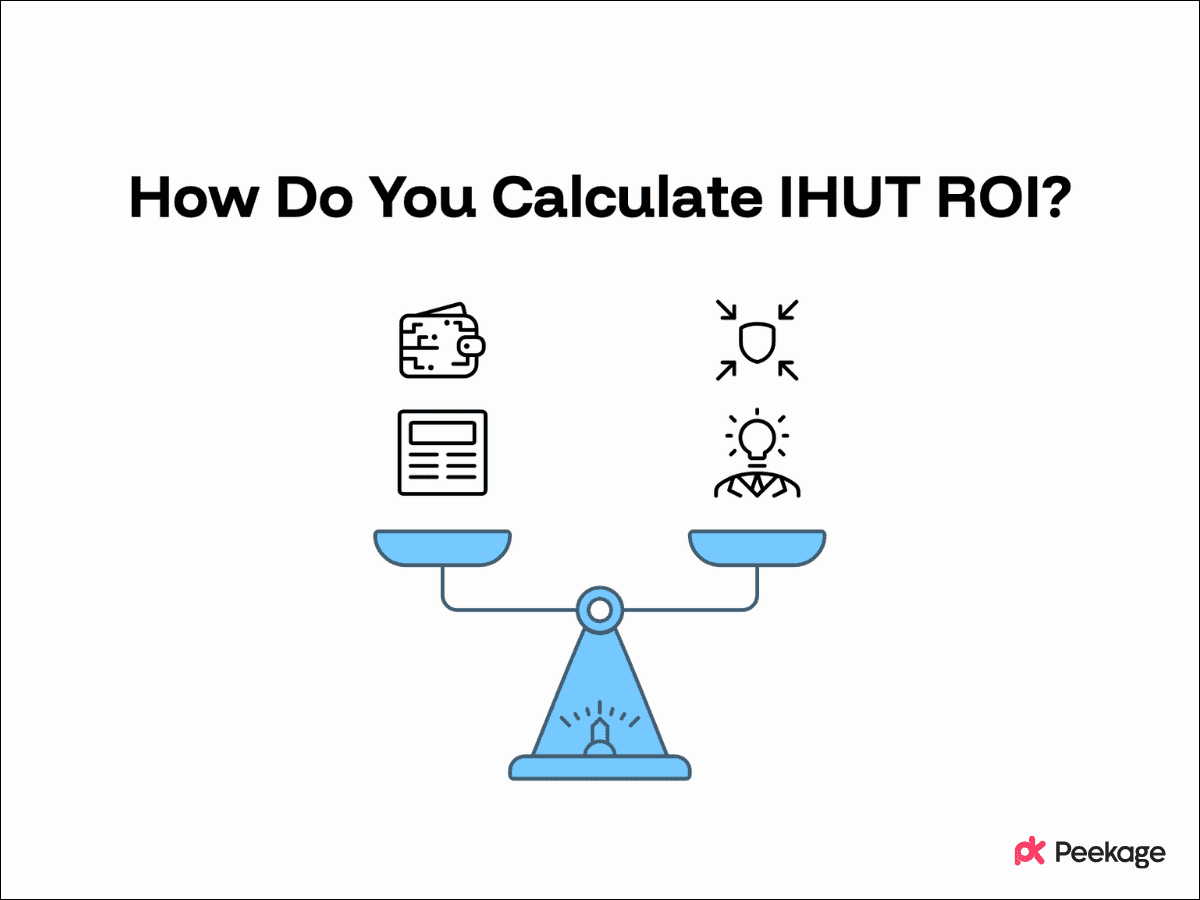
A simple way to calculate IHUT ROI is:
ROI = (Value generated or cost avoided − Total IHUT cost) ÷ Total IHUT cost × 100
The challenge is deciding what value to include. Depending on the study, an IHUT may help you avoid producing a product that consumers do not want, identify changes before launch, improve packaging, or increase the likelihood that a product meets consumer expectations.
For example, if an IHUT costs $10,000 and helps you avoid $50,000 in product development or launch costs, the ROI would be:
($50,000 − $10,000) ÷ $10,000 × 100 = 400%
You can also compare the cost of the study with the potential cost of making the decision without consumer feedback. The more expensive the decision, the more useful it can be to test key assumptions before committing additional resources.
What Does a Good ROI Look Like for an IHUT?
There is no universal ROI target for an IHUT. A useful benchmark depends on what the study is expected to influence and the potential cost of making the decision without consumer feedback.
For example, an IHUT that identifies a packaging problem before a large production run can help prevent wasted inventory.
Product testing can also identify improvements before launch. The value comes from how the findings affect the business decision.
How Can You Run an IHUT Without Breaking the Bank?
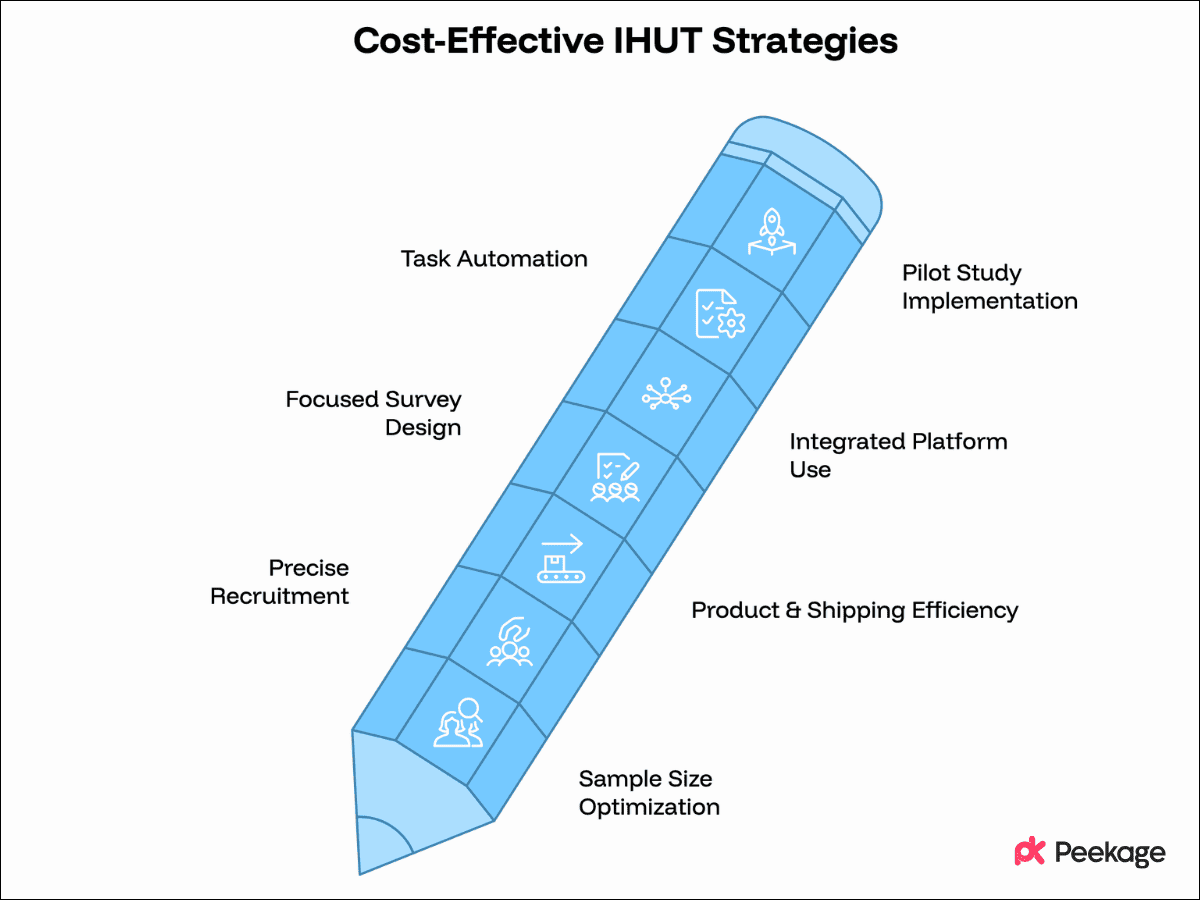
You do not need to cut the parts of an IHUT that protect data quality to reduce costs. Focus instead on matching the study design to your research goal and removing unnecessary work, products, and logistics.
Choose a Sample Size Based on Your Research Goal
Start with the decision you need the study to support, then determine how many participants you need to answer it.
Exploratory research can often use a smaller sample, while quantitative comparisons require more participants. Avoid adding participants simply to make the sample larger if they will not provide additional evidence for the decision.
Recruit Only the Consumers You Need
To recruit IHUT participants without unnecessary cost increases, define your target audience before recruitment and build screening questions around the characteristics that matter to the study.
For example, if you are testing a product used by parents of young children, screen for relevant household and product-use criteria instead of recruiting a broad group of consumers. This helps reduce recruitment costs and keeps the sample relevant.
Avoid Unnecessary Product and Shipping Costs
Calculate how much product each participant actually needs for the testing period. Avoid sending unnecessary extras, and use packaging that protects the product without adding avoidable costs. For shelf-stable products, standard shipping may be sufficient when the study does not require fast delivery. Perishable or temperature-sensitive products may need faster shipping and specialized packaging.
Keep the Survey Focused
Every question should help answer your research question or support a product decision. Remove questions that duplicate information collected elsewhere or will not be used in the analysis. If you need feedback at several points, use short check-ins rather than adding every question to one long final survey.
Use One Platform for Recruitment, Testing, and Feedback
Managing recruitment, surveys, participant communication, and reporting through separate tools can create additional subscription costs and manual work. An IHUT testing platform can bring these activities together, making it easier to manage the study and keep participant data in one place.
Automate Repetitive Research Tasks
Look for tasks you can automate, such as organizing survey responses, identifying common themes in open-ended feedback, and creating basic reports. Automation does not replace research judgment, but it can reduce the manual work needed to turn participant responses into usable findings.
Start With a Smaller Pilot IHUT
A pilot can help you find problems before you commit to a larger study. Test recruitment criteria, product instructions, the shipping process, survey questions, and the participant experience with a smaller group first. You can then fix issues before scaling the study, reducing the risk of spending money on a design that does not work as intended.
Where Can You Cut IHUT Costs Without Reducing Research Quality?
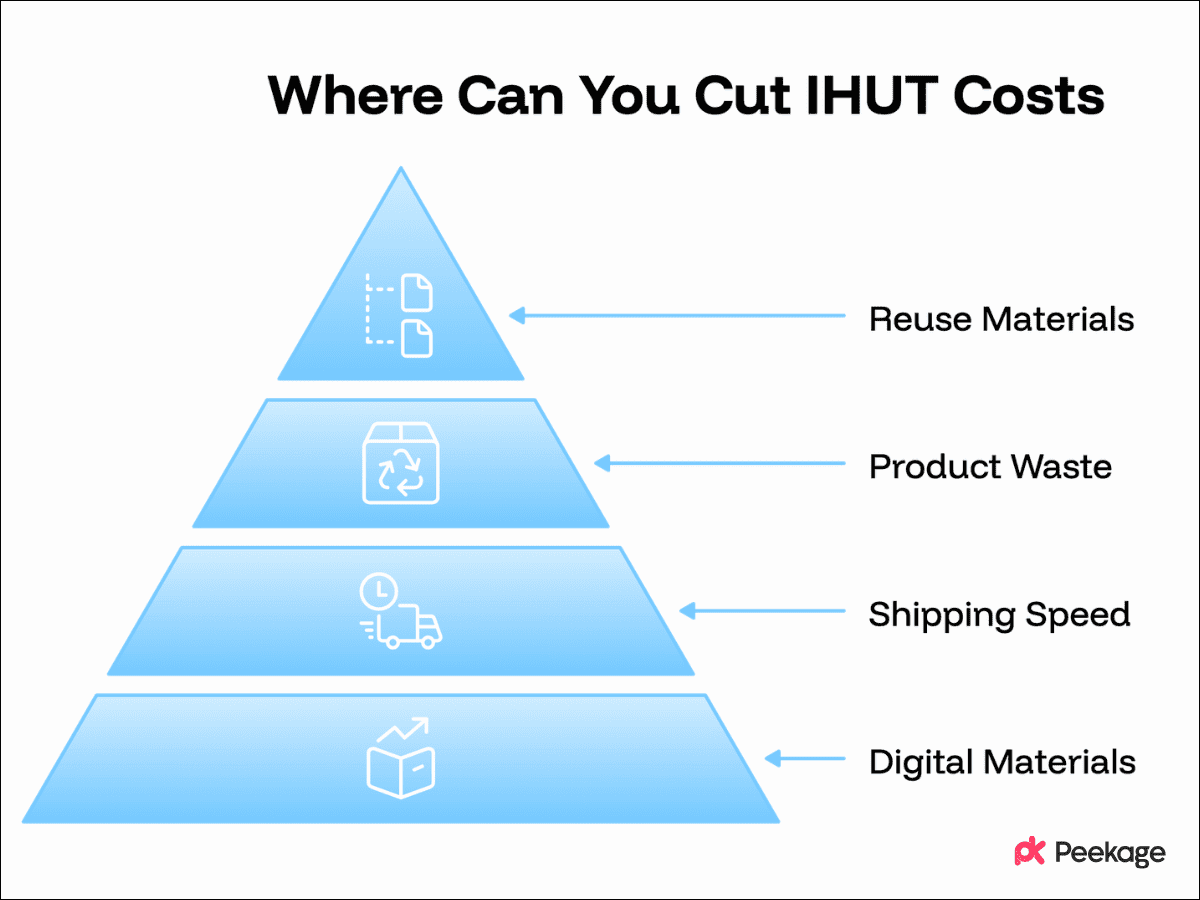
You can reduce IHUT costs without affecting data quality by cutting unnecessary operational expenses.
- Limit printed materials. Use digital instructions and surveys where possible to reduce printing and fulfillment costs.
- Choose the right shipping speed. Use standard delivery for shelf-stable products when the study timeline allows it. Reserve expedited shipping for products that need faster delivery.
- Reduce product waste. Plan sample quantities carefully so you have enough for participants and replacements without ordering significantly more product than needed.
- Reuse study materials. Create templates for participant instructions, consent forms, surveys, and communications so future studies require less preparation time.
How Much Should You Budget for an IHUT?
There is no standard IHUT price because costs depend on the sample size, product, incentives, shipping, study length, and research requirements. These ranges can be used as general planning examples rather than fixed industry benchmarks.
- Low-budget IHUT: $2,000–$5,000. Suitable for a small exploratory study with a simple product, limited participant requirements, and a single feedback survey.
- Mid-range IHUT: $8,000–$20,000. Suitable for a larger sample, higher participant incentives, multiple feedback points, and additional study management or analysis.
- Large-scale IHUT: $25,000+. More complex studies with large samples, multiple markets, higher-value products, longer usage periods, or extensive analysis can cost $25,000 or more.
Example IHUT Budget Breakdown
For example, a 100-participant study could have a budget like this:
| Line item | Estimated cost |
|---|---|
| Recruitment and screening | $2,500 |
| Participant incentives | $4,000 |
| Product and shipping | $3,000 |
| Platform and software | $1,500 |
| Analysis and reporting | $1,500 |
| Contingency | $2,000 |
| Total | $14,500 |
This is an illustrative budget, not a standard IHUT quote. A contingency can help cover unexpected costs such as replacement shipments, additional recruitment, or changes to study requirements.
How Peekage Helps Brands Control IHUT Costs
Peekage brings participant recruitment, product fulfillment, in-home testing, feedback collection, and reporting into one consumer product testing platform. Brands can recruit from a panel of 5M+ consumers using 200+ targeting attributes, including demographics, location, lifestyle, shopping habits, and product usage.
The platform also handles product packaging, shipping, delivery tracking, participant communication, surveys, and feedback collection. AI-supported analysis helps identify patterns and themes in responses, giving teams a faster way to review testing data and find areas for improvement.
Our pricing depends on the size of the consumer panel, testing method, product requirements, and other study details. There is no fixed price for every test. Talk to the Peekage team and share your research goals to get a quote based on your study.