A well-designed in-home usage test is only as useful as the people taking part in it. If your participants don't match your target consumers, their feedback may not reflect how the product will perform in the real market.
The right recruitment process helps you find consumers who fit your target audience, use the product in realistic conditions, and provide feedback you can act on.
In this guide, we'll cover how to define your target participant, where to find them, how to screen them, and how many consumers you need for an effective IHUT.
Why is Finding the Right Consumers Important for In-Home Product Testing?
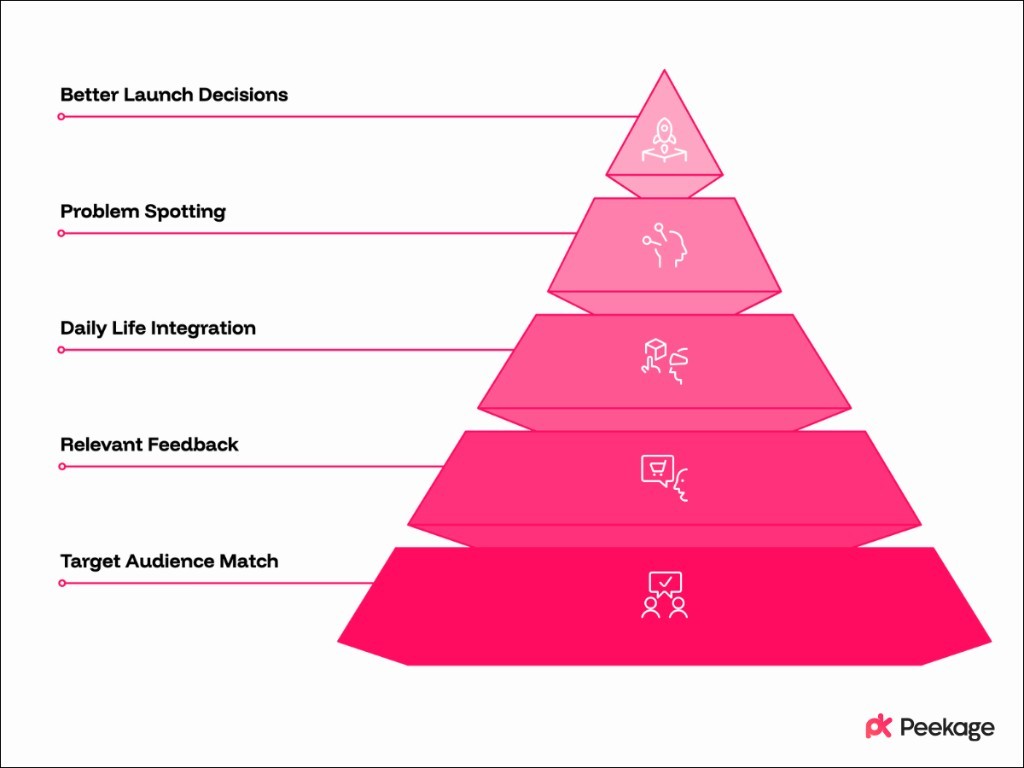
With in-home usage testing, or IHUT services, you put your product in the hands of real consumers who use it at home and report back on their experience. But the results are only useful if those consumers match your target audience.
Finding the right participants matters because they help you:
- Get relevant feedback: Consumers who fit your target profile can give you feedback that reflects the needs and preferences of your actual buyers.
- See how the product fits into daily life: Real consumers may store, use, or interact with the product differently than they would in a controlled testing environment.
- Spot problems before launch: Participants can uncover issues with packaging, instructions, convenience, taste, texture, or product use that may not appear in a lab.
- Make better launch decisions: Reliable feedback from the right consumers gives your team stronger evidence when deciding what to change, improve, or take to market.
For example, sending a plant-based creamer to people who drink their coffee black may produce genuine feedback, but it won't tell you much about how your target buyers are likely to respond.
How to Define Your Target Consumer Profile Before Recruiting
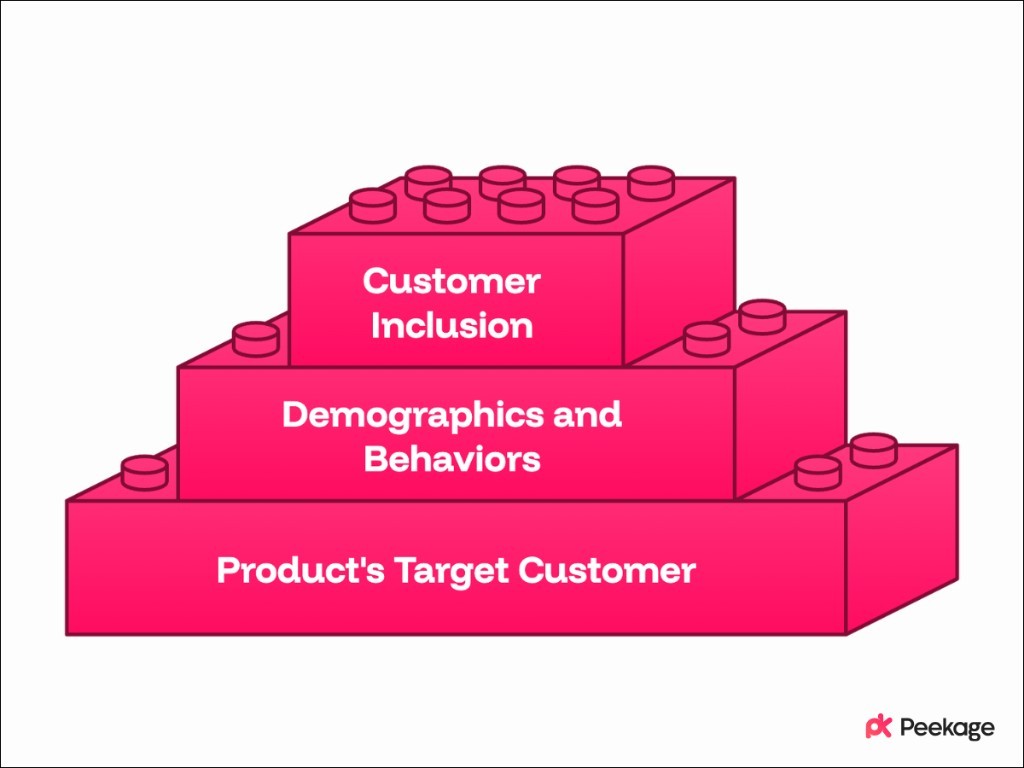
Before you recruit participants, define exactly who you want to test. This profile will guide your screening criteria and help you build a sample that reflects your target market.
1. Start With Your Product's Target Customer
Start with the buyer persona your team already uses for positioning. If you've already used concept testing services, use those findings to confirm who showed the strongest interest in the product and why.
Then consider whether your product serves an established category or aims to attract a new type of buyer. A better-for-you tortilla chip is likely to target existing chip buyers. A shelf-stable protein shake for seniors may require a broader definition of the target consumer.
2. Identify the Demographics and Behaviors That Matter
Age, gender, and location can help define your audience, but behavior often tells you more about how someone will respond to the product.
For a CPG study, useful screening criteria can include:
- Category purchase frequency: How often they buy products in the category
- Household composition: Whether they live with children, pets, or other household members
- Dietary or sensitivity needs: Relevant allergies, intolerances, or dietary preferences
- Competitive brand usage: Which competing products they currently buy or use
Category experience can be especially useful when recruiting testers. Someone who regularly buys hot sauce, for example, can provide more relevant feedback than someone who only fits your target age group.
3. Decide Whether to Include Customers, Non-Customers, or Both
Your existing customers can show whether a new product or reformulation meets the expectations of people who already buy from you. Non-customers can help you understand whether the product appeals to new buyers.
You may also want to include people who currently use competing brands. This can show how your product compares with the alternatives consumers already have at home.
For some studies, combining these groups gives you a broader view of both customer satisfaction and new-user appeal.
Where CPG Brands Can Find Consumers for In-Home Product Testing
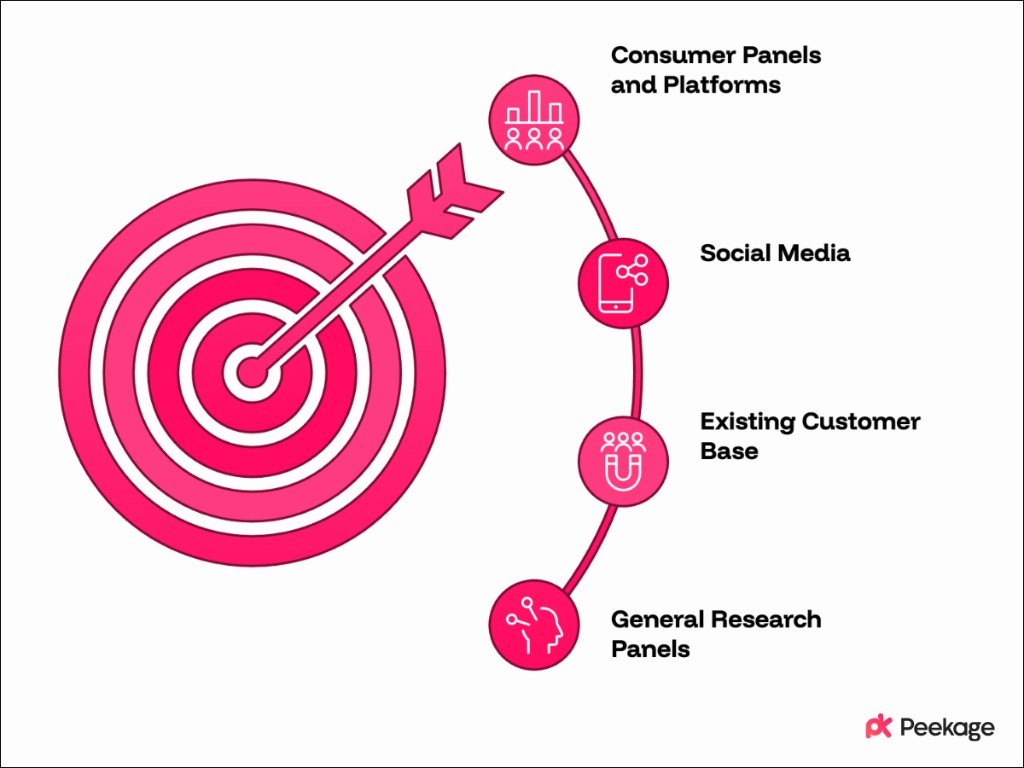
CPG brands can recruit IHUT participants through several channels. The best option depends on your target audience, timeline, and how specific your screening criteria are.
Use a Consumer Product Testing Platform to Simplify Recruitment
Consumer product testing platforms give you access to pre-profiled participants and built-in targeting tools. For example, Peekage has a network of more than 5 million consumers and over 200 targeting attributes covering demographics, purchase habits, dietary preferences, and lifestyle.
You can use these filters to find consumers who match your target profile, then add custom screening questions when you need more specific information.
Recruit From Your Existing Customer Base
Your CRM, email list, and loyalty program can be useful sources of participants, especially when you already have a large customer base.
The main limitation is that your customers already know and may prefer your brand. That can make this approach less suitable when you're testing whether a product can attract new buyers or comparing it with competitors.
Reach Consumers Outside Your Current Audience
General research panels can give you access to a broad pool of consumers, while CPG-focused panels may offer more detailed information about shopping habits, household composition, and category use.
The tradeoff is usually reach versus relevance. A general panel can fill a large sample quickly and often costs less, but you may spend more effort screening out people who don't fit. A CPG-focused panel tends to cost more per participant, yet its richer profiling can reach niche category buyers, such as regular buyers of plant-based frozen meals, with far less screening.
When choosing a panel, check how often participants take part in research. Frequent testers may respond differently from typical shoppers, which can affect your results.
Use Consumer Panels and Product Testing Platforms
Consumer panels and product testing platforms give you access to pre-profiled consumers who can be filtered by demographics, purchase habits, household characteristics, and other criteria. This can make recruitment much faster than finding and screening participants from scratch.
For CPG brands, a product testing platform such as Peekage can be especially useful because you can target consumers based on more than 200 attributes and add custom screening questions when needed. This lets you build a participant pool that closely matches your target consumer before the study begins.
Recruit on Social Media
Facebook, Instagram, and similar social platforms can help you reach consumers who match specific demographics, interests, locations, or life stages. You can recruit through organic posts in your brand community or use paid ads to target a narrower audience.
For example, a CPG brand could run an Instagram ad targeting parents of young children in a specific city or use Facebook groups to reach people interested in a particular product category.
Social media can be especially useful for harder-to-reach audiences, but you'll need a screening process to confirm that respondents meet your study criteria. Using the same screener across social media and other recruitment sources also helps keep your participant pool consistent.
How to Recruit Consumers for Your Product Testing Study
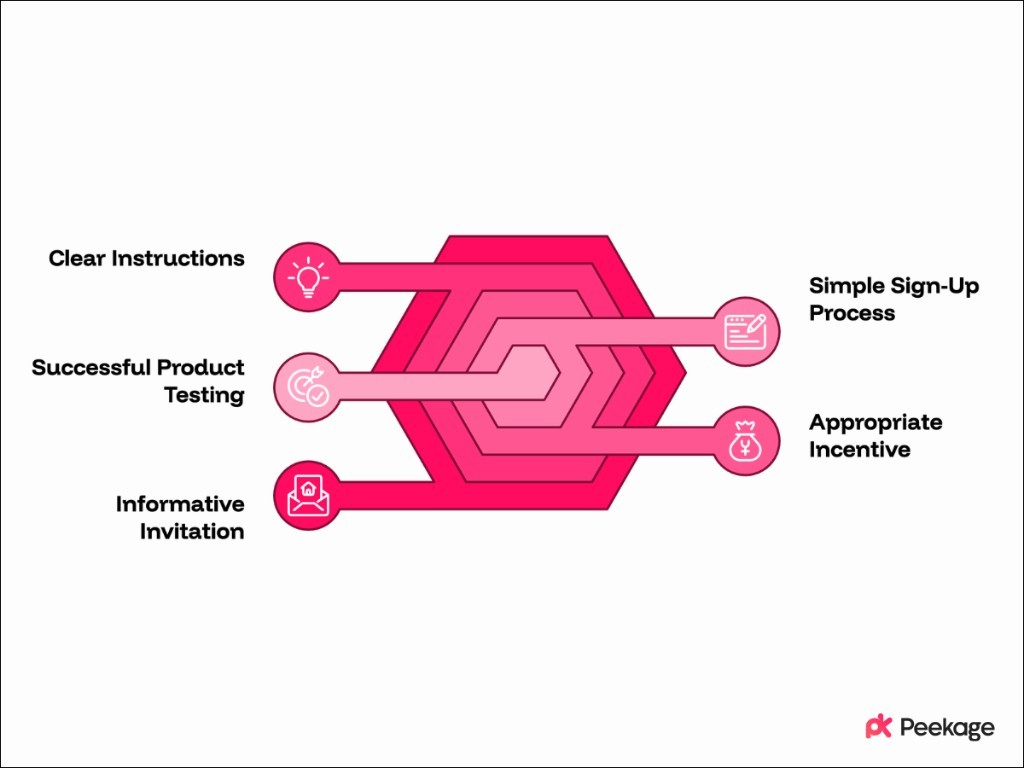
Once you've identified your target audience, your invitation and sign-up process should make it clear what participants can expect.
Write a Clear Product Testing Invitation
Explain what the product category is, how long the study will take, and what participants will need to do. Keep the language simple and avoid research terms that participants may not understand.
For example, “Try a new snack at home and tell us what you think” is clearer than a description filled with research terminology.
Explain What Participants Will Need to Do
Tell participants what the study involves before they sign up. Include how long they will use the product, how many surveys they will complete, and whether they need to submit photos or videos.
If the product requires assembly or specific usage conditions, provide clear instructions with the shipment. This helps participants use the product correctly and ensures their feedback focuses on the product itself.
Offer the Right Incentive for Participation
Match the incentive to the time and effort required, then set the amount against how long the study runs and how hard the audience is to reach. For example:
- Keep the product: A one-week snack or skincare trial where participants use the product a few times and complete one short survey. Letting them keep the product is often enough on its own for a light study like this.
- Gift card (around $20 to $50): A two-week household cleaner test that requires several surveys and a final review. The amount usually rises with the number of surveys and the length of the fieldwork.
- Cash ($50 to $150 or more): A demanding study that requires daily feedback, photos, or videos, or one that targets a harder-to-reach consumer group. Specialized or low-incidence audiences generally need more to take part.
The goal is to offer enough to encourage participation without making the reward the main reason someone joins the study. Be clear about the incentive and when participants will receive it before they sign up.
Make the Sign-Up Process Simple
Keep your screener short, clear, and mobile-friendly. Only ask questions that help determine whether someone fits your study criteria.
A long or confusing sign-up process can cause qualified participants to drop out before they finish.
How to Screen and Select Consumers for an IHUT
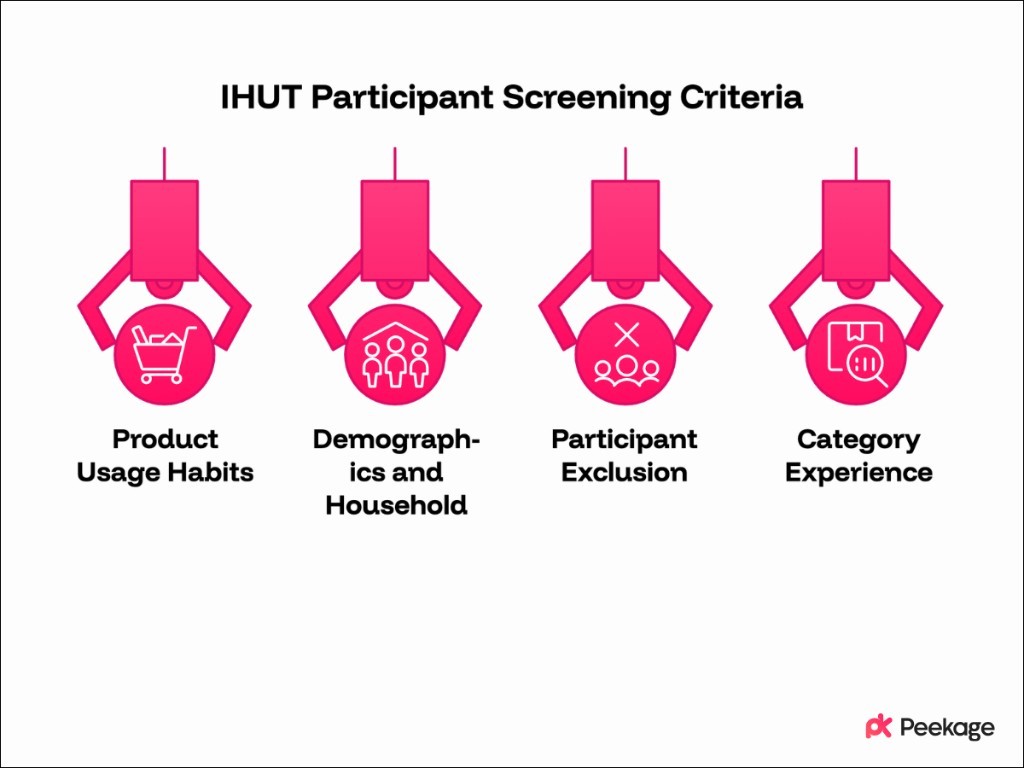
A screener is a short set of questions that helps confirm whether someone fits your study criteria. The goal is to verify relevant behaviors and characteristics before selecting participants.
Ask Questions About Product Usage and Purchase Habits
Ask about actual behavior rather than what people think they might do. For example:
- Weak: “Do you buy frozen pizza?”
- Better: “How many times have you bought frozen pizza in the past month?”
The second question gives you a more specific measure of category usage and makes it easier to group participants based on purchase frequency.
Screen for Relevant Demographics and Household Details
Confirm the demographic and household details that matter for your study, such as age, household size, location, or income.
For food and personal care products, you may also need to screen for allergies, dietary restrictions, or sensitivities. Confirm these requirements before shipping the product.
Remove Participants Who Don't Match Your Criteria
Exclude participants who don't meet your screening criteria or who fall outside your required quotas. You may also want to limit people who take part in research studies very frequently, as they may have more experience with testing than typical consumers.
Make sure category experience matches your research goals.
- If you're testing an established product category, regular category buyers may provide more relevant feedback.
- If you're testing a new category, including non-users may help you understand whether the product can attract new consumers.
How to Select the Right Consumers and Make the Final List for Your In-Home Test
Once you've screened participants, use your target profile to build the final sample. Look beyond who qualifies and make sure the group reflects the segments you need to study.
- Match participants to your target profile: Review qualified applicants against your original criteria rather than simply selecting people in the order they responded.
- Balance your consumer segments: If you plan to analyze three segments separately, each segment needs enough participants to produce useful results. A total sample of 150 won't necessarily give you three reliable groups of 50.
- Confirm participant availability: Check shipping details, delivery timing, and whether each participant can complete the study within your fieldwork window. Someone who is unavailable for part of the study may become a dropout.
- Keep backup participants: IHUT completion rates can range from 65% to 90%, so recruiting more participants than your target gives you a buffer for dropouts. Keep qualified backups ready to replace participants who don't complete the study.
How Many Consumers Should You Recruit for an In-Home Test?
For most CPG IHUTs, a practical range is 50 to 200 consumers per product or test group, though smaller exploratory studies can work with fewer. The right number depends on whether you're looking for early feedback, directional results, or a more statistically reliable comparison.
- 10 - 20 consumers per test group: Good for exploratory testing and identifying obvious issues with taste, texture, packaging, or ease of use.
- 30 - 75 consumers per product or test group: Useful for directional feedback and identifying stronger patterns across consumers.
- 100 - 200+ consumers per product or test group: Better for quantitative testing, product comparisons, and studies where you need more stable results or subgroup analysis.
- Add 20% - 30% for dropouts: Recruit above your required final sample so you still reach your target if some participants don't complete the study.
If you plan to analyze segments separately, apply these numbers to each segment rather than the study as a whole, since every group you want to report on needs enough participants of its own.
For studies that need statistical significance or precise estimates, calculate the sample size based on your study design, expected differences, confidence level, and margin of error rather than relying on a fixed IHUT number.
How Peekage Helps CPG Brands Find and Recruit Consumers for IHUTs
Recruiting participants, screening them, managing product delivery, and collecting feedback can take a lot of time when handled separately. Peekage brings these steps together in one platform.
- Access a large consumer panel: Reach more than 5 million consumers using over 200 targeting attributes, including demographics, purchase habits, dietary preferences, and lifestyle factors.
- Add custom screening questions: Screen for specific requirements that aren't covered by standard panel data, such as ingredient familiarity or household characteristics.
- Build studies with AI-guided tools: Describe your research goal in plain language and use the platform to help configure your questionnaire.
- Manage product delivery: Coordinate packaging, shipping, and delivery tracking, including frozen, refrigerated, and blind-label products.
- Review results in one place: Use a live dashboard to review responses and identify the factors driving consumer preferences.
Wise Snack used Peekage for new product development and reported saving 70% on product development costs.
If you're planning an IHUT, talk to the Peekage team to see how the platform can support your study.