
Concept testing is a research method that evaluates consumer reactions to a product idea, feature, or positioning before full development or launch. The goal is to learn whether people understand the idea, find it useful, and worth buying.
What you ask during these tests is much more important than running a concept test itself. If your team runs a survey to test a concept and collects hundreds of responses, you can still make the wrong decision because you did not ask the right questions.
Since we have run hundreds of product concept tests and helped our clients identify the right questions for their surveys, we’d love to share what we’ve learned with you. In this article, we’ll walk you through the types of questions that actually produce useful answers, show you specific examples, and explain how to avoid the mistakes that lead to confident but wrong decisions.
What Are Concept Testing Questions?
Concept testing questions are the specific prompts that measure how consumers react to a product idea before it exists in its final form. The questions you ask determine whether you leave with insight or just data.
Testing a concept simply means showing people your idea. Asking the right questions about that concept means learning whether they'd buy it, what confuses them, what excites them, and how it compares to what they already use.
General survey questions ask broad things like "How satisfied are you with your current product?" Satisfaction or usage questions focus on existing experiences. Concept testing questions focus specifically on evaluating something that doesn't exist yet, which requires different wording and a different interpretation.
Why Do the Right Questions Matter in Concept Testing?
The questions you ask can completely change the results you get. If the questions are unclear or biased, they can make a bad idea seem like a good one, or hide a great idea behind confusing feedback.
Good questions help you make better decisions. Poor questions can lead people toward certain answers, making it look like customers like your idea when they actually don’t.
Wrong questions also hide problems. If you ask vague or “what if” questions, people may respond positively, but real concerns never come up. That’s why some products test well but fail once they launch. The testing didn’t uncover what would actually stop people from buying.
The cost adds up quickly. Eight in ten products fail, often because the testing process didn't reveal what consumers actually needed. Even one poorly written question can lead a company to build the wrong features or communicate the wrong message.
However, our customers are protected against making such mistakes with questions. Peekage offers concept testing services through a dashboard for creating your survey questions by yourself or with the help of our team once we understand your goal. If you need support, we guide you through the entire process, from designing the questions to running the survey and analyzing results.
What Are the Different Types of Concept Testing Questions?
Concept testing often fails because people ask different kinds of questions without a clear plan. When a survey jumps randomly from one question to another, the answers become confusing and hard to use. Grouping questions by purpose helps you understand what the feedback really means.
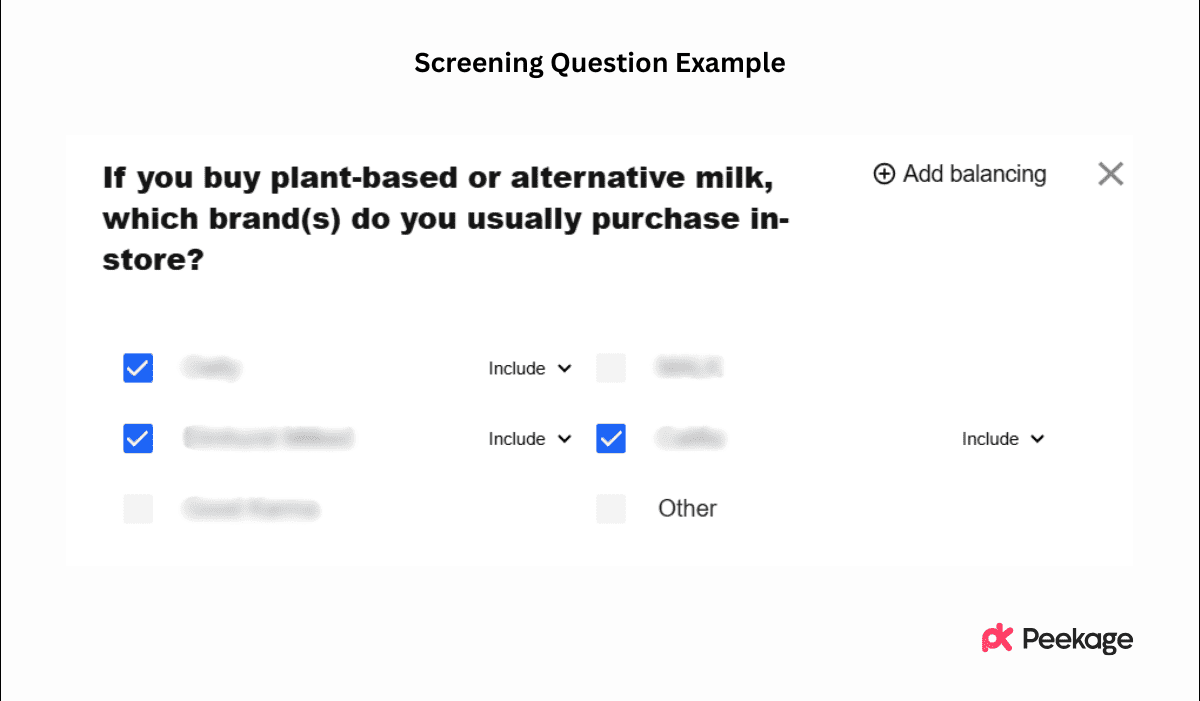
Screening Questions
You need to make sure you’re talking to the right audience, so the first thing that comes up are screening questions.
These questions check things like whether someone buys products in that category, how often they purchase, or basic details about them. Because if someone never buys that type of product, their opinion won’t help you decide what to build. This means that your weak screening will lead to weak results, no matter how good your survey is.
Appeal and Relevance Questions
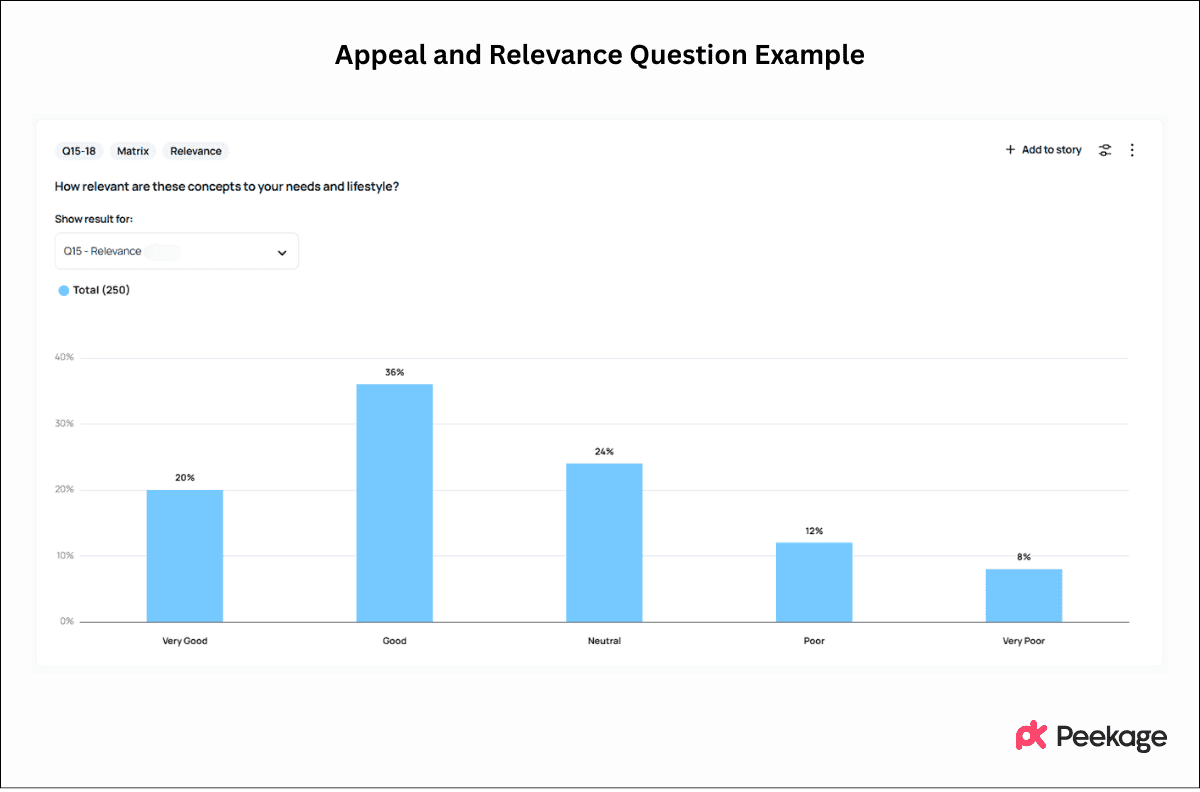
Appeal questions look at first impressions. They tell you whether something looks interesting or attractive at a glance.
Relevance questions go a step further. They ask if the idea actually matters to someone’s life. A product can sound nice without being useful. When people like an idea but don’t see it fitting into their lives, they usually don’t buy it. So, appeal gives early signals, relevance tells you if the idea has real potential.
Concept Validation Questions
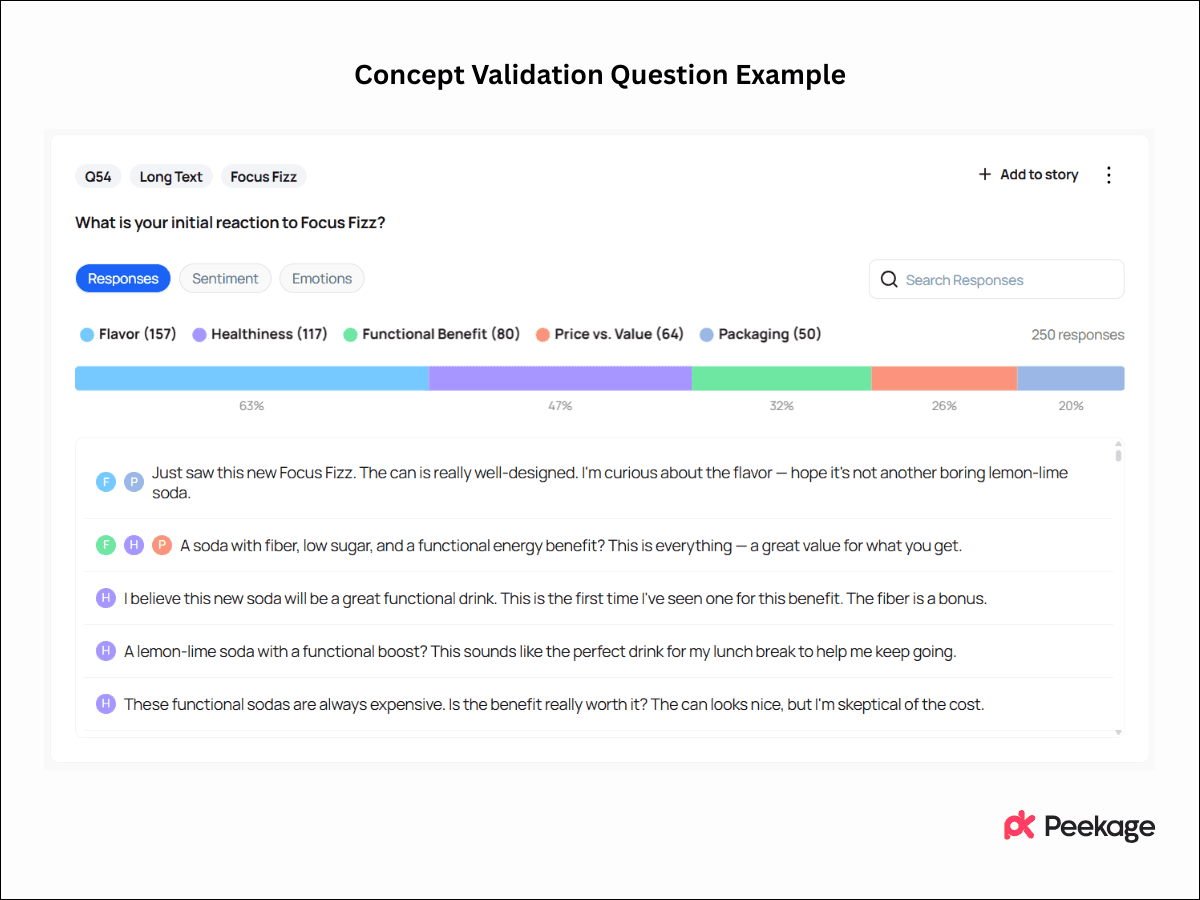
These questions check if the idea makes sense in real life.
They focus on usefulness and whether the concept solves an actual problem. The goal isn’t to get praise, it’s to learn if the idea truly works. When teams only look for confirmation, they miss important flaws that show up later.
Purchase Intent Questions
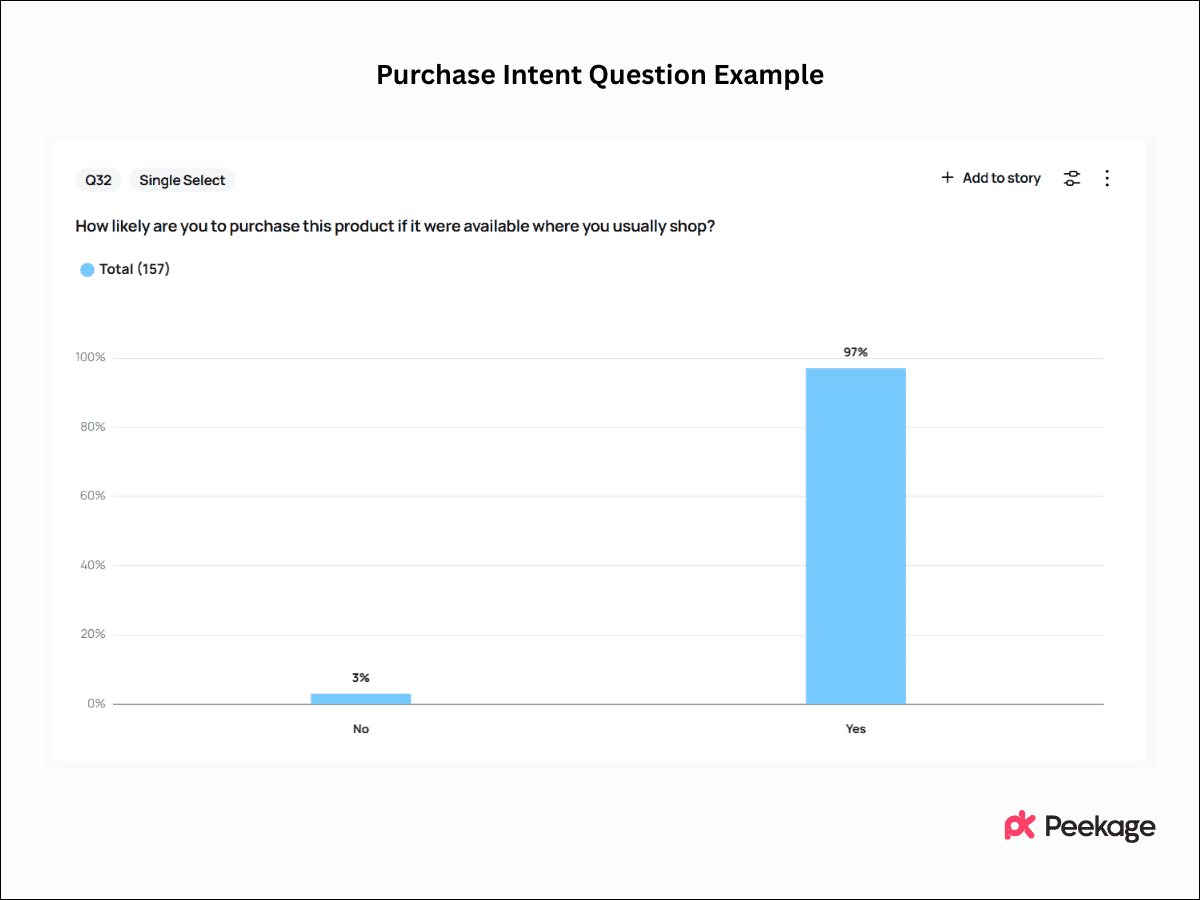
Purchase intent questions ask people if they say they would buy the product. They show interest, not commitment.
Because people are reacting to an idea and not a real product, these answers are often optimistic. Strong purchase intent doesn’t guarantee real buying behavior. Use these questions as a supporting signal, not as the main data to move forward.
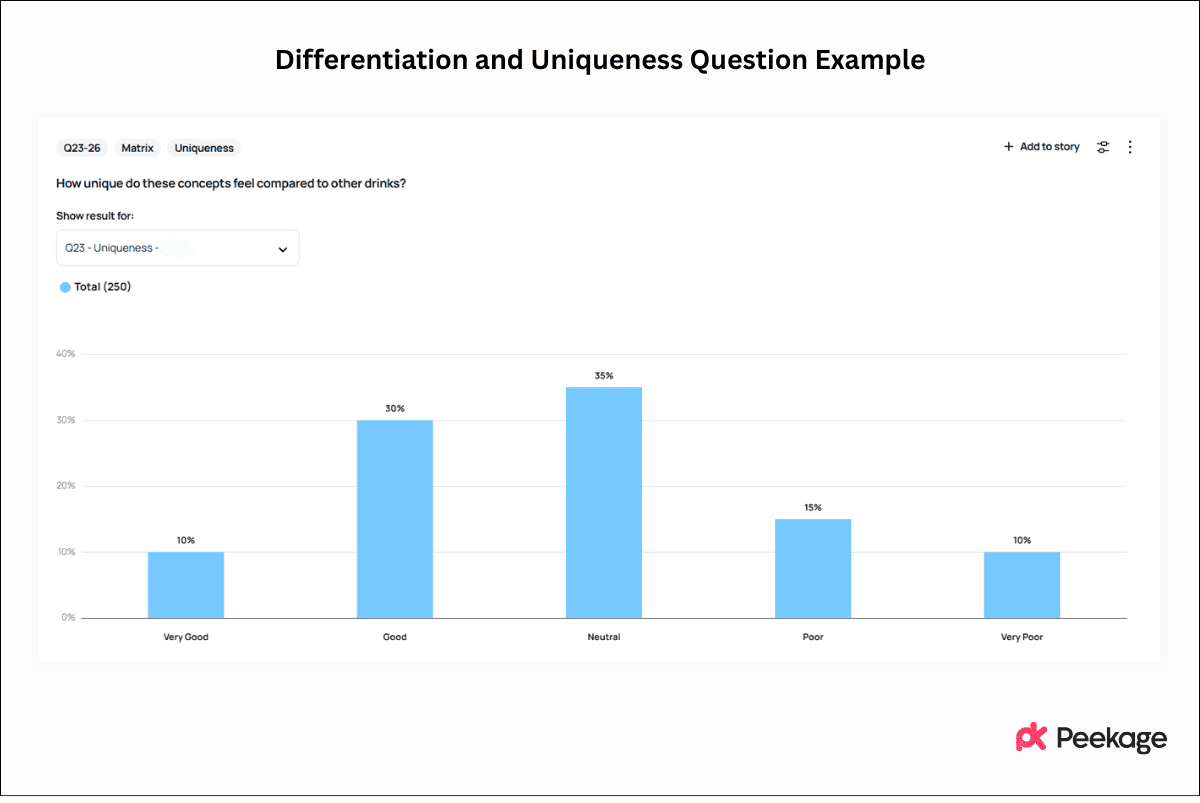
Differentiation and Uniqueness Questions
These questions check if people see your idea as different from what is already out there.
If you ask about uniqueness by itself, people often overrate it. Asking them to compare it to existing products gives a more realistic view. This helps you understand if your concept really stands out or just blends in with what is already available.
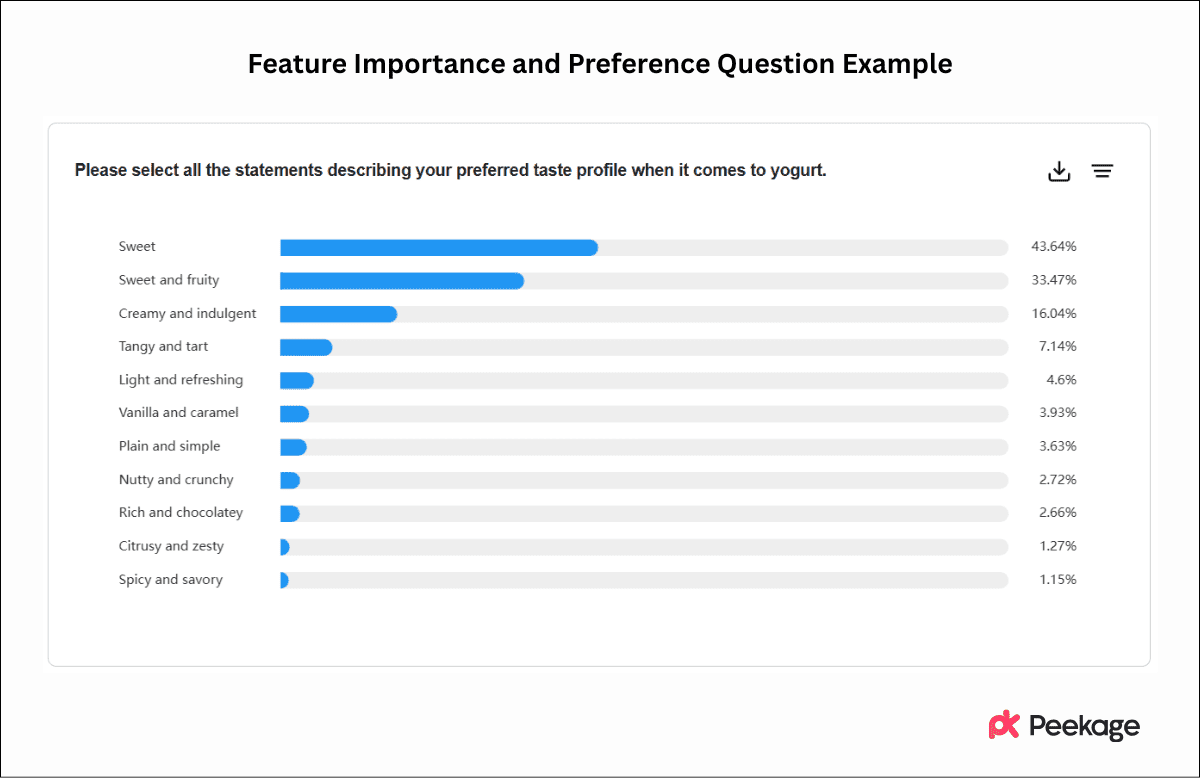
Feature Importance and Preference Questions
Not all features are equally important. People may like many features, but only a few actually influence their decision to buy.
These questions help identify which features matter most by making respondents focus on priorities. This prevents teams from thinking everything is equally important and guides which features to build first. It helps keep the product focused and manageable.
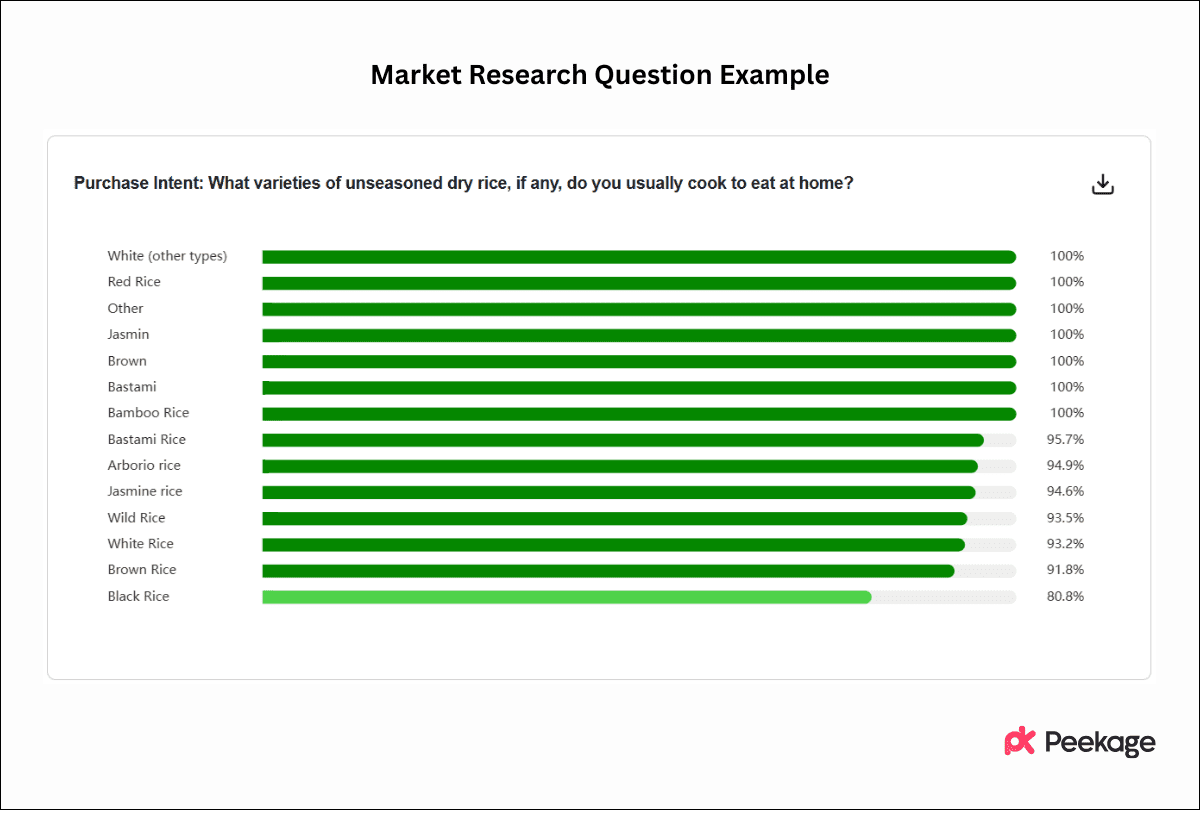
Market Research Questions
Market research questions give background and context instead of judging your idea. They explore how people currently solve a problem, what alternatives they use, and what they expect from products in the category. These questions set the stage for the survey and help interpret later feedback, but they do not prove whether your concept will succeed.
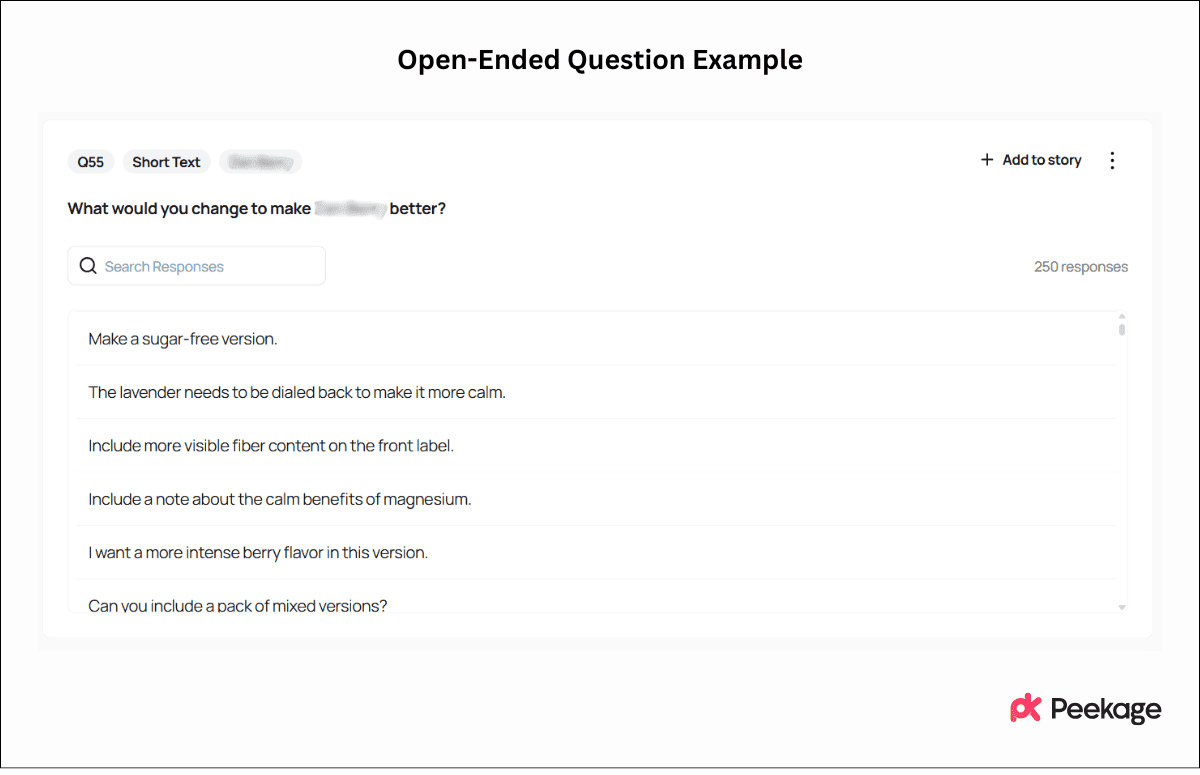
Open-Ended Questions
Open-ended questions help explain the reasons behind the scores people give. They reveal patterns and insights that numbers alone can miss. Even feedback from a small group can uncover important issues that averages hide. These responses are very useful, but too many can make analysis harder without adding real value.
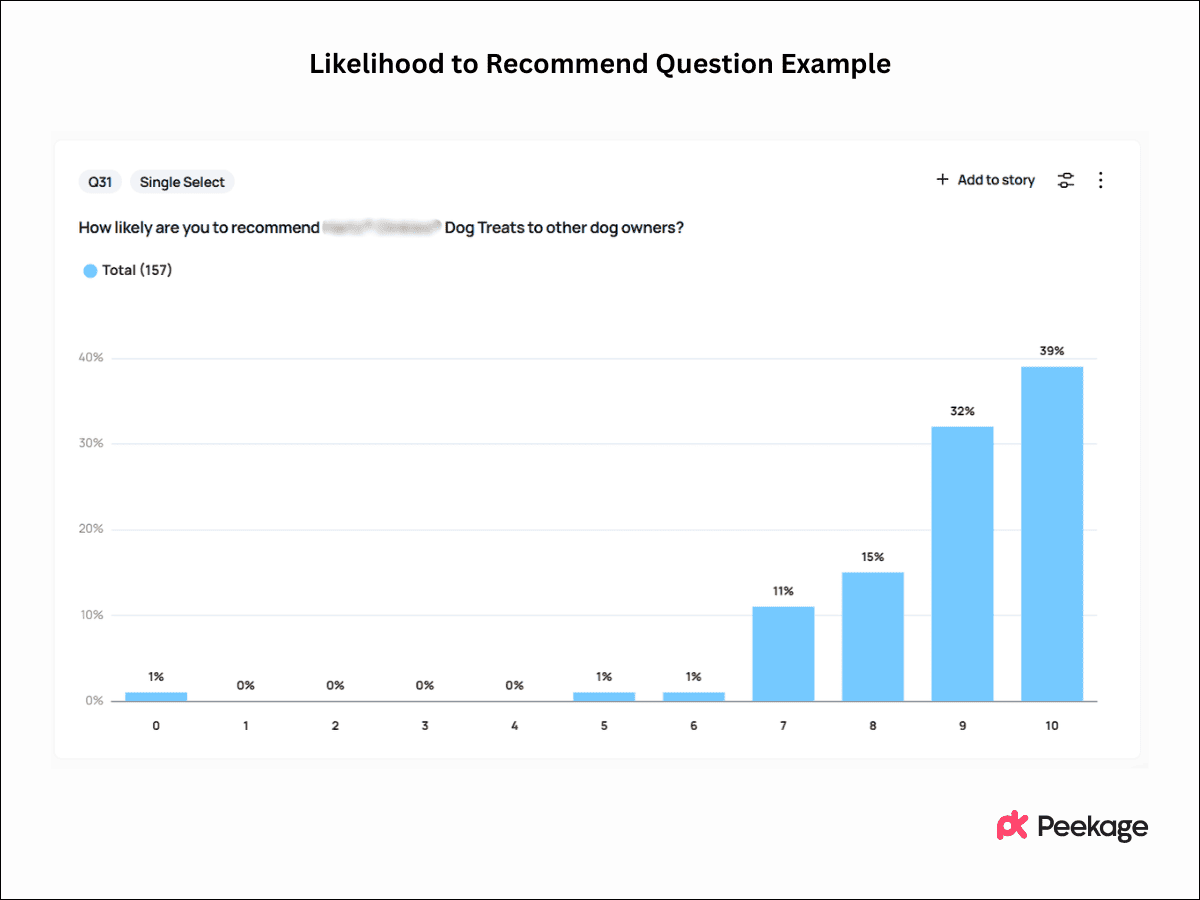
Likelihood to Recommend (Net Promoter Score) Questions
These questions measure overall enthusiasm for the idea, even if someone does not need it personally. They show how likely people are to share or suggest the concept to others. At the early concept stage, this is only a general signal of interest and should not be treated like a loyalty metric for a finished product.
Examples of Concept Testing Questions that Help You Make a Better Decision
Examples work best when adapted, not copied blindly. The specific wording depends on your audience, your concept, and what you're trying to learn.
Example #1: If this were available right now, how likely would you be to try or buy it?
This question measures purchase or trial intent directly. It helps determine whether the product creates genuine interest and how strong early demand can be within your target audience.
Example #2: Which parts of this product feel most useful to you?
This reveals perceived value. It tells you which features or benefits matter most to users and what should be prioritized in product development and messaging. Practically, it helps avoid overbuilding features that don't drive value.
Example #3: What are the top reasons you'd want to use this product, and what can hold you back?
This diagnostic open-ended question uncovers motivators that attract users and barriers that could prevent adoption in a single response. If trust issues come up repeatedly, you know to address credibility before launch.
Example #4: Compared to what you use today, what feels better, worse, or different about this product?
This provides a competitive context. It reveals whether differentiation is clear and where existing alternatives still perform better.
Example #5: On a 1-10 scale, how well does this product meet your needs?
This measures overall perceived fit and value. It differs from purchase intent because a product can feel valuable without triggering immediate purchase. Someone can rate fit at 9 but not buy it because they're not in the market right now. It's useful for comparing multiple product ideas and spotting strong versus weak options early.
Example #6: Is anything missing or unclear in the way this product is explained?
This tests clarity and understanding. It uncovers confusing elements and missing information users need to decide. If half your respondents flag the same confusion, that's a problem worth solving before launch.
Example #7: If you had to pick just one, which benefit would matter most?
This forces prioritization. It reveals the strongest core value proposition by eliminating "everything matters" feedback.
Example #8: What improvements would make this product more appealing to you?
This refinement-focused question helps improve the product before launch. It reveals specific changes users want and what's currently missing, weak, or not convincing. Results guide iterative improvements and help prioritize updates that can increase interest.
Example #9: What concerns or issues could prevent you from giving this product a try?
This identifies anything that could stop people from trying the product, like trust issues, effort, or missing features. It helps you address concerns and make trying the product easier.
Example #10: How likely would you be to mention or recommend this product to someone like you?
This question measures excitement about the product beyond personal interest. Even if someone may not use it themselves, a high score shows they see value and might tell others about it. At an early stage, this is just a signal of potential enthusiasm and word-of-mouth, not a guarantee of loyalty or long-term use.
Common Mistakes in Concept Testing Questions and How to Avoid Them
Some mistakes affect the whole study, not just one question. Avoiding them helps you get honest, useful feedback.
Leading and Biased Questions
Questions should not assume an answer. For example, asking "How much do you love this feature?" assumes people love it. Neutral wording, like "What do you think about this feature?" lets people give honest opinions, positive or negative.
Over-Reliance on Purchase Intent
Asking if people would buy something can be misleading. What people say and what they actually do can be very different, especially if the idea is new or confusing. Focus more on whether the product solves a real problem than on buying interest.
Asking Too Much, Too Soon
Long surveys bore people out and reduce the quality of answers. Keep surveys short, under 10 minutes if possible, and focus only on questions that matter most.
Treating Concept Testing as Validation
If you're testing to PROVE your idea works rather than to learn WHETHER it works, you'll filter out important feedback.
Test early, be ready to change, and use negative feedback to improve your concept, not as a failure.
How Does Peekage Help You Create the Right Questions for Your Concept Test?
Writing the right questions for concept tests is often harder than running the test itself. Peekage removes this burden by offering an AI design agent that can either create your survey questions for you or guide you through the process of designing them yourself.
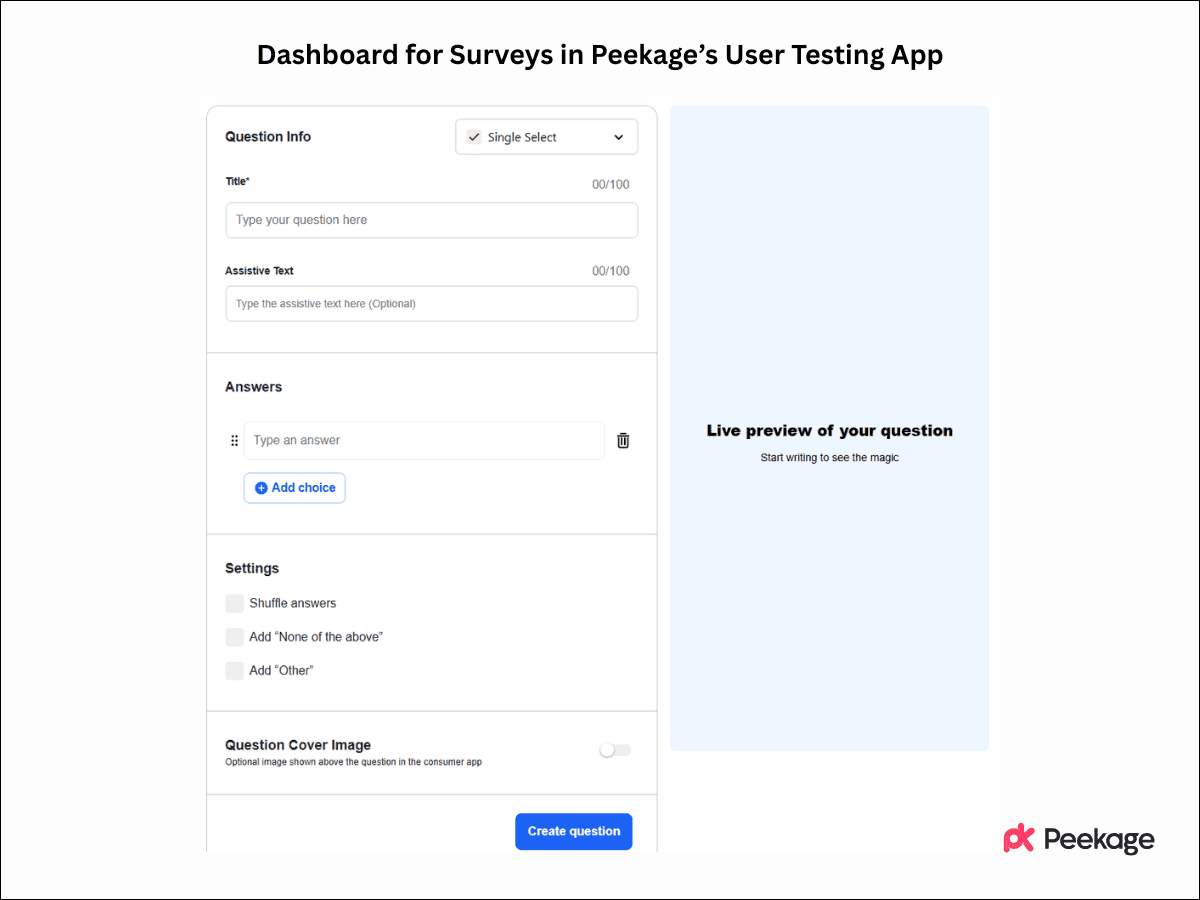
You can start with smart templates made for different business objectives such as concept testing, where all questions are preloaded into your study and only need to be reviewed and customized. Alternatively, you can start from scratch using the Survey Builder module.
In the survey builder module, you start by entering your question title and optional assistive text, which helps clarify context for respondents and improves response quality.
Instead of guessing how a question will look to participants, you see a live preview on the right side of the screen. As you write, the preview updates instantly, so you always know exactly how respondents will experience the question.
Peekage supports all major question formats used in concept testing, all accessible from a simple dropdown.
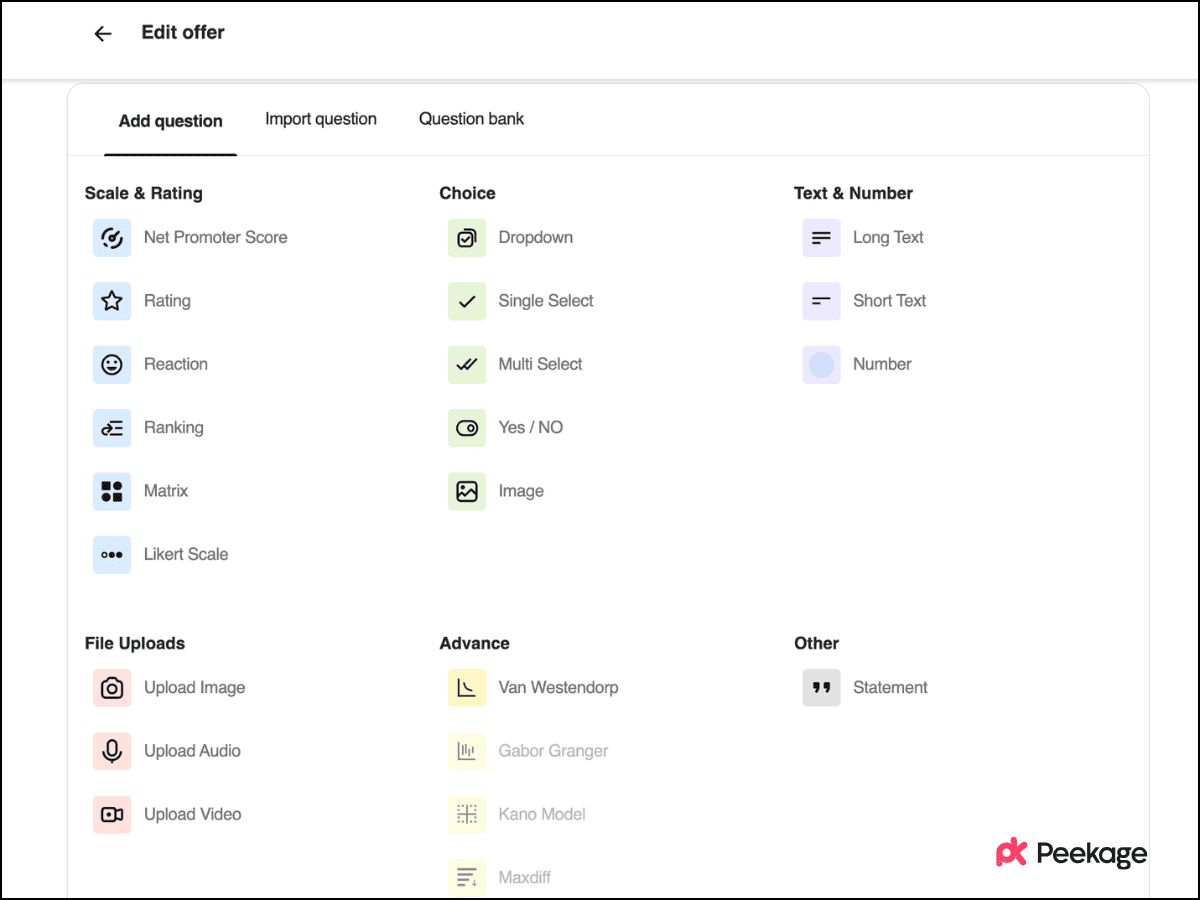
This flexibility allows you to match each question type to the insight you’re trying to gather, rather than forcing every question into the same format.
Also, you can quickly add answer options using the Add Choice function or customize every option manually. Peekage also lets you:
- Shuffle answers to reduce bias
- Add “None of the above” or “Other” options when appropriate
- Keep questions clean and focused without overwhelming respondents
If you don’t want to start from scratch, Peekage provides pre-filled question structures and best-practice formats that you can adapt with just a few clicks.
You can also add an optional cover image for each question, which is especially useful when testing product visuals, packaging, or UI concepts.
Whether you’re running your first concept test or managing research at scale, Peekage adapts to your workflow:
- Beginners can rely on structured templates and guided setup
- Experienced teams can fully customize questions, scales, and formats
You can build surveys independently or collaborate with the Peekage team, who can help you refine questions once your testing goal is clear.
Peekage doesn’t just help you write questions, it helps ensure those questions lead to clear, actionable insights. Combined with result analysis and AI-assisted feedback, the platform makes sure your concept testing uncovers real demand, confusion, and risk before you invest in building or launching the product.
How to Interpret Concept Testing Question Results
Interpretation is the real decision lever. Collecting responses is the easy part.
Small differences in scores often fall within the margin of error. A concept scoring 72% versus 68% on intent might not be meaningfully different. Sample size affects confidence: 500 responses at 95% confidence gives you about a 4.4% margin of error.
Sometimes, qualitative feedback outweighs scores. If 80% rate appeals highly, but the open-ended responses reveal consistent confusion, the confusion matters more than the number.
Watch for false positives: concepts that test well because the questions were too easy or too leading. High scores on vague questions don't predict market success.
At Peekage, we evaluate your survey results using our AI assistant and provide actionable suggestions on areas for improvement based on its feedback.
Time to Act on What You Learned
The success of concept testing depends more on the questions you ask than on the platform or method you use. Good questions uncover real reactions, objections, and comparisons that reveal whether a concept truly works.
Match your questions to your development stage. Early-stage concepts should focus on validating the problem. Later-stage concepts should focus on surfacing final objections and refining the idea.
Treat concept testing as a learning tool, not a scorecard. The goal is not to prove your concept is perfect, but to understand what works, what doesn’t, and what to improve.
With Peekage, you can turn these insights into action using our platform. We help you design surveys, run tests, and analyze results so you can confidently move from learning to decision-making.
If you're running concept tests and still making decisions that fail at launch, the questions are usually the first place to look.