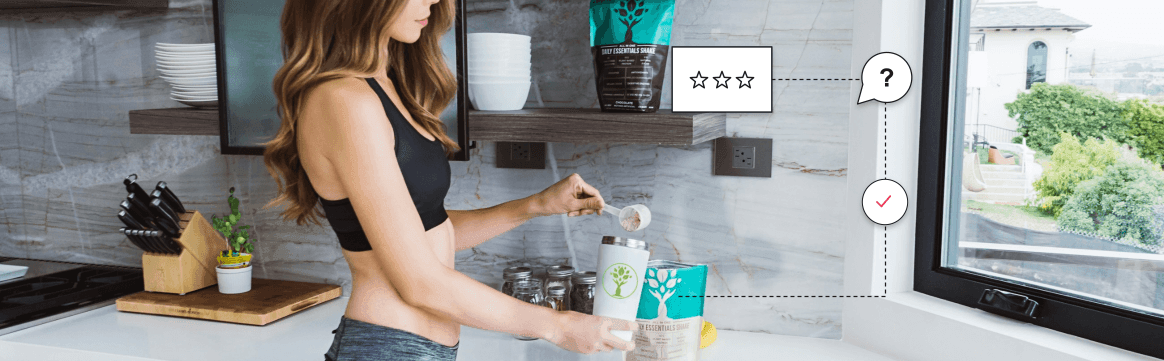
A supplement may have the right ingredients but still disappoint users because the capsules are too large, the taste is unpleasant, or the product is difficult to fit into a daily routine. An in-home usage test (IHUT) helps brands identify these issues by letting consumers try a product at home and share feedback based on their experience.
The global dietary supplements market reached USD 209.5 billion in 2025, according to Grand View Research. As consumers compare products, factors such as taste, format, and ease of use can influence their experience alongside the ingredients.
This article covers which wellness and supplement products are suitable for IHUTs, how to plan and run a study, which metrics and questions to use, and what the results can and cannot tell you.
Why Is Running an In-Home Usage Test Important for Wellness and Supplement Brands?
A supplement can have a good formula and still disappoint the people who buy it. The capsules may be too large, the powder may leave a chalky aftertaste, or taking several servings a day may become a chore. These problems can be hard to spot in a lab or a one-time product trial, but they become obvious when people use a supplement at home.
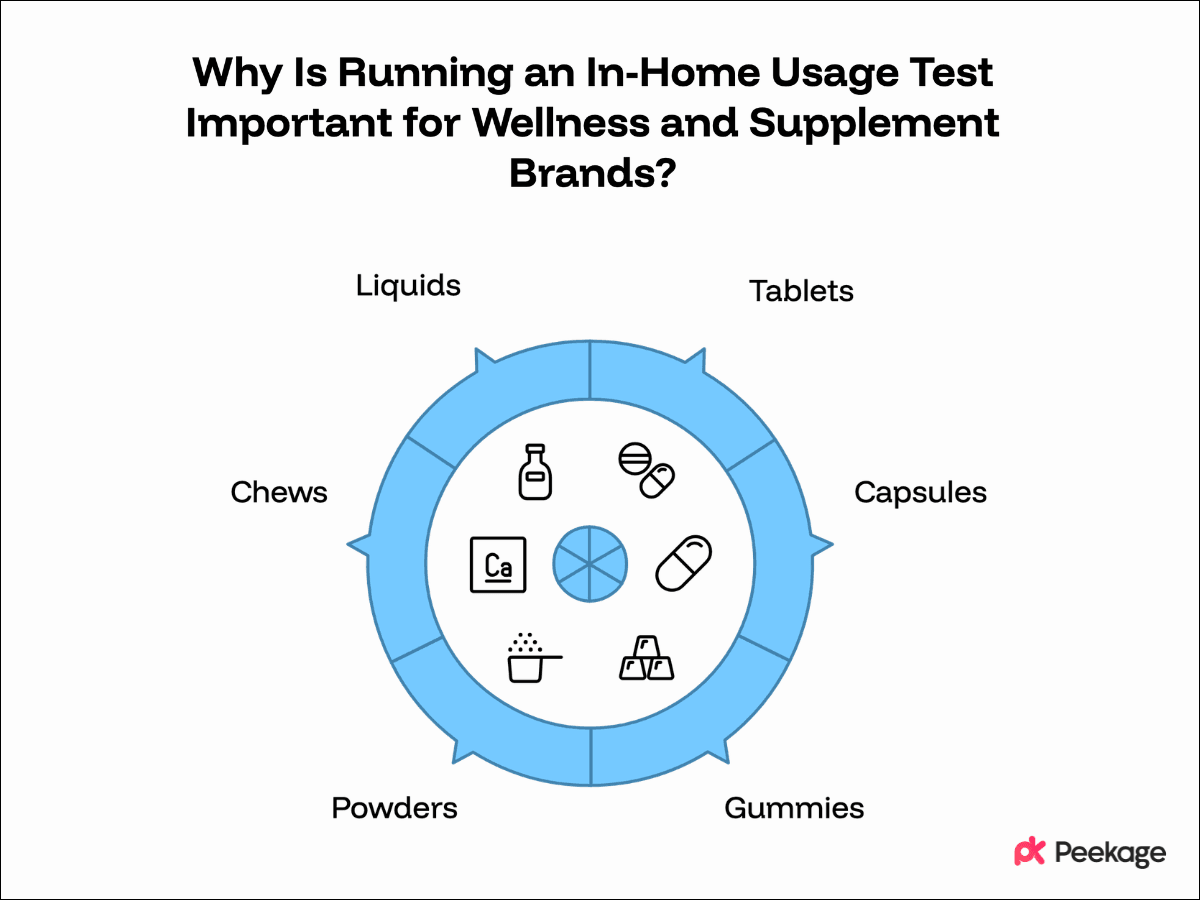
Consumer preferences also vary by format. Some people are happy taking tablets and capsules, while others prefer gummies, powders, chews, or liquids. At SupplySide Global 2025, SupplySide Supplement Journal reported growing discussion around "pill fatigue," the frustration some consumers feel about swallowing pills every day. For brands, this makes it important to know whether their chosen format suits the people they're trying to reach.
Taste can also affect how people feel about a product after repeated use. A gummy might taste good on the first day but become too sweet over time. A July 2025 home-use study of 128 U.S. participants, reported by Cosmetics & Toiletries, found that taste and ease of consumption influenced product preferences and reported consistency of use. TOSLA commissioned the study, so its findings should be treated as one example rather than a conclusion that applies to every supplement.
An IHUT lets brands see how these details play out in everyday life. Participants can report what works, what gets in the way, and what they would change after using the product for several days. That feedback helps brands address practical problems before launch.
What Types of Wellness and Supplement Products Can You Test With an IHUT?
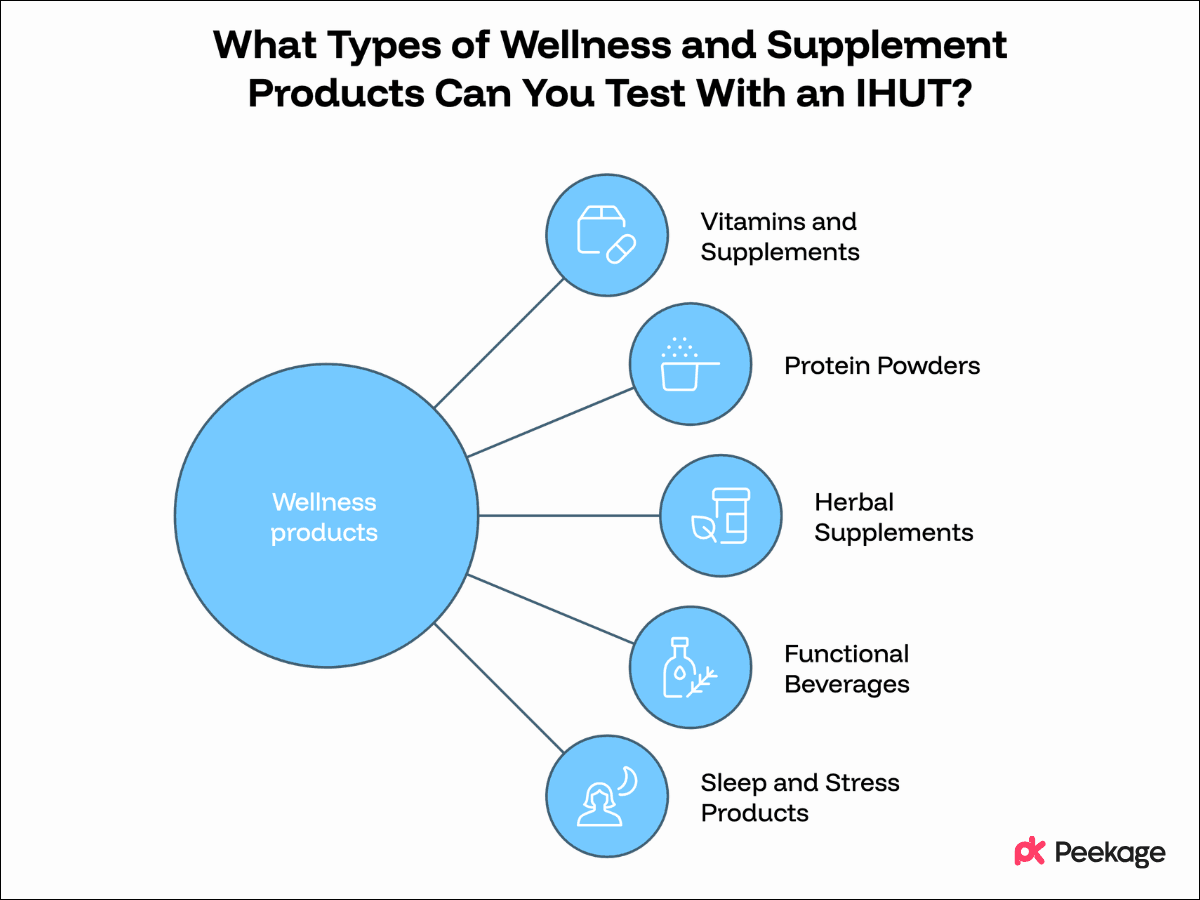
An IHUT works for wellness and supplement products that consumers can use at home as part of their regular routines. The study can help brands assess taste, texture, convenience, packaging, and overall satisfaction.
Common product categories include:
- Vitamins and dietary supplements: Assess tablet or capsule size, ease of swallowing, packaging, and how well the product fits into a daily routine.
- Protein powders and sports nutrition: Test how easily powders mix, along with taste, texture, and whether consumers still enjoy the flavor after repeated use.
- Herbal and botanical supplements: Gather feedback on taste, smell, aftertaste, and ease of consumption.
- Functional beverages and wellness drinks: Evaluate flavor, sweetness, convenience, packaging, and purchase intent.
- Sleep, relaxation, and stress support products: Assess the format, ease of use, and how well the product fits into consumers' usual routines.
The study design should match the product. For example, a protein powder test may focus on mixability and texture, while a capsule test may examine size and ease of swallowing.
An IHUT measures consumers' experiences and reported preferences. It does not establish whether a supplement is effective or medically beneficial.
How Do You Run an IHUT for Wellness and Supplement Products?
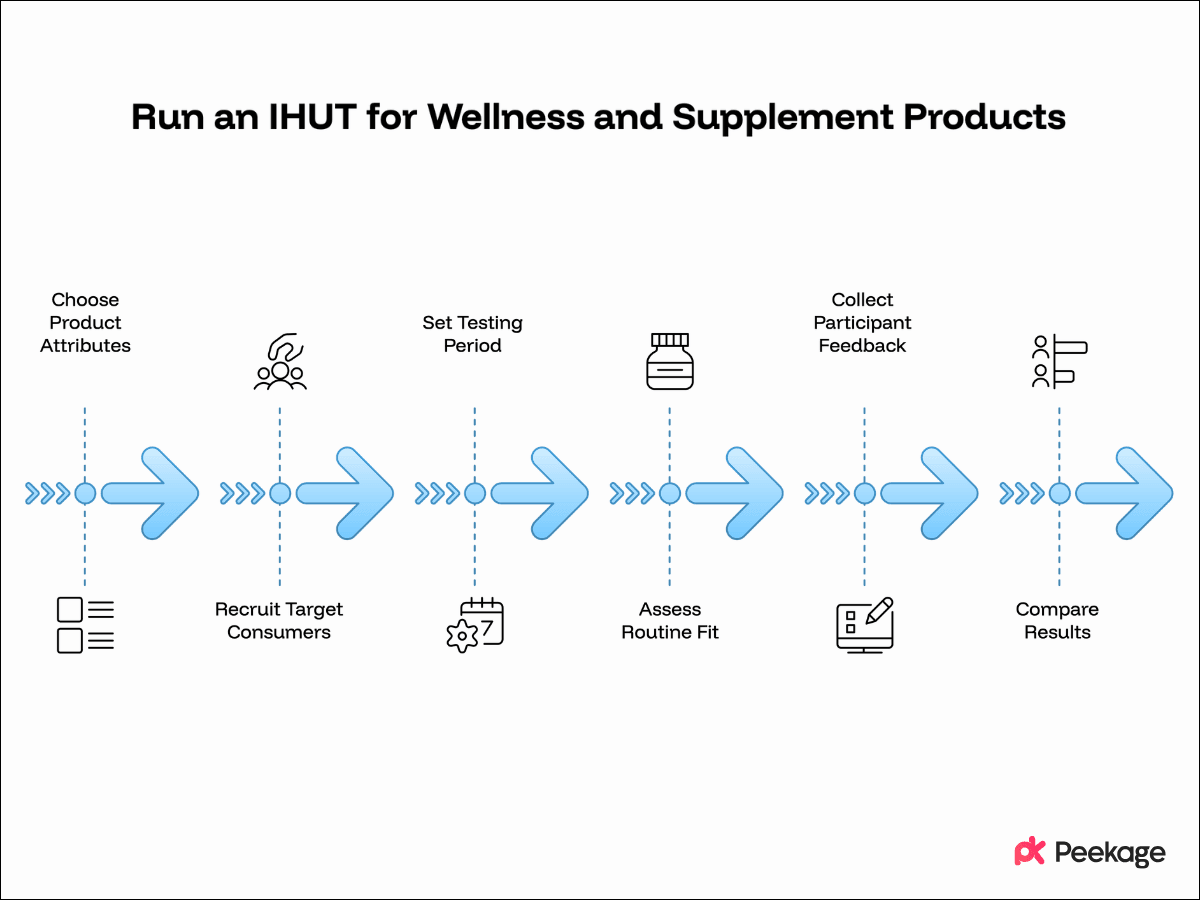
A successful IHUT starts with clear research goals and follows a structured process from participant recruitment to final analysis. IHUT testing services can support each stage and help you collect useful feedback on how consumers use and experience wellness and supplement products at home. The following six steps outline the process.
1. Choose the Product Attributes You Want to Test
Start by identifying three or four attributes that matter most to the product experience, such as taste, smell, texture, tablet size, serving size, or format. Tablet size, quantity, and color can also influence how consumers perceive a supplement.
Link each attribute to a specific product decision. Low taste ratings may point to a need for flavor adjustments, while complaints about capsule size may indicate that another format is worth testing.
2. Recruit Consumers Based on Their Wellness Goals and Supplement Habits
Recruit participants for IHUT who match your intended audience. Screen them based on current supplement use, preferred formats, wellness goals, and relevant demographic characteristics.
For example, regular protein powder users can give more relevant feedback on mixability and texture than people who rarely use protein supplements. Similarly, people who already take several capsules daily can help you assess whether a new product fits their routine.
Offer a reasonable incentive and set clear expectations about the testing period and required feedback. This helps participants stay engaged through the final survey.
3. Set a Testing Period That Matches Your Research Goals
The testing period should reflect what you want to learn. A short test may be enough to evaluate taste, texture, or how easily a powder mixes. Assessing routine fit and continued use requires a longer period.
The choice between a central location test (CLT) and an in-home usage test (IHUT) also matters. A CLT works well for comparing immediate reactions to products in a controlled setting, while an IHUT lets participants use a product at home over several days or weeks. This makes IHUTs more suitable for studying changes in preferences and how well a product fits into daily routines.
For example, a participant might enjoy a gummy on the first day but find it too sweet after a week of regular use.
Decide how long participants need to use the product to answer your research questions. Set clear expectations for how often they should use it and when they should submit feedback.
4. Assess How the Product Fits Into Daily Routines
A supplement can score well on taste and still be inconvenient to use regularly. Ask participants when they take it, where they store it, how they prepare it, and whether it fits their existing habits. This is particularly relevant for consumers who already take multiple supplements.
Short usage diaries can help capture these details. Participants might record when they take the product, whether they remember each serving, and any difficulties they encounter. Photos can also help document packaging, preparation, or storage issues.
5. Collect Feedback on Ease of Use, Serving Size, and Overall Experience
Use an initial survey to record participants' existing habits and expectations, then follow up after the testing period to understand their experience.
The final survey can cover:
- Taste, smell, and texture
- Ease of preparation and consumption
- Serving size and clarity of instructions
- Packaging and storage
- Convenience and fit with daily routines
- Overall satisfaction and purchase intent
Combine rating scales with open-ended questions. Ratings help quantify how participants respond, while written answers explain why they liked or disliked a product.
For example, a low convenience score tells you there may be a problem. An open-ended response might reveal that the scoop is difficult to use or the packaging is hard to reseal.
6. Compare Results Across Consumer Groups and Usage Patterns
Overall scores can hide differences between audience segments. To interpret IHUT results accurately, compare responses across relevant groups, such as age, current supplement habits, preferred formats, and wellness goals.
For example, a gummy supplement may appeal to people who dislike swallowing pills but receive lower ratings from consumers who prefer capsules. These differences can help you decide whether to change the product or focus on a more suitable audience.
Look for consistent patterns across responses rather than relying on a single comment or small difference in scores. Use these findings to prioritize changes to the product, packaging, instructions, or positioning.
Peekage can help manage participant targeting, product distribution, feedback collection, and analysis throughout the IHUT process.
What Can Brands Measure With a Wellness and Supplement IHUT?
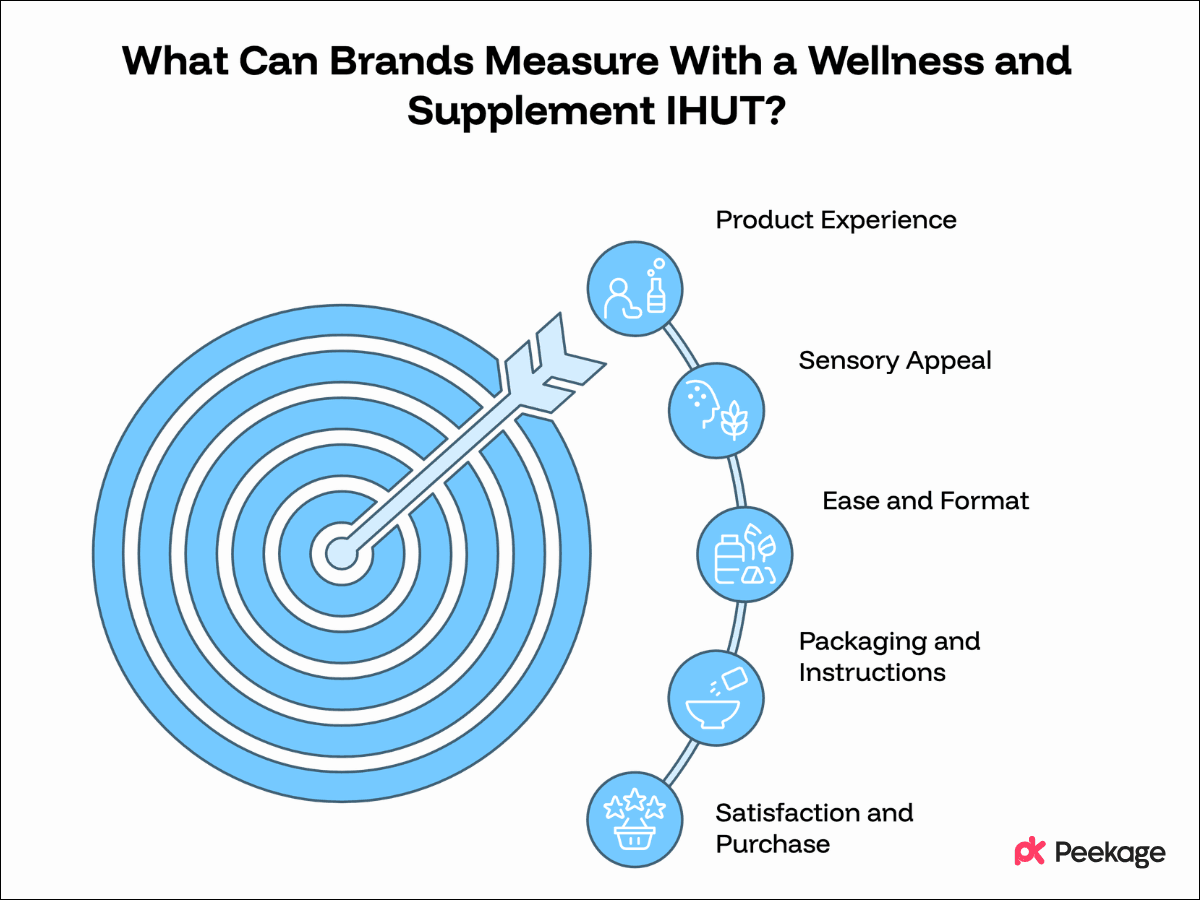
A wellness and supplement IHUT measures how consumers experience a product and what influences their satisfaction and purchase decisions.
Brands can track five key areas:
- Taste, smell, and texture: Assess flavor, aftertaste, texture, and overall sensory appeal, including whether consumers enjoy the product after repeated use.
- Ease of use and product format: Evaluate how easy the product is to swallow, chew, mix, or carry. Format preferences are also important. According to data from Informa reported by NutraIngredients, gummies accounted for around 25% of the U.S. market.
- Packaging and serving instructions: Check whether packaging is easy to open and store, and whether serving sizes and usage instructions are clear.
- Consumer perceptions and satisfaction: Record what participants like and dislike, along with their overall satisfaction ratings.
- Purchase intent and perceived value: Ask how likely participants are to buy the product and what price they consider reasonable.
These metrics help brands identify what consumers value, which aspects need improvement, and whether the product meets expectations.
What Questions Should You Ask in a Wellness and Supplement IHUT?
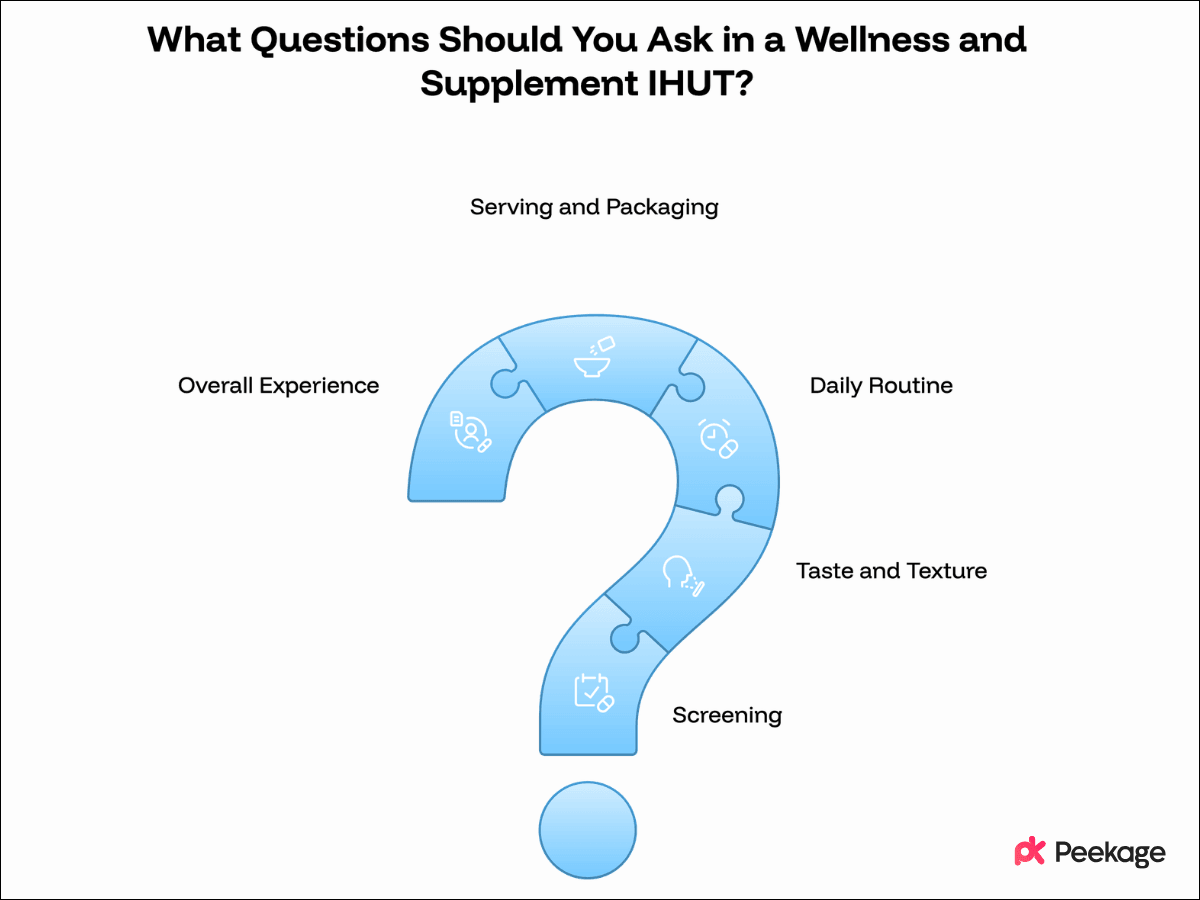
Keep survey questions short, specific, and focused on one aspect of the product experience. Group them by topic to make the survey easier to complete and the results easier to analyze.
Screening
- Which supplement formats do you currently use?
- What wellness goals influence your supplement purchases?
Taste and texture
- How would you rate the product's taste, smell, and texture?
- Did you notice any unpleasant aftertaste?
Daily routine
- At what time of day did you use the product?
- Did you skip any servings during the test? If so, why?
Serving and packaging
- Were the serving instructions clear?
- Was the packaging easy to open and store?
Overall experience
- How likely are you to buy this product?
- What would you change about it?
Use a mix of rating scales and open-ended questions. Ratings help quantify the experience, while written responses explain the reasons behind them. For example, a low taste score may reflect an unpleasant aftertaste that only becomes noticeable after repeated use.
How Does Peekage Support Wellness and Supplement Product Testing?
Peekage helps CPG brands run product testing from participant recruitment and product distribution to feedback collection and analysis. Our platform uses AI-supported tools to help teams make sense of consumer feedback and identify areas for improvement.
With a panel of 5 million consumers across the U.S. and Canada and more than 200 attributes for targeting, we help brands find participants who match their target audience. For a supplement IHUT, this could mean recruiting consumers who already use gummy vitamins or regularly buy protein powders.
Our platform supports in-home usage tests, taste and sensory tests, packaging tests, pricing research, and concept testing.
Planning to test a wellness or supplement product? Talk to our team to discuss your research goals and plan a study that fits your product and target audience.