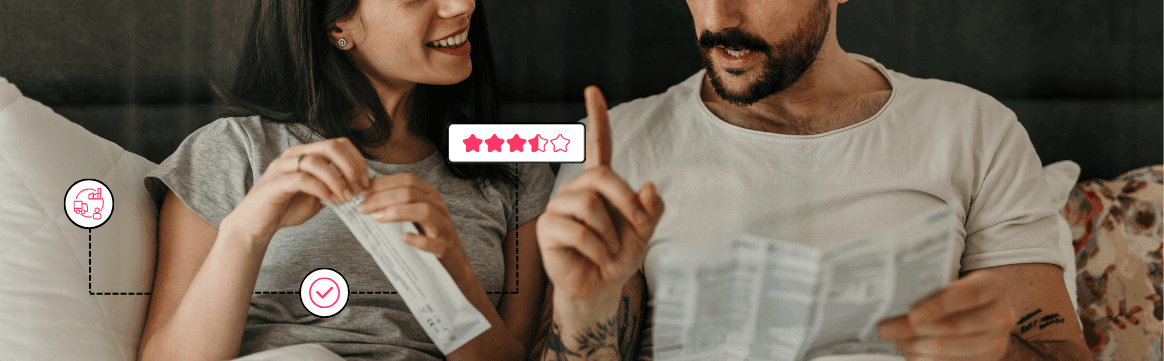
Consumers test products every day without even thinking about it. Trying a new shampoo, switching to a different brand of milk, streaming music for the first time, or trying on clothes in a store are all forms of product testing.
But what if your product hasn’t even launched yet? How do you put it in front of real consumers and get honest, unfiltered feedback?
You don’t want reactions from a sterile testing room, you want to see how people actually feel and behave when your product becomes part of their everyday life. How they use it, what frustrates them, what surprises them. That’s where IHUT comes in: real people, real environments, real insights, right from their homes.
What Is In-Home Usage Testing (IHUT)?
IHUT is a market research method in which real consumers test products in their own homes. It measures how a product performs, how satisfying it is to use, and how easy it is to work with, all under real-life conditions. This gives CPG brands honest, practical feedback they can use to refine and improve a product before it officially launches.
IHUTs are valuable because they show firsthand how a consumer interacts with a product in their natural environment. Researchers can also ask follow-up questions in real time, making this approach genuinely engaging and informative. Peekage specializes in exactly this, delivering end-to-end in-home usage testing services that connect brands with real consumers in their everyday environments, getting feedback that lab-based testing simply cannot replicate.
Why Should CPG Brands Rely on In-Home Product Testing?
Participants in IHUT testing respond to key questions before and after sampling the product, helping determine if it meets consumer expectations. This method also tracks how consumer acceptance changes over time, pinpointing areas that need improvement.
- Identifying pain points: IHUT helps brands discover issues that customers experience with packaging, functionality, or overall satisfaction.
- Improving product quality: Feedback from testers gives brands the data they need to make meaningful improvements to their products.
- Building brand loyalty: When customers are involved in product development, they feel a stronger connection to the brand. Research shows that brands using IHUT see a 30% increase in customer retention rates.
Peekage works with CPG brands across food & beverage, personal care, household products, health & wellness, and more, helping teams at every stage of the product lifecycle turn real consumer feedback into confident, data-backed decisions.
Types of In-Home Product Testing
There are several IHUT approaches available, and the right one depends on your goals. Some focus on the product itself, others on how it is priced or packaged, and others on how it compares to the competition. Understanding what each type offers helps you choose the approach that will give you the most useful data.
Blind Product Testing
In blind product testing, consumers test a product without knowing which brand made it. All branding, logos, and identifying information are removed before the product is sent out. This strips away any preconceptions or brand loyalty that might color a person's opinion, so feedback focuses purely on how the product performs.
Blind testing is especially valuable when you want an unbiased read on quality, taste, or effectiveness, and when you need to know whether your product can stand on its own merits before any marketing or branding is applied. Peekage's blind testing capabilities allow brands to isolate true product performance from brand perception, giving R&D and innovation teams clean and unbiased data to work with.
Competitive Benchmarking
Competitive benchmarking asks consumers to use your product alongside one or more competing products and compare them directly. Participants evaluate each option on the same criteria, giving you a side-by-side view of where your product leads and where it falls short.
This type of testing is useful at any stage of development, whether you are trying to understand how a new product measures up before launch or how an existing product holds its ground against newer competitors entering the market. Peekage offers dedicated Competitive Analysis services to help brands benchmark their products against the competition and identify clear points of differentiation.
Concept Testing
Concept testing happens early in the product development process, before a product is fully finalized.
In in-home usage testing, this typically involves sending early-stage prototypes or sample versions of a product to consumers so they can try it in real conditions. Instead of just reacting to an idea on paper, participants experience something tangible and share how it performs in their everyday routine.
They provide feedback on things like how useful the product feels, whether it meets their expectations, and how likely they are to use or buy it.
This early input helps brands understand whether they should move forward with development, make changes, or rethink the direction before investing further resources.
Peekage's concept testing service focuses on validating these early prototypes in real homes, so brands can make confident, evidence-based decisions before scaling production.
Price Testing
Price testing exposes consumers to the same product at different price points to understand how price affects their willingness to buy. Participants may not be aware they are seeing different prices, or they may be asked directly to evaluate whether a given price feels fair for what the product offers.
The insights from price testing help brands set a price that reflects perceived value without leaving money on the table or pricing the product out of reach for the target audience. Peekage's Pricing Testing service evaluates price sensitivity, perceived value, and purchase intent, giving brands the data they need to land on a price point that maximizes both revenue and conversion.
Packaging and Design Testing
Packaging is often the first thing a consumer notices, and it plays a bigger role in purchasing decisions than many brands expect. Packaging testing gathers feedback on the visual design, how functional the packaging is to open and use, how easy it is to store, and whether it communicates the right message about the product inside.
Participants may be shown multiple packaging options and asked to compare them, or they may live with a single version and report on how it holds up over time. This type of testing helps brands avoid packaging that frustrates users or misrepresents the product. Peekage's Package Testing service evaluates design, usability, and clarity, helping brands ensure their packaging works as hard as the product inside it.
Sensory Testing
Sensory testing evaluates a product based on how it engages the senses, covering taste, texture, scent, appearance, and in some cases - sound. It is most commonly used for food, beverages, personal care products, and beauty items, where how something feels or smells is central to the experience.
Participants describe their sensory impressions in detail, which helps brands refine formulations, adjust ingredients, or fine-tune a product's sensory profile before it reaches store shelves. Because sensory preferences can vary significantly across demographics and regions, this type of testing is particularly useful when a product is being developed for a specific audience or market. Peekage's Taste & Formula Testing service is built for exactly this, collecting structured sensory feedback to help brands optimize product appeal across their target consumer segments.
What are the Advantages of IHUT Product Testing for CPG Brands?
Any business, regardless of industry, can benefit from in-home product testing. While it is not required before a launch, it is strongly recommended.
Ongoing Feedback
One of the key strengths of in-home usage testing is that feedback is collected close to the actual product experience. Since testing happens in a participant’s home, brands get insights based on real usage instead of artificial testing conditions.
In many cases, feedback can be captured the same day a product is used. For example, snacks can be tested and reviewed immediately after delivery and consumption, which helps capture fresh and accurate impressions.
However, not all products generate insights instantly. Skincare products, supplements, or longer-use items may require several days or even weeks before results become clear. In these cases, Peekage supports multiple rounds of feedback collection so brands can track how opinions change over time.
This approach ensures that both immediate reactions and longer-term experiences are captured in a structured way. Peekage’s AI-driven insights system then analyzes these responses across all stages and turns them into clear, actionable findings for product and marketing decisions.
Multiple Data Collection Options
Depending on the product and the brand, there may be a short window between product use and feedback gathering, ranging from one to six weeks. The complexity of the product usually determines how much time is needed in between. Peekage supports multiple feedback formats through its platform, giving brands the flexibility to collect data in the way that best fits their product and timeline.
Direct Prototype Feedback
IHUT gives participants the chance to interact with a product in a natural setting, which often leads to honest and specific feedback. Participants can tell you whether the product tastes or smells good, whether the instructions are clear, whether it delivers on its promises, how the packaging looks, and where in their home they use it most. This kind of early feedback supports better decision-making and helps avoid wasted time and resources later.
A Full Picture Before Launch
IHUT enables respondents to describe every sensory aspect of a product, from how it looks and feels to how it smells and tastes. Before the product reaches the public, it goes through a complete evaluation covering first impressions, appeal, satisfaction, potential improvements, expected price, purchase intent, and competitive positioning. These insights help you understand whether your target market is likely to buy the product, and they give you the opportunity to strengthen what is working and address what is not. Peekage delivers this full-picture view through detailed and easy-to-understand reporting that equips brand and product teams to make confident decisions faster.
Ongoing Product Monitoring
The benefits of IHUT extend beyond the early stages of development. It allows brands to track how their product evolves from pre-launch through post-launch. Some brands choose to run multiple studies at different points in a product's lifecycle, which is useful because consumer attitudes can shift as a product matures. Comparing data from the prototype stage to data from an established product often reveals meaningful insights. Peekage supports brands at every stage of the product lifecycle, from early concept validation through post-launch optimization, making it a long-term research partner, not just a launch tool.
Easier Participant Recruitment
Because IHUT is not tied to a specific location, it is far easier to recruit participants than it is for in-person focus groups. There are no geographic constraints, and many people are excited to try something new. An added incentive is that participants are often allowed to keep the product being tested and may also receive gift cards or other rewards. Peekage handles the full recruitment and targeting process, identifying and reaching the right consumer profiles for your product so you get feedback from the people who actually matter to your brand.
What are the Disadvantages of IHUT Product Testing for CPG Brands?
Despite its many strengths, in-home usage testing also has some limitations worth considering.
Limited Statistical Generalizability
IHUT projects are typically conducted with small, highly targeted groups, sometimes as few as 100 to 200 people. This means the findings may not easily apply to a broader population. If statistical generalizability is a priority, combining an IHUT project with a large-scale, well-designed survey can give you the best of both approaches. At Peekage, we can run in-home usage tests with bigger audiences and have no limits in that aspect.
Cost of Expensive Products
Some products are simply too costly to distribute for free or to expect participants to return. High-end electronics, for example, are generally not well suited for IHUT unless the budget is unusually large.
In these situations, central location testing, where participants come to a set location to interact with the product, is usually a better option.
Confidentiality Concerns
When a product is highly confidential, brands often worry that participants may share photos or information online during in-home testing.
To help reduce this risk, Peekage requires all testers to agree not to share any details, photos, or information about the product publicly or with third parties. These confidentiality requirements are included in our terms and conditions before participation begins.
This gives brands an added layer of protection while still allowing them to gather real-world consumer feedback through in-home testing.
Products Requiring Precise Handling
If a product has a steep learning curve or requires very specific steps to use correctly, IHUT may not be ideal. Central location testing allows a trained researcher to guide participants through the process and ensure the product is demonstrated accurately.
That said, if the goal is to understand how people use a product improperly so those issues can be corrected, IHUT may actually be the right choice.
| Advantage of IHUT | Disadvantage of IHUT |
|---|---|
| Real-time feedback collected in a natural setting | Small sample sizes limit statistical generalizability |
| Multiple data collection formats available | High-cost products are difficult or impractical to distribute |
| Direct, honest feedback on prototypes before launch | Confidential products carry a risk of exposure |
| Full product evaluation before it reaches the market | Products with steep learning curves are hard to test remotely |
| Ongoing monitoring across the product lifecycle | Historically required large budgets and research firms |
| No geographic constraints, easier participant recruitment | Data analysis demands dedicated time and resources |
Why Brands Have NOT Used IHUT Enough in the Past
Several barriers have historically limited IHUT adoption.
- High costs were a major obstacle. Earlier IHUT campaigns often required physically organizing groups of testers, which created significant logistical and operational expenses related to product distribution and coordination.
- Coordination challenges made it difficult to manage large numbers of testers, ensure products were delivered properly, and monitor the testing process consistently.
- Dependence on large research firms meant that successfully executing an IHUT campaign often required hiring expensive market research companies, which was out of reach for smaller businesses and startups.
- Data analytics demands added another layer of cost. Analyzing large volumes of feedback requires dedicated analytics teams, which not all companies have.
- Slow turnaround times made IHUT less appealing for brands needing quick insights. Logistical delays and time-consuming analysis meant results often came in later than desired.
Peekage was built specifically to remove these barriers. By combining targeted digital product sampling with a platform that manages recruitment, fulfillment, and data collection, Peekage makes IHUT fast, accessible, and cost-effective. AI-powered analysis then turns raw feedback into clear insights, helping brands of all sizes run high-quality research without needing large enterprise research budgets.
How to Develop an IHUT Strategy: A Step-by-Step Guide
Before diving into the step-by-step process, it’s worth noting that you have two options when developing your IHUT strategy. You can either build and manage the entire process in-house using the framework outlined below, or streamline everything by using Peekage. While the steps remain the same, Peekage simplifies execution by handling planning, recruitment, logistics, and data collection, allowing you to focus on insights and decision-making rather than operations.
Step 1: Get Your Facts Straight
Before anything else, you need to be clear about why you are running this campaign. Is this a new product or an updated version of an existing one? What is the goal? Are you trying to understand how well a new feature is understood, or whether your formula outperforms the competition? Having clear answers to these questions sets the foundation for everything that follows. Peekage works with brands at this discovery stage to help define clear research objectives and ensure the study aims to answer the right questions from the start.
Step 2: Create an Action Plan
Once the purpose is clear, develop a detailed action plan that outlines the key tasks, timelines, and responsible parties. This keeps the team aligned and ensures the project moves forward as planned. The action plan should be treated as a living document and updated throughout the campaign. Peekage's team collaborates with clients to build structured project plans, managing timelines, logistics, and milestones so brands can stay focused on their core work.
Step 3: Recruit Participants
Identify which type of participant is the right fit for your product and your campaign goals. Keep in mind that not everyone recruited will complete the survey. Completion rates typically range between 65 and 90%, so plan for a larger pool than you think you need. Participants can be recruited through phone outreach, online panels, and social media. Peekage handles participant recruitment and targeting through its +5M proprietary consumer network, making sure the right people are selected based on demographics, behaviors, and product fit, not just whoever happens to be available․
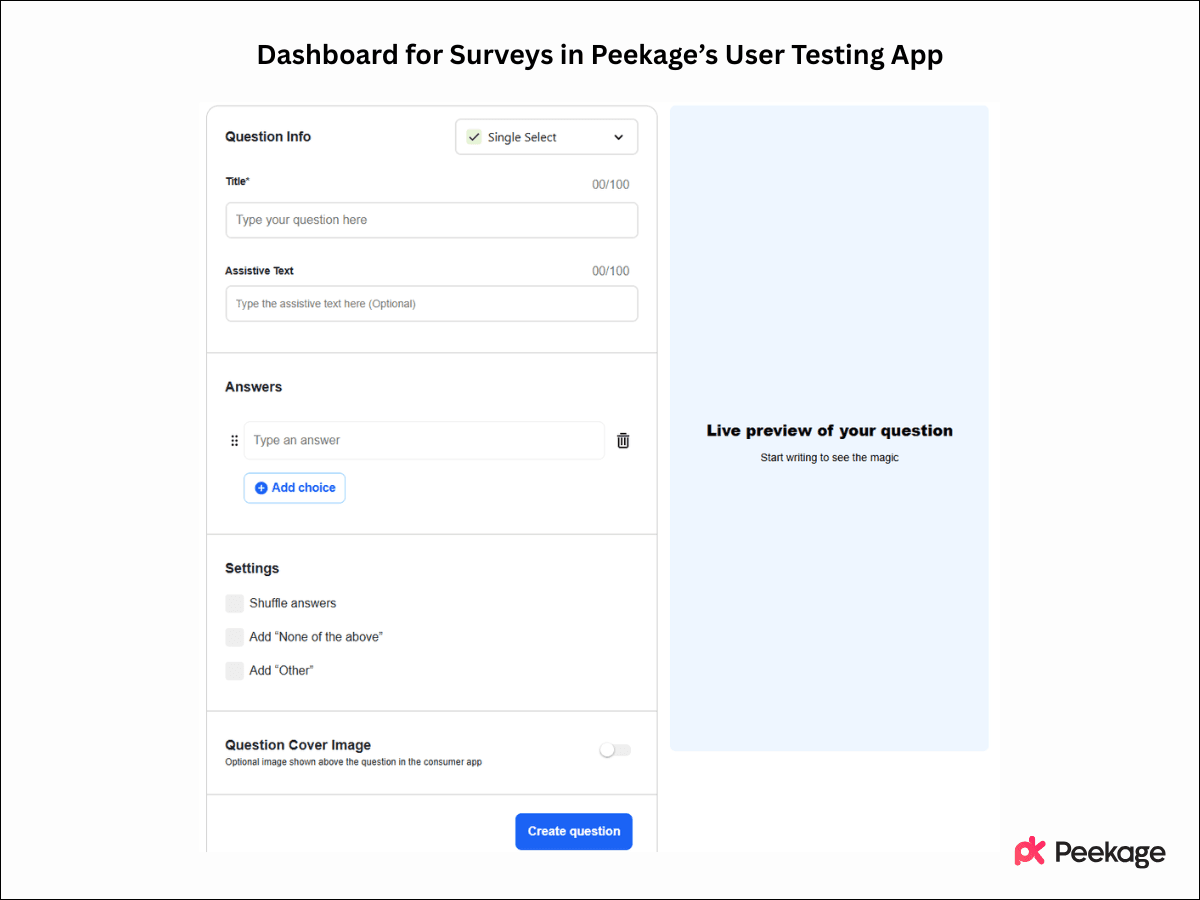
Step 4: Create Surveys and Evaluation Forms
This is the most important step. During the testing period, participants complete surveys or assessment forms after using the product. If they are testing only one product, the survey may be completed once. If they are also evaluating competing products, it may be completed multiple times. Common formats include a printed form or diary mailed with the product, an online survey for immediate and real-time feedback, or a follow-up email survey sent after the testing period ends. Peekage designs customized surveys that contain relevant concept testing questions and evaluation frameworks made for each brand's specific research goals. This covers everything from first impressions and sensory feedback to purchase intent and competitive positioning.
Step 5: Develop and Mail Product Packs
Prepare product kits to send to participants. Each kit should include the product, an introduction note with contact information, and a booklet with frequently asked questions and usage guidelines. Poorly assembled kits lead to lower engagement and worse response rates, so put care into this step. A well-prepared kit pays off with higher quality data. Peekage manages the full product fulfillment process, from kit preparation to delivery, so brands don't have to coordinate logistics themselves.
Step 6: Send Reminders and Follow-Ups
As with all market research, reminders and follow-ups are essential. Keep in mind that some participants may feel skeptical about the process, especially when a company is going to the expense of shipping them a product. Address this by being proactive, answering questions before they are asked, and ensuring that a real person is available to reassure participants. Feeling understood and supported makes a significant difference in how engaged participants are. Peekage manages participant communication throughout the study, including reminders, follow-ups, and support, to keep engagement high and ensure completion rates stay strong.
Step 7: Collect Surveys and Forms
Recall surveys are often used as the final step, typically sent to participants via email. A follow-up phone call is also recommended at this stage and may be more in-depth depending on the needs of the project. These final surveys can cover favorite aspects of the product, ideas for improvement, overall satisfaction, likelihood of purchase, and any additional comments. Participants may also be asked in the final question whether they are willing to participate in a follow-up call if further clarification is needed. Peekage's platform centralizes data collection across all survey touchpoints, aggregating responses automatically so nothing falls through the cracks and the analysis phase can begin without delay.
Step 8: Reward Participants
After all tasks and follow-ups are complete, make sure participants are rewarded promptly for their involvement. Delays in delivering rewards can generate negative word of mouth and reflect poorly on the brand.
Step 9: Analyze Data and Draw Conclusions
The final step is analyzing the data and making decisions based on what you find. At this point, you have everything you need to determine whether your product is ready for full production and market entry. Peekage's AI-powered analytics engine transforms raw feedback into clear, actionable insights, identifying patterns, surfacing opportunities, and delivering findings through detailed, easy-to-understand reports that empower teams to act with confidence.
Case Study: How a CPG Brand Used IHUT for a Successful Product Launch
To understand the practical implications and potential of IHUT, let's examine a real-world example of how a CPG brand used IHUT to achieve a successful product launch:
- Brand: CPG Brand, a snack food company
- Product: Two chip flavors (Original and Salt & Vinegar)
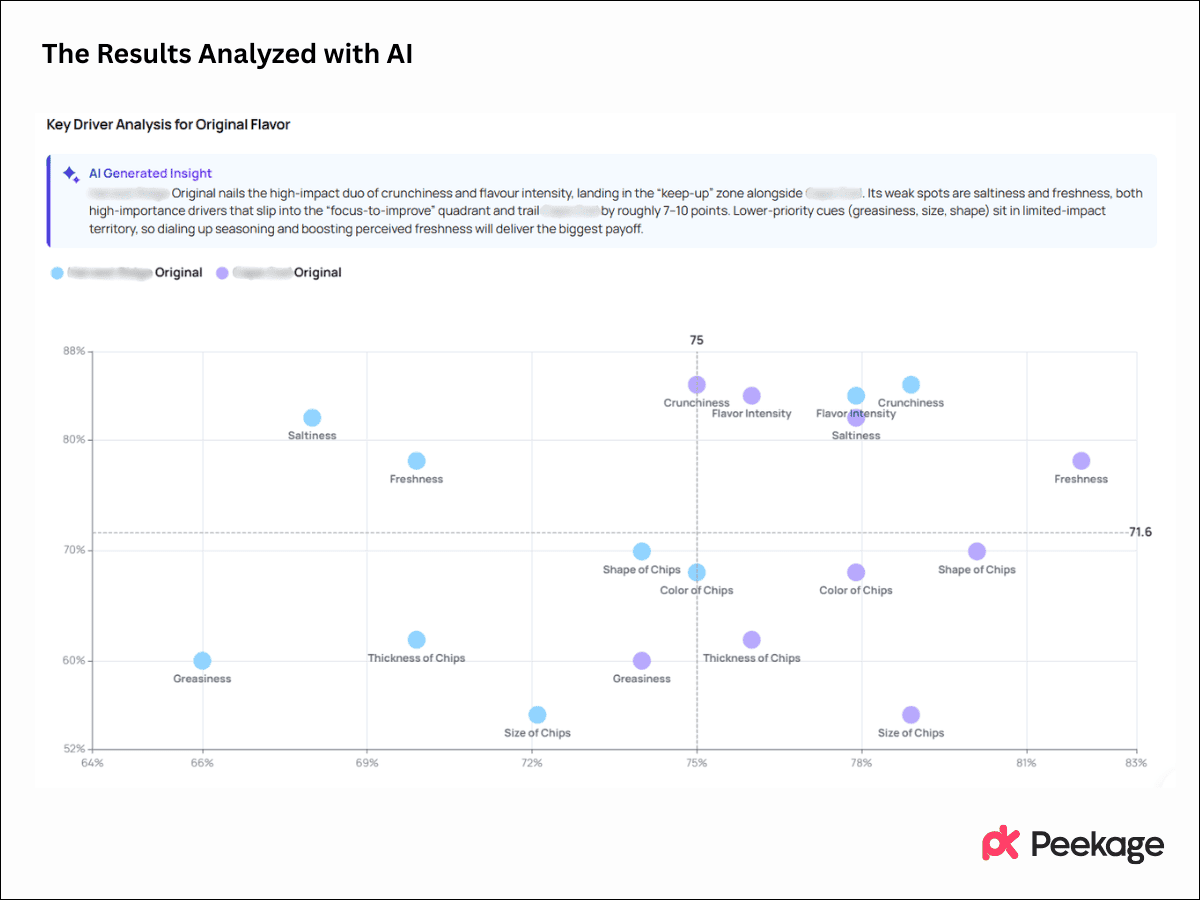
- Objective: Benchmark performance against competitors, identify key gaps in sensory attributes and purchase drivers, and refine product formulation and positioning to improve market performance.
IHUT Process Followed by CPG Brand
- Sample Selection: We recruited 500 U.S. consumer representatives for one of our clients’ target audience, ensuring diversity across age, gender, income, and geography.
- Product Distribution: Participants received products in a blind format, ensuring unbiased comparisons against competitors.
- Usage Period: Consumers tested the products at home in real consumption occasions, evaluating taste, texture, aroma, and overall experience.
- Feedback Collection: Participants provided structured feedback on key sensory attributes (e.g., freshness, saltiness, crunchiness), performance metrics (e.g., satisfaction, purchase intent), price expectations, and emotional responses.
- Data Analysis: Our client analyzed attribute gaps, performance metrics, and sentiment data to identify strengths, weaknesses, and opportunities for improvement.
Key Findings and Actions Taken
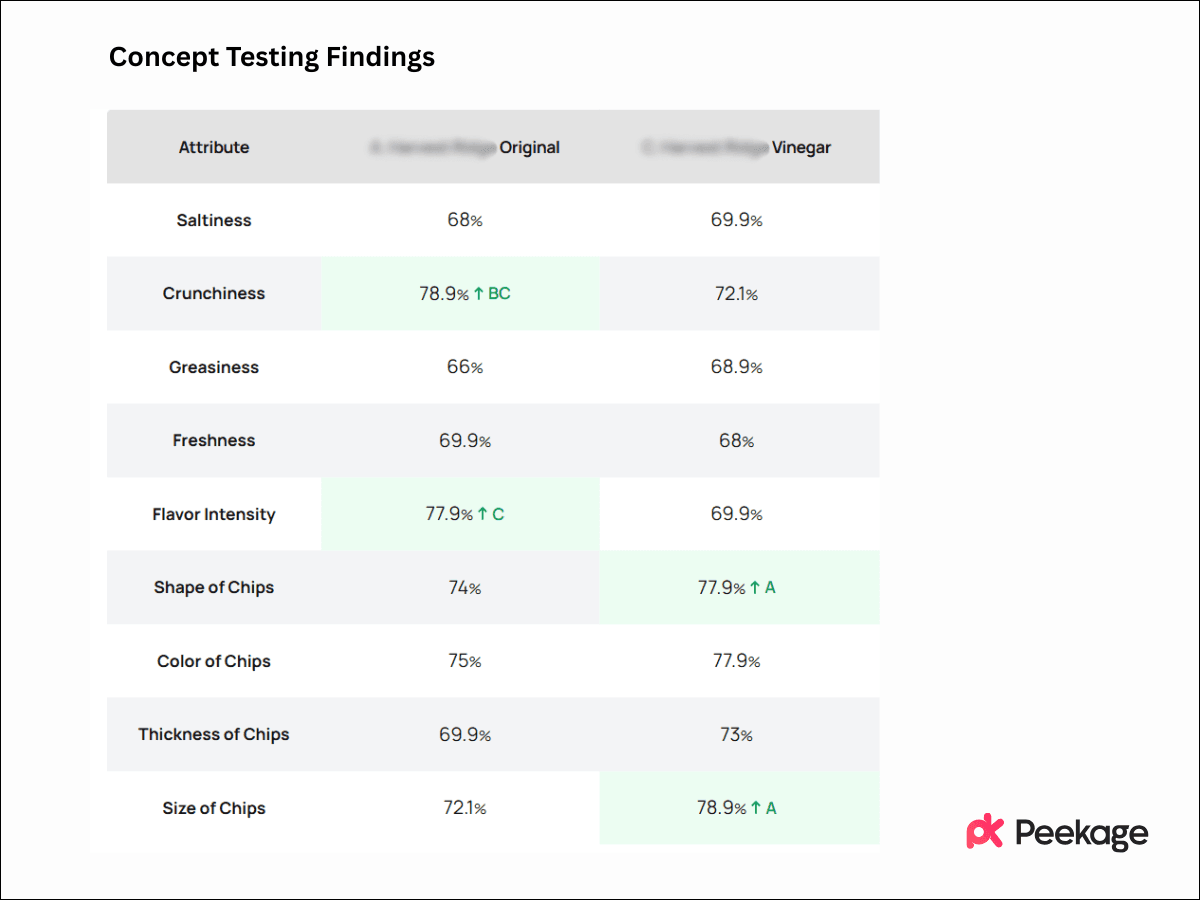
- The Original flavor stood out in texture and crunchiness, but lagged significantly in freshness (-12 points) and saltiness (-10 points) compared to competitors.
- The Salt & Vinegar flavor underperformed across nearly all key drivers, with gaps of up to -12 points in freshness and -10 points in saltiness, along with weaker overall performance metrics.
- Purchase drivers such as satisfaction and purchase intent were lower than competitors, especially for the Salt & Vinegar variant (down 23–26 points).
- Consumers perceived both products as slightly overpriced relative to expectations, signaling a mismatch between product experience and pricing.
Based on these insights, our client:
- Prioritized improving freshness and flavor intensity, particularly saltiness, across both variants.
- Identified the need for reformulation or repositioning of the Salt & Vinegar product due to consistent underperformance.
- Refined pricing and value messaging to better align with consumer expectations.
- Leveraged strengths like texture and crunchiness in marketing communications.
Outcome and Impact
By acting on IHUT insights, our client gained a clear roadmap for product optimization and competitive positioning. Improvements focused on high-impact sensory attributes and value perception enabled stronger alignment with consumer expectations.
These changes positioned the products for improved consumer satisfaction, purchase intent, and overall market competitiveness, while also helping the brand identify which variants to prioritize, refine, or potentially reconsider.
Final Thoughts
An IHUT strategy gives you a genuine feel for how your product will perform once it reaches the market, and it costs no more than any other market research campaign. Companies that test their products before launch are far better positioned to succeed. Those that skip this step are moving forward without the insights their competitors already have.