
A moisturizer may perform well in lab tests but behave differently in someone's daily routine. It might pill under sunscreen, feel greasy after several hours, or come in packaging that becomes difficult to use over time.
An in-home usage test (IHUT) helps beauty and personal care brands understand how consumers experience a product in real-life conditions. Participants use it as part of their usual routines and share feedback over days or weeks. 46% of buyers named proven efficacy through consumer or clinical claims as their top reason to buy a skin care product for a specific problem.
This article covers which beauty products are suitable for IHUTs, how to run a study, which metrics and questions to use, and how to choose a research partner.
What Beauty and Personal Care Products Can You Test With an IHUT?
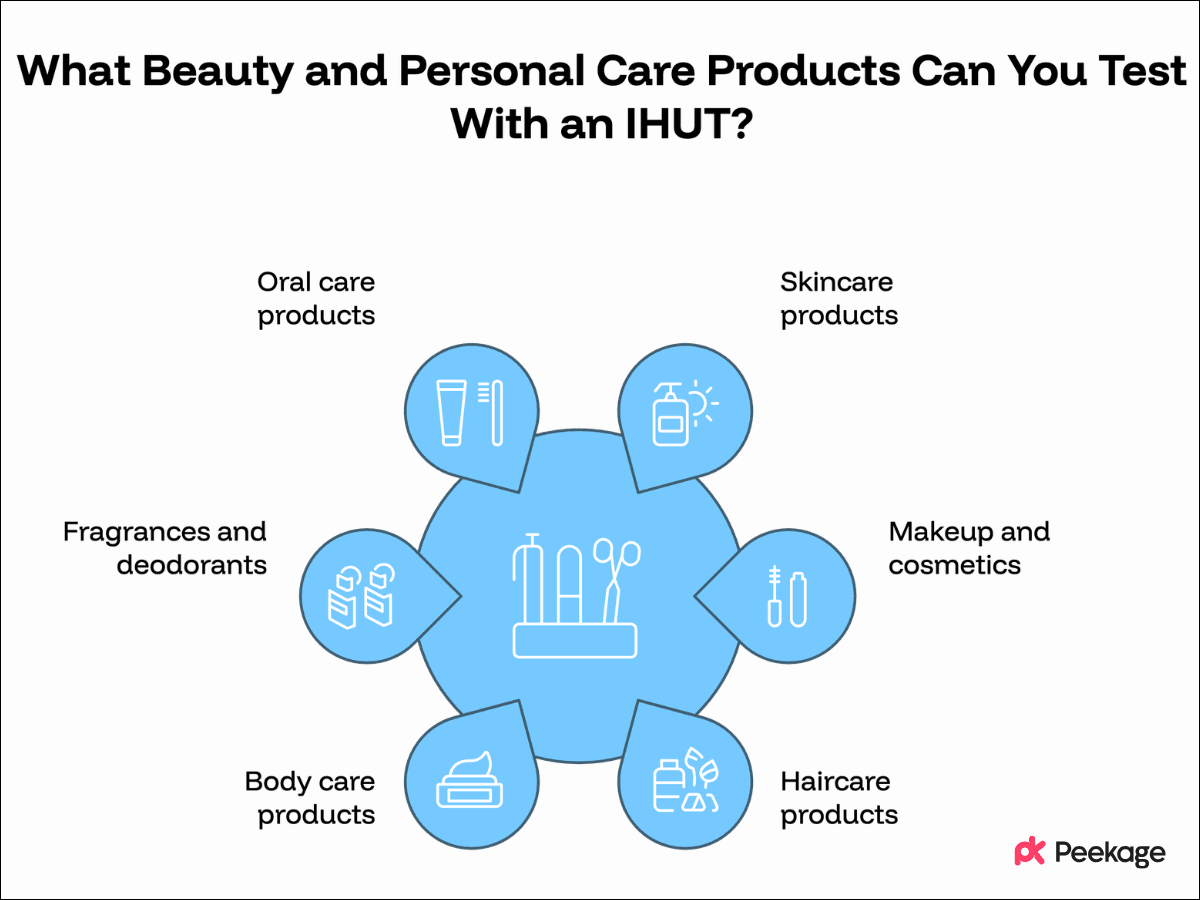
IHUTs work well for beauty and personal care products that consumers use at home, especially when the experience depends on regular use or changes over time. The study length and questions should reflect how each product is used and what the brand wants to learn.
- Skincare products: Moisturizers, serums, cleansers, and sunscreens can be tested for texture, absorption, scent, ease of use, and overall satisfaction. For products that claim to improve skin over time, repeated use can help capture consumer perceptions of results.
- Makeup and cosmetics: Foundation, mascara, and lip products can be evaluated for coverage, wear, comfort, ease of application, and how they perform throughout the day.
- Haircare products: Shampoo, conditioner, and hair treatments can be tested for scent, texture, ease of use, and perceived effects such as softness or frizz control after repeated washes.
- Body care products: Lotions, body washes, and scrubs can be evaluated for scent, texture, absorption, ease of rinsing, and how the product feels after use.
- Fragrances and deodorants: Consumers can report on scent, comfort, and how the product performs throughout the day.
- Oral care products: Toothpaste, mouthwash, and whitening products can be tested for taste, freshness, ease of use, and how well they fit into daily routines.
Products that require repeated use to assess the consumer experience may benefit particularly from an IHUT. The study can capture first impressions as well as feedback over time, helping brands understand how a product performs beyond the initial trial.
How Do You Run an IHUT Study for Beauty and Personal Care Products?
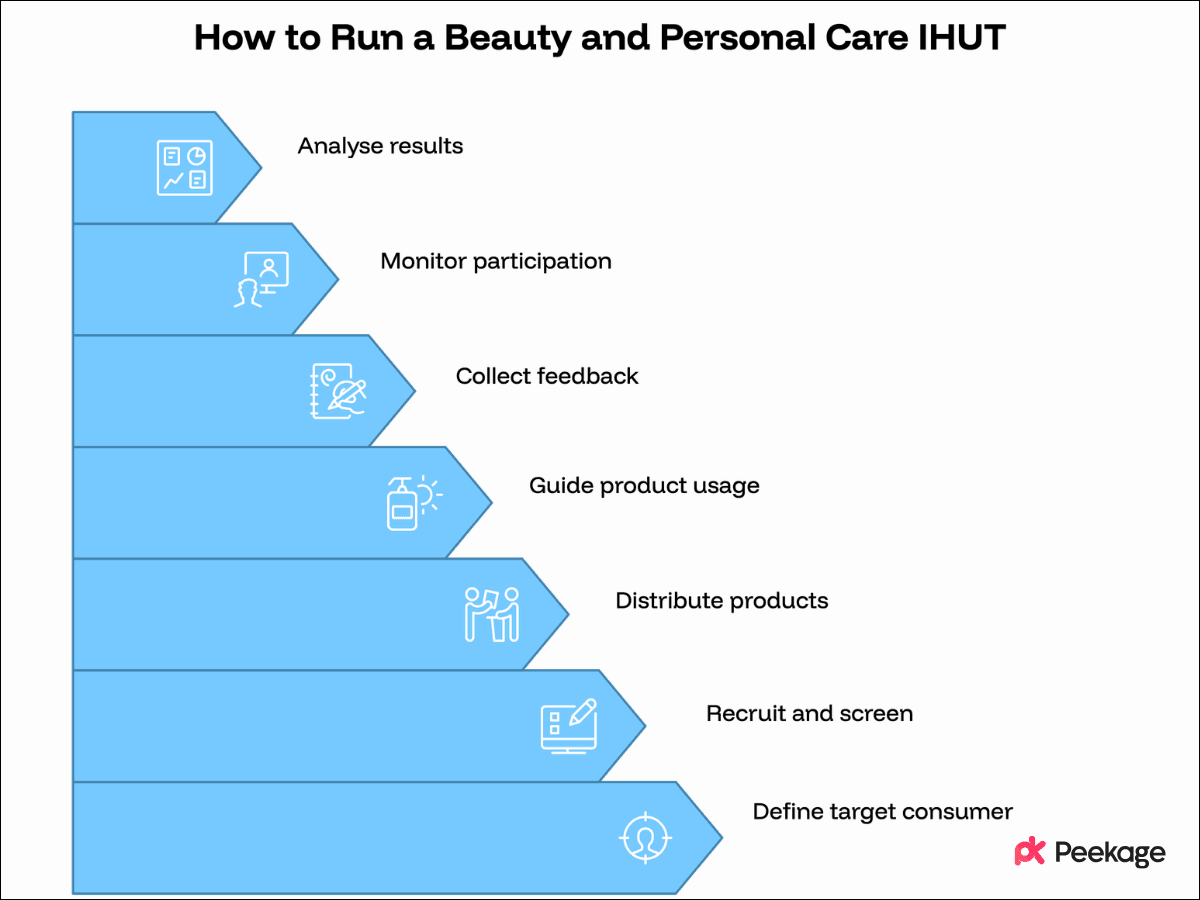
An IHUT study for beauty and personal care products involves seven steps, from defining the target consumer to analyzing the feedback. Each step affects the quality of the results, so it's important to plan the study carefully from the start.
How to Define Your Target Consumer
Start with a clear research objective. You might want to evaluate a product claim, compare two formulas, or determine whether a product is ready for launch. This objective will guide the study design, participant criteria, and questions.
Next, define the ideal participant. For beauty products, this may include skin type, hair type, main concerns such as acne or dryness, category usage habits, and whether the person currently uses similar products.
For example, a night cream intended for dry, mature skin requires a different participant profile from a gel designed for oily, acne-prone skin.
How to Recruit and Screen Participants
Recruit participants who match your target profile, then use screening questions to confirm their eligibility. Depending on the product, these questions may cover skin or hair type, current routines, allergies, sensitivities, pregnancy, and other relevant safety exclusions.
Participants should provide informed consent before receiving the product. An appropriate incentive can also encourage them to complete surveys and follow the usage schedule throughout a multi-week study.
Careful screening helps ensure that feedback comes from consumers who reflect the intended audience. It is an important part of recruiting real consumers for an IHUT test.
How to Distribute Products to Participants
Products may be sent in plain or blind-test packaging when the study aims to reduce brand influence. Each kit should include clear usage instructions and relevant safety information.
Before distribution, confirm that the product has passed the necessary safety and stability checks. Packaging and shipping conditions also matter, particularly for formulas that may be affected by heat or other environmental factors.
Track deliveries and record when participants receive their kits. Coordinating start dates helps keep usage diaries and follow-up surveys aligned throughout the study.
How to Guide Participants Through Product Usage
Give participants a clear schedule that explains when to use the product, how much to apply, and how often to use it. The testing period should reflect the product and the outcome being evaluated. Products that require repeated use to assess perceived results may need several weeks.
For example, a short test may capture a serum's texture and ease of application, but it may not give consumers enough time to assess perceived changes in skin appearance. The study duration should allow participants to evaluate the specific benefits the research aims to measure.
Photos or videos can provide additional context and help researchers review how participants use the product, where appropriate.
How to Collect Consumer Feedback
Collect feedback at several points during the study to capture both first impressions and experiences over time.
- Initial survey: Ask about first impressions after the first use, including texture, scent, application, and ease of use.
- Usage diaries: Invite participants to record brief updates during the test, noting their experience, any problems, and perceived changes.
- Final evaluation: Ask participants to assess the product overall and rate relevant attributes, satisfaction, and purchase intent.
Photos and short videos can add context that rating scales alone may miss, such as how a cream spreads or how hair looks after air-drying. Keep surveys concise and easy to complete. Long or repetitive questionnaires can make participants less likely to finish the study.
How to Monitor Participation and Responses
Monitor participation throughout the test rather than waiting until it ends. Send reminders, check survey completion, and review incoming responses to identify problems early.
Look for signs of incomplete participation, such as missed diary entries, missing photos, or repeated identical ratings across a questionnaire. These patterns may warrant a follow-up to check whether the participant understood the instructions and completed the tasks as requested.
Early checks give researchers time to clarify instructions, follow up with participants, or address gaps before they affect the final dataset.
How to Analyse and Report the Results
Start by reviewing the key metrics against the research objectives and targets established before the study. Reports may include top-box scores, which show the percentage of participants who selected the highest response option on a rating scale. For example, on a five-point agreement scale, this may be the share who selected "strongly agree."
Include consumer comments alongside the quantitative results to explain what may be driving the scores. Breaking down results by relevant groups, such as skin type or hair type, can also reveal differences between consumers. A serum, for instance, may receive more positive feedback from participants with dry skin than from those with oily skin.
Clear segment analysis is an important part of interpreting IHUT reports and turning consumer feedback into useful product decisions.
Finally, distinguish consumer perceptions from objectively measured product performance. An IHUT can show how participants describe their experience or perceive a benefit, but it does not by itself establish clinical efficacy. Claims such as wrinkle reduction may require additional instrumental or clinical evidence, depending on the claim and market. Consult a regulatory specialist when determining what evidence is needed to support product claims.
What Metrics Should You Measure in a Beauty Product IHUT Study?
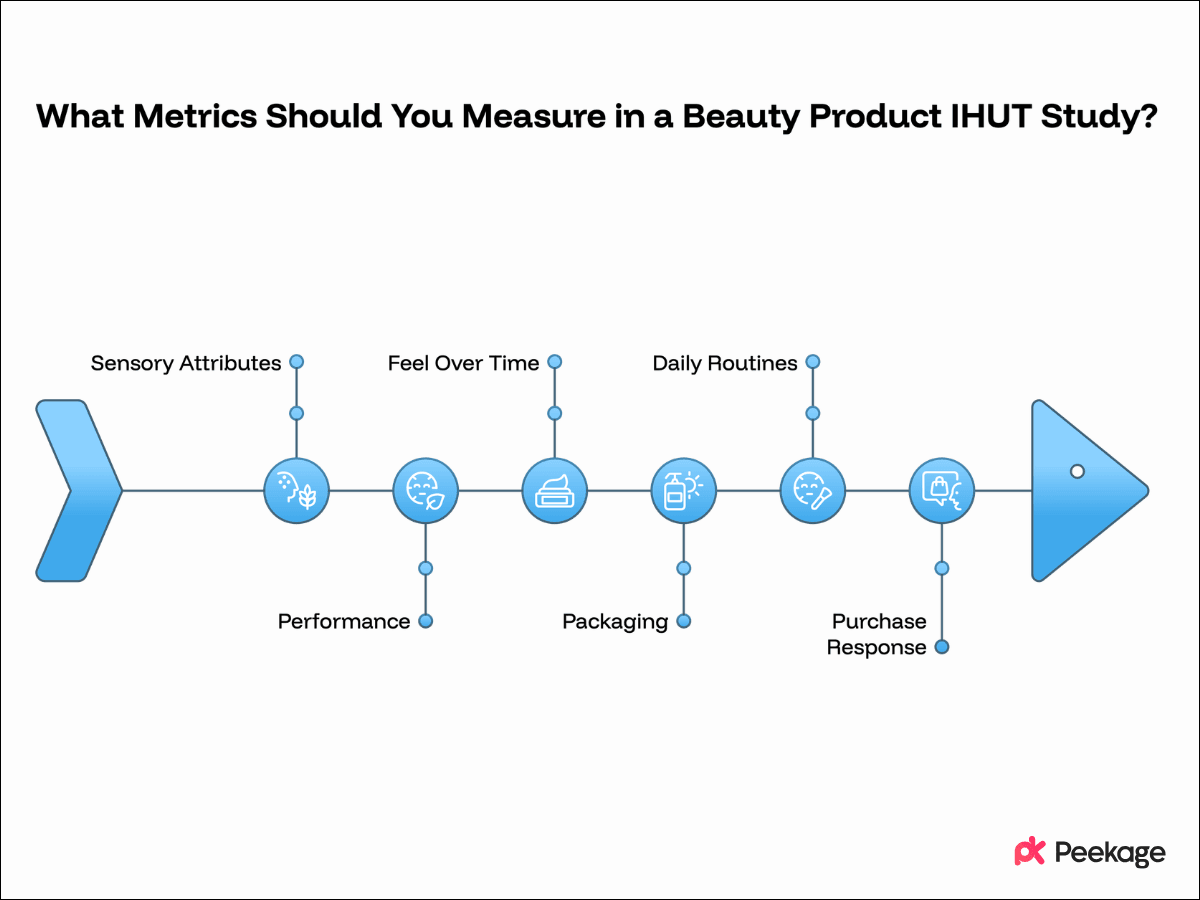
The metrics in a beauty IHUT should reflect what the brand needs to learn. A launch decision may depend on purchase intent, while a reformulation study may focus more on texture, scent, or ease of use. Common metrics include:
- Texture, scent, and ease of application: Ask participants how the product feels, smells, and applies to the skin or hair. These attributes help brands understand first impressions and identify areas for improvement, such as a lotion that feels greasy or a cream that takes too long to absorb.
- Product performance and perceived results: Measure whether participants notice the benefits the product is intended to deliver. Questions might ask whether skin feels softer, hair appears smoother, or the product performs as expected. These responses reflect consumer perceptions, not clinical proof of efficacy.
- Skin and hair feel over time: Capture feedback after initial use and at later stages of the test. A cream may feel smooth at first but become greasy with repeated use, while a hair treatment may be easier to assess after several washes.
- Packaging and ease of use: Evaluate whether pumps, tubes, caps, and other packaging components are easy to handle. Ask about dispensing, portability, and any problems that arise during normal use.
- Fit with daily routines: Find out whether the product works with participants' existing routines. For example, does a moisturiser layer well under sunscreen, or does a hair product add too much time to a morning routine?
- Overall satisfaction and purchase intent: Measure satisfaction, likelihood to buy or repurchase, and perceived value at the intended price. These results can help brands assess consumer acceptance and identify potential barriers to purchase.
The right mix of metrics depends on the product and the study objective. Prioritise the attributes linked to the product's main claims or the decision the brand needs to make, while retaining enough broader measures to understand the overall consumer experience.
What Questions Should You Ask in a Beauty Product IHUT?
A good beauty IHUT questionnaire combines rating scales with open-ended questions. Ratings make it easier to compare responses, while written feedback helps explain what participants liked, disliked, or would change.
Here are sample questions to adapt to your product and research goals:
- How would you rate the product's texture?
- How easy was the product to apply?
- What changes, if any, have you noticed after a week of use?
- Did you experience any irritation or discomfort while using the product?
- How well does the product fit into your current routine?
- How easy was the packaging to open, handle, and use?
- How likely would you be to buy the product at the listed price?
- What, if anything, would you change about the product?
Use a 5-point scale for questions about satisfaction, ease of use, or overall experience. Include a few open-ended questions to understand the reasons behind participants' ratings, and keep them focused so the survey remains easy to complete. Asking what participants would change can reveal specific improvements that rating scales may miss.
How to Choose the Right IHUT Research Partner for Beauty Products
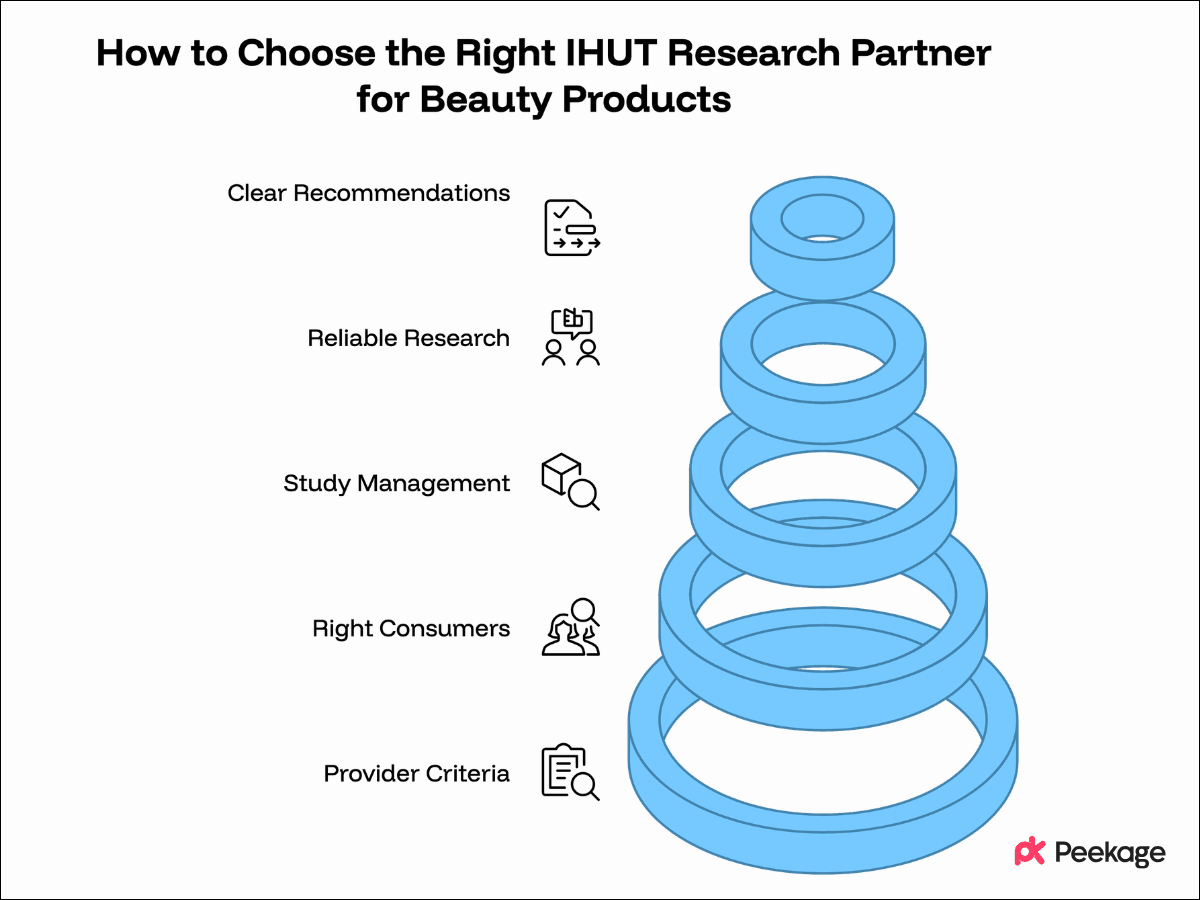
A good IHUT research partner should be able to recruit the right consumers, manage product delivery, collect reliable feedback, and turn the findings into clear recommendations. When comparing IHUT product testing services, look for a research partner that can recruit the right consumers, manage product delivery, collect reliable feedback, and turn the findings into clear recommendations.
- Beauty category experience: Experience running studies for skincare, haircare, cosmetics, or other personal care products.
- Panel quality: The ability to recruit relevant consumers based on skin type, hair type, product usage, and specific concerns.
- Safety screening: Clear procedures for checking participant eligibility, identifying relevant allergies or sensitivities, and obtaining informed consent.
- Product logistics: Reliable shipping, delivery tracking, and support for monitoring product use and collecting feedback.
- Study timeline: A realistic schedule covering recruitment, product delivery, the testing period, and final reporting.
- Reporting and analysis: Clear metrics, participant comments, and breakdowns by relevant consumer groups to help explain the results.
Sample size also matters. How many participants are needed for your IHUT depends on the research objective, the products being tested, and whether the study compares different consumer groups.
How Does Peekage Help Beauty and Personal Care Brands Run IHUT Studies?
Beauty brands often need to understand not just whether consumers like a product, but which audiences are most likely to respond to it. As a consumer product testing platform, Peekage helps brands explore these preferences through consumer testing, using a panel of more than 5 million consumers across the US and Canada and over 200 consumer attributes for audience targeting.
This reach can support research into different beauty audiences, from consumers exploring anti-aging skincare to shoppers looking for fragrance-free personal care products. Brands can use consumer feedback to understand how a product is received by their intended audience and identify preferences that may inform future product development or positioning.
Peekage also uses AI-powered analysis to help teams make sense of consumer responses. Instead of relying only on overall satisfaction scores, brands can explore recurring themes in feedback and better understand what consumers value or where expectations are not being met.
For beauty and personal care teams looking to bring consumer perspectives into product decisions, talk to the Peekage team about your research goals.