An in-home usage test (IHUT) shows how consumers experience a product in their everyday lives. To get useful results, brands need to measure the product attributes that shape that experience: from taste and texture to ease of use and performance.
This matters because not every new product meets consumer needs. NIQ found that 27% of new CPG launches globally were not viable with consumers in pre-market testing. Understanding which product attributes consumers value, and where the product falls short, can help brands make better decisions before launch.
Below, we cover the main consumer drivers to test, how to choose the right ones for your product, and how to use the results to guide product decisions. You will also see how IHUT testing services can help you with the process and collecting feedback during product use.
What Are Consumer Drivers in IHUT Testing?
Consumer drivers are the product attributes that affect how consumers feel about a product. These can include taste, texture, ease of opening, scent, how quickly a lotion absorbs, or how easy the instructions are to follow.
It helps to separate drivers from outcome metrics. An outcome metric tells you what consumers think about the product, such as overall satisfaction, purchase intent, or likelihood to recommend. A driver can help explain why they feel that way.
| Level | What it measures | Examples |
|---|---|---|
| Product attributes | Specific characteristics of the product | Taste, texture, scent, ease of use, product performance |
| Consumer experience | How consumers feel about the product after using it | Enjoyment, satisfaction, perceived quality, overall experience |
| Outcome metrics | What consumers are likely to do as a result | Purchase intent, likelihood to recommend, likelihood to switch |
Researchers can use Key Driver Analysis for CPG products to measure which attributes have the strongest link to the outcome. This helps brands see which product features matter most instead of relying on assumptions.
A consumer product testing platform can help collect these ratings and feedback from people using the product in their normal routines. For example, a shampoo can be tested in a consumer's own shower rather than in a controlled setting, giving brands a clearer view of how its key attributes perform in everyday use.
Which Product Drivers Should You Test With IHUT?
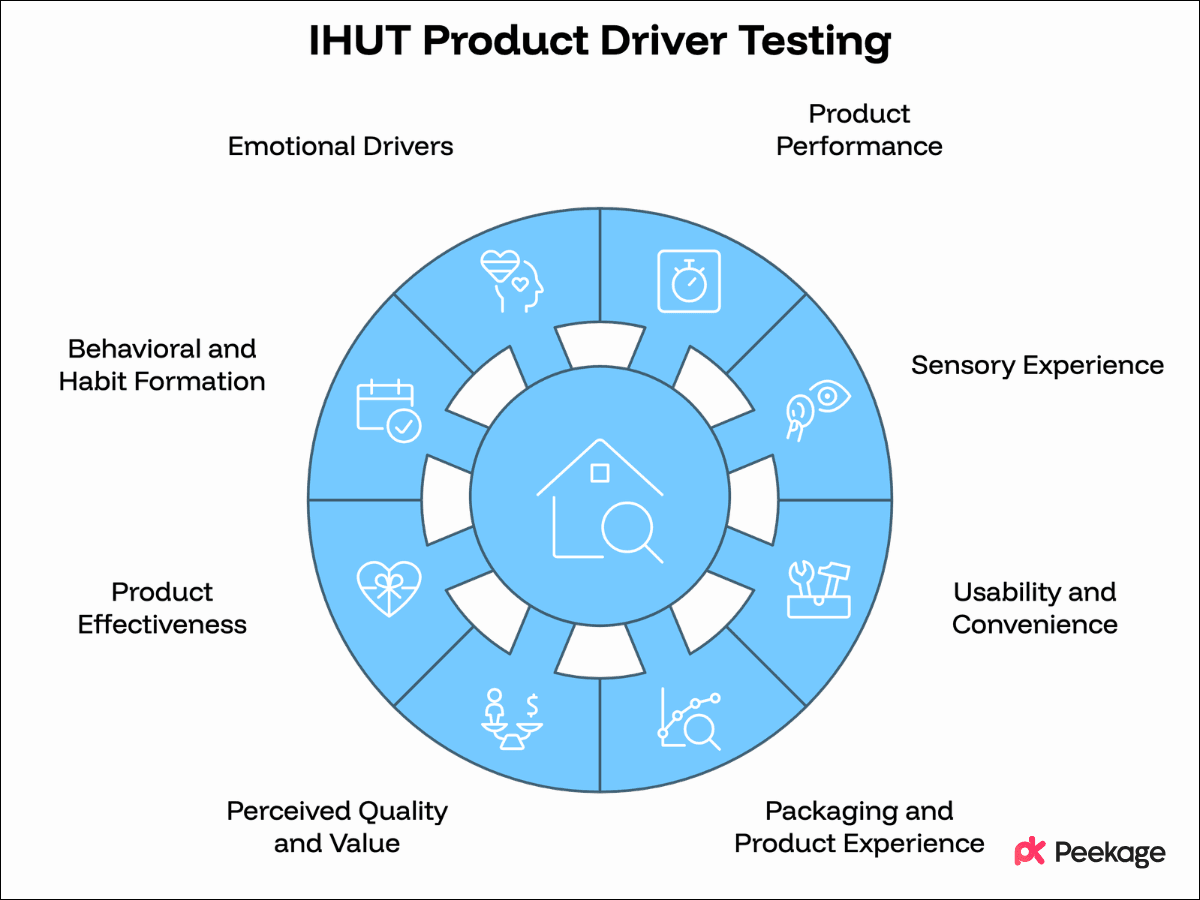
The right drivers depend on the product and what you need to learn from the IHUT. Most studies focus on a few main areas, including product performance, sensory experience, ease of use, and overall product experience.
Product Performance Drivers
Performance drivers show whether the product does what consumers expect it to do. For example, if you're conducting an IHUT study for a stain remover, it should lift stains, a moisturizer should hydrate the skin, and a razor should provide the expected result over repeated use.
This is where understanding how IHUT testing works can be useful. Consumers test the product in their own homes, so brands can see how it performs during normal use. These measures can help test a new product, assess a reformulation, or identify when a product is not meeting its main promise.
Taste, Texture, Scent, and Other Sensory Experience Drivers
Sensory drivers cover what consumers see, smell, taste, hear, and feel when using a product. Depending on the category, this can include taste, aroma, mouthfeel, texture, color, fragrance, or aftertaste.
Two common ways to measure these attributes are:
- Just-About-Right (JAR) scales: JAR scales show whether consumers find an attribute too weak, too strong, or at the right level. For example, you can ask whether a product is too sweet, not sweet enough, or just right.
- Hedonic liking scales: Show how much consumers like a product or a specific attribute, usually on a scale from dislike to like.
JAR results can also be used with penalty analysis to see whether an attribute being too weak or too strong affects overall liking. For example, if consumers say a drink is too sweet and those consumers also rate it lower overall, sweetness may be an area worth changing.
JAR should not be used on its own. Combining it with liking measures gives a clearer view of both the level of an attribute and how it affects the overall product experience.
Usability and Convenience Drivers
Usability drivers show how easy the product is to use as part of a normal routine. Ask about setup, preparation time, instructions, application, and any steps that make the product harder to use.
For example, a protein powder that dissolves in a shaker may be easier to use than one that requires a blender. An IHUT can capture these differences because consumers use the product in their normal routines.
Longer studies can be useful for products that take time to learn or use regularly.
Product Effectiveness Drivers
Effectiveness drivers show whether the product delivers the expected result over time. This can include visible results, symptom relief, durability, or changes after repeated use.
For example, a skincare product may be tested for changes in skin appearance over several weeks, while a laundry product can be tested after repeated washes. The testing period should match the result the brand wants to measure.
These results can also support product claims. If a brand wants to make a claim about results after two weeks, the study should measure the product's performance over that same period.
Perceived Quality and Value Drivers
These drivers show whether consumers think the product is worth its price. Ask whether the product feels high quality, whether the amount or packaging meets expectations, and whether consumers would consider buying it at the expected price.
This can reveal a gap between product performance and perceived value. A product may work well but still feel too expensive if consumers do not think the overall experience matches the price.
Brands can combine these measures with price questions to understand how consumers view the product's quality and value.
Packaging and Product Experience Drivers
Packaging drivers look at how easy the product is to open, use, store, and understand. Ask about opening and closing the package, dispensing the product, reading the label, and storing it between uses.
An IHUT can reveal problems that may not appear in a shelf test. A pump may clog, a pouch may be difficult to reseal, or a package may be awkward to store. You can also ask where consumers keep the product and whether its packaging fits into their usual routine.
Behavioral and Habit Formation Drivers
Behavioral drivers look at what consumers actually do with the product during the test. This can include how often they use it, how much they use each time, when they use it, and whether they use it instead of another product.
For example, if you are testing a new snack, you could ask consumers how many times they ate it during the week, when they usually chose to eat it, and whether they reached for it instead of another snack. If they try the product several times but gradually stop using it, this may point to an issue that a simple liking score does not explain.
Tracking these behaviors over time can reveal changes in usage. For example, if consumers use a product often during the first week but much less by the third week, the brand may need to understand what caused that drop.
Emotional Drivers
Emotional drivers look at how a product makes consumers feel. Depending on the category, consumers may describe feelings such as confidence, comfort, enjoyment, relief, or reassurance.
Open-ended questions, photos, and short videos can help uncover these reactions. A consumer might give a night cream a 4 out of 5 rating but explain that using it makes her feel like she is taking better care of herself. That added context can help brands understand the reasons behind the rating and find useful ideas for marketing.
How Do You Choose Which Product Drivers to Test in an IHUT Study?
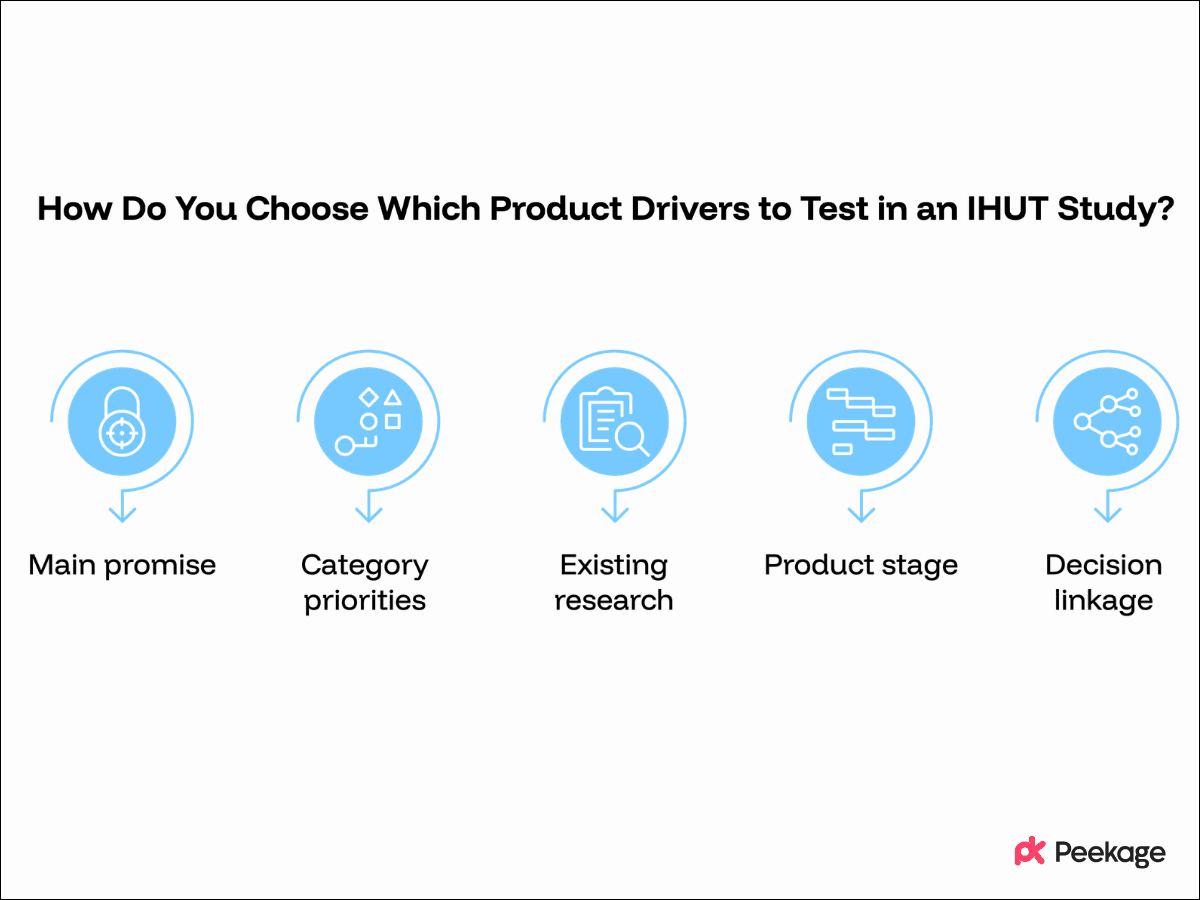
The right drivers depend on what you need to learn from the test. Use these steps to narrow your list.
- Start with the product's main promise. Identify what the product is supposed to do. If a stain remover claims to remove tough stains in one wash, stain removal and performance after one wash should be key drivers.
- Identify what matters in the category. Consumers usually focus on taste and texture for snacks, scent and lasting protection for deodorant, or whether a pet food is accepted by their pet.
- Review existing consumer research. Look at previous tests, product reviews, customer feedback, and complaints. Recurring issues can show you which attributes are worth measuring in the IHUT.
- Consider the product's stage. Early product tests may need a wider set of drivers because the team is still learning what works. A pre-launch test can focus on fewer attributes linked to specific product or launch decisions.
- Link each driver to a decision. Before adding a driver, ask what you will do if the result is poor. You might reformulate the product, change the packaging, adjust the price, or delay the launch. If a result will not affect a decision, consider leaving that driver out.
Which IHUT Drivers Should You Test for Different Product Categories?
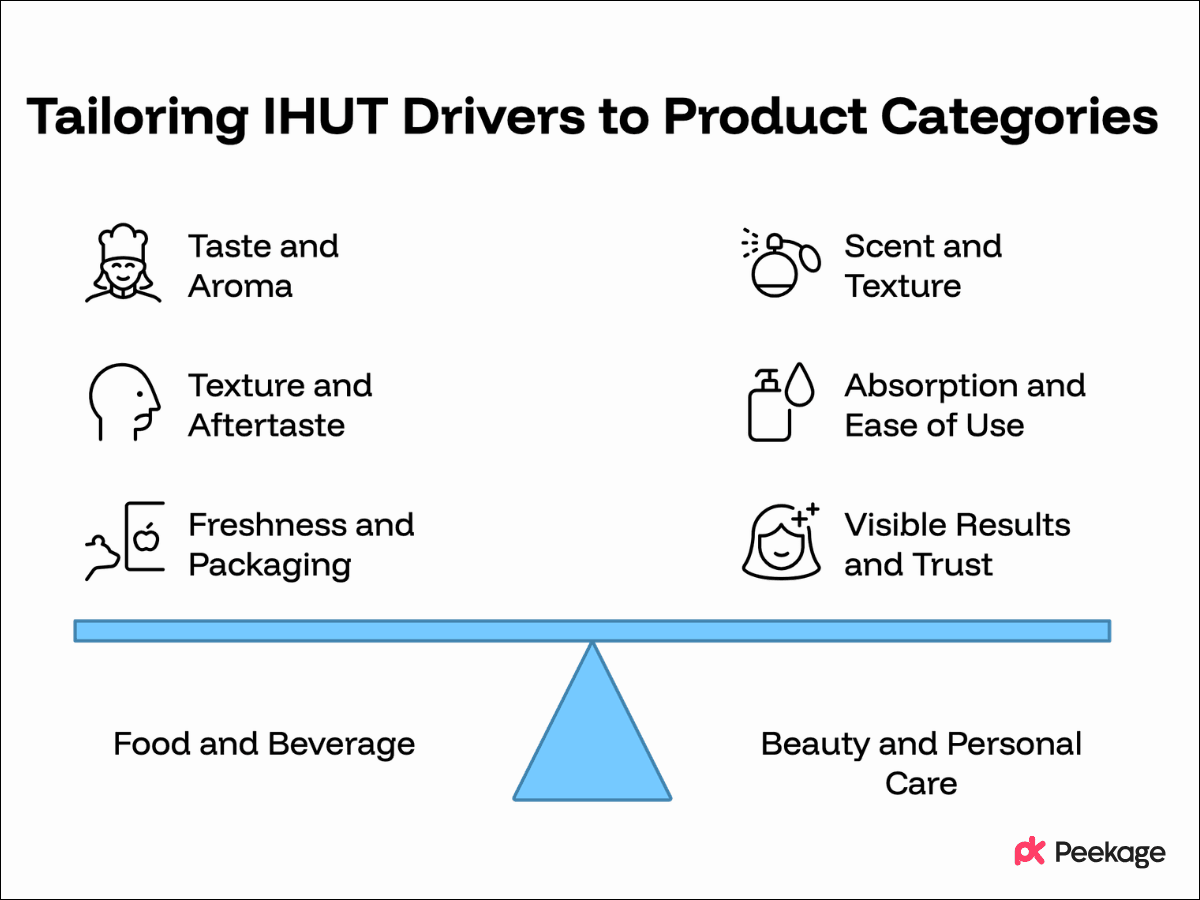
The most important drivers depend on the product. Here are some common priorities by category:
- Food and Beverage: Taste, aroma, texture, aftertaste, freshness, and packaging. JAR scales can help measure whether attributes such as sweetness or saltiness are at the right level.
- Beauty and Personal Care: Scent, texture, absorption, ease of use, and visible results. For products that take time to work, measure the experience and results across the full testing period.
- Pet Products: Palatability is important for food and treats because the pet's response matters. Also measure portioning, mess, storage, ease of use, and how owners view the product's ingredients and quality.
- Baby Products: Safety, comfort, fit, ease of use, materials, and overall trust. For caregivers, a product needs to feel safe and easy to use as well as perform well.
- Wellness and Supplements: Perceived results, ease of use, fit with daily routines, taste and format for products that are consumed, and perceptions of ingredients and quality.
What Metrics Can Be Used to Measure IHUT Drivers?
Start with the outcome you want to understand, then choose measures that can help explain it.
Outcome Metrics
Common outcome metrics include:
- Overall satisfaction: Shows how consumers feel about the product overall.
- Purchase intent: Measures how likely consumers are to buy the product, often using a five-point scale.
- Likelihood to recommend: Shows whether consumers would recommend the product to others.
Ways to Measure Drivers
Different question types work better for different drivers:
- JAR scales: Show whether a sensory attribute is too low, too high, or at the right level.
- Hedonic scales: Measure how much consumers like a product or specific attribute.
- Likert scales: Measure agreement with statements about product performance, usability, or other attributes.
- MaxDiff: Helps identify which features or claims matter most by asking consumers to choose between different options.
Analyze Which Drivers Matter Most
Key Driver Analysis and Relative Importance Analysis can show which product attributes have the strongest link to an outcome such as satisfaction or purchase intent. Penalty analysis can help identify sensory attributes that may be reducing overall liking.
It is also useful to look at results by consumer group. For example, new users and regular category users may have different priorities. Segment-level results can show which drivers matter most to each group.
How Can Brands Turn IHUT Drivers Into Product Decisions?
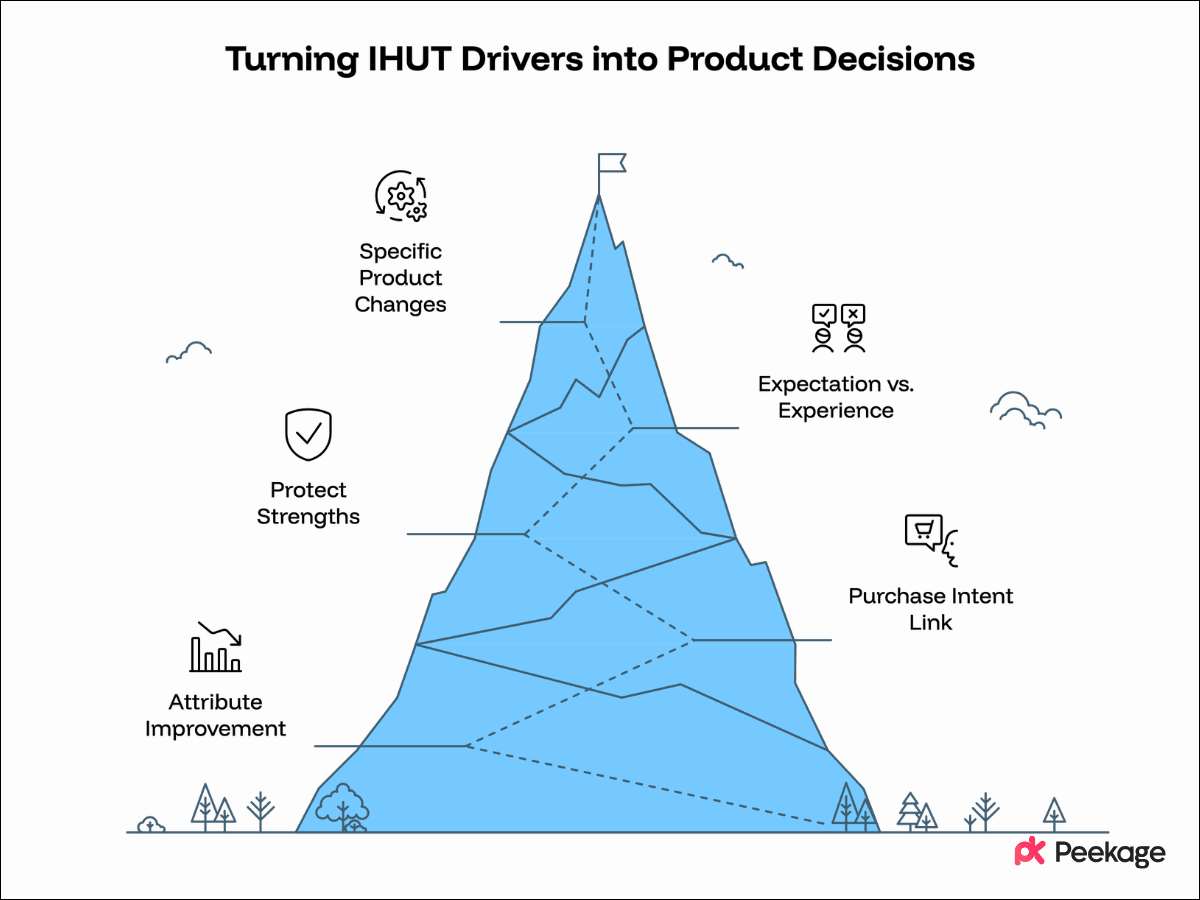
IHUT drivers are most useful when they lead to a clear action. Use the results to decide what to improve, protect, test again, or change.
- Identify which attributes need improvement. Compare how important each driver is with how well the product performs on it. High-importance attributes with poor performance should be a priority.
- Focus on drivers linked to purchase intent. A product attribute can be well liked without having a strong effect on purchase decisions. Look for the attributes that have a meaningful link to purchase intent.
- Protect the attributes that already work well. High-importance attributes with strong performance can be strengths worth keeping during reformulation or other product changes.
- Compare expectations with the actual experience. If consumers expect more from a product before using it than they report after use, look at both the product experience and the way its benefits are communicated.
- Turn findings into specific product changes. Use the results to guide formulation, packaging, product claims, or other changes. For example, if a penalty analysis shows that a product is too sweet and this lowers liking, the finding can help guide the next formulation.
Common Mistakes When Testing Consumer Drivers With IHUT
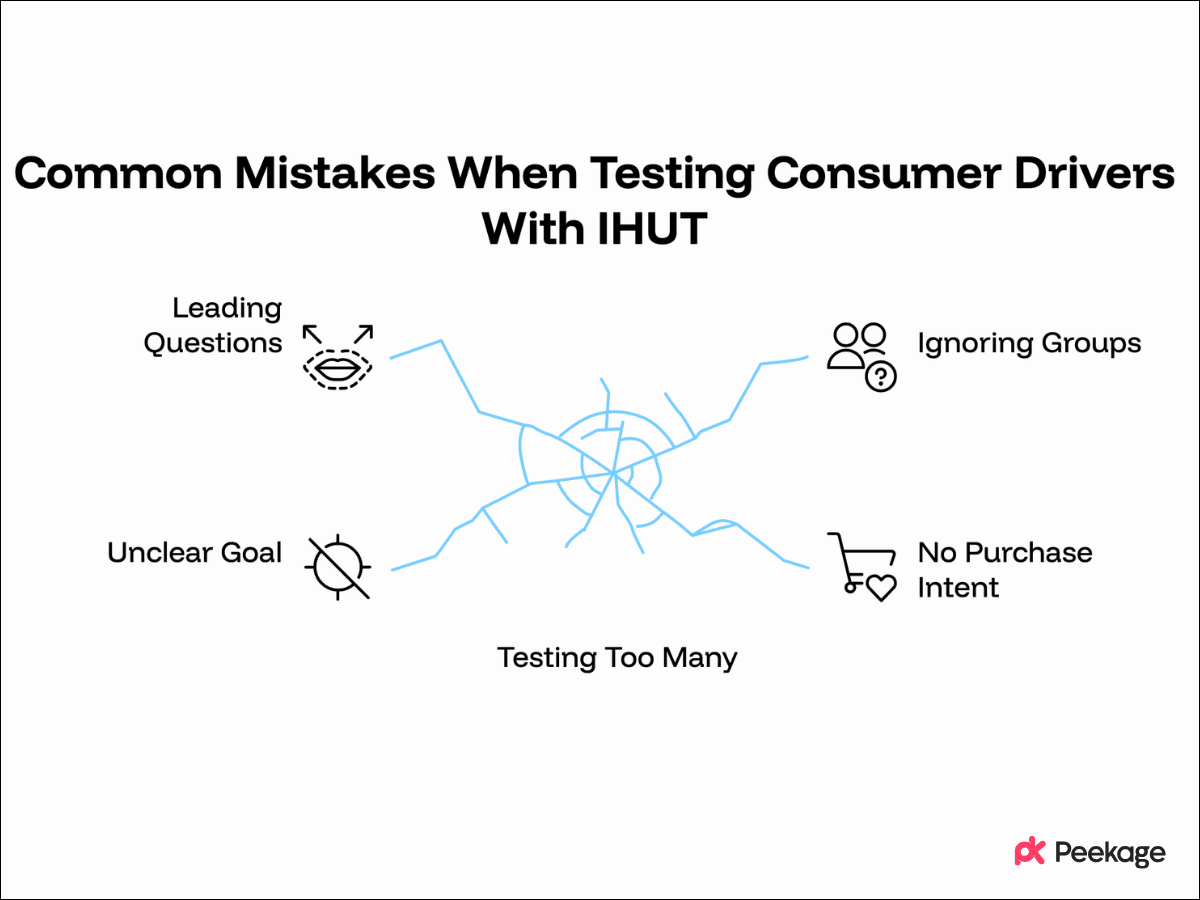
A well-planned IHUT should measure the drivers that matter without making the study harder for participants to complete. Avoid these common mistakes:
- Testing too many attributes. Long surveys can make participants tired and less engaged. Focus on the drivers that are most important to the research goal.
- Choosing drivers without a clear goal. Every driver should help answer a research question or support a product decision. Decide what you will do with the results before the study starts.
- Asking leading questions. Questions such as "How much did you enjoy the refreshing scent?" can influence the response. Use neutral wording so consumers can give their own opinion.
- Ignoring differences between consumer groups. Overall results can hide important differences between groups. A product may perform well with one group but poorly with another.
- Measuring satisfaction without purchase intent. Consumers can like a product without planning to buy it. Measuring both can show whether a positive product experience is likely to lead to purchase.
How Peekage Helps Brands Test Consumer Drivers With IHUT
At Peekage, we help brands build IHUT surveys that collect the right data to understand what drives consumer response. You may know which product you want to test, but still need to work out which questions to ask. The right questions help you understand not only whether consumers like a product, but why they respond to it in a certain way.
For example, if you are testing a new chips product, we can help you build questions around taste, texture, crispiness, and other attributes that may affect the overall experience. You could ask consumers to rate the taste or crispiness on a 0 to 10 scale, how much they enjoyed the product, how satisfied they were after eating it, or how likely they would be to buy it again.
We look at these questions together to help identify the product attributes that are linked to outcomes such as satisfaction and purchase intent. This gives you a clearer view of which attributes are driving the consumer response and which ones may need improvement.
We start by discussing your product, research goal, and the decisions you want the IHUT to support. From there, we help develop the right questions for your survey, so you collect useful data and can use the results to make informed product decisions.
Talk to the Peekage team to plan your next IHUT.