
Most CPG brands skip talking to consumers before launching a new product. According to SmashBrand, 85% of brands don't test their product idea with real buyers first. That single gap explains a lot about why so many new products disappear from shelves within a year.
If you're a CPG brand manager, product developer, or marketing lead with two or more concepts on the table, this guide is for you. We'll walk through comparative testing from scratch: what it is, where it works, where it falls short, and how to run one using the concept testing services of Peekage.
What Is Comparative Product Concept Testing and Who Is It for?
Comparative concept testing is a research method where you show two or more product concepts to consumers at the same time. Respondents evaluate the concepts side by side, then rank or choose between them. The goal is simple: figure out which concept your target buyer prefers.
This is different from monadic concept testing, where each respondent sees only one concept. Monadic testing gives you deep feedback on a single idea, but it can't tell you which of your options consumers would pick if both were sitting on a shelf. Comparative testing forces that direct choice.
From what we've seen, this method works best for CPG brand managers choosing between packaging directions, innovation teams narrowing options during a stage-gate process, and marketing teams A/B testing messaging before a campaign goes live. It's built for moments where you have 2 to 4 clearly different options and want a fast and a decisive answer.
The timing matters too. Comparative testing shines when your budget or timeline is tight, because it doesn't require splitting respondents into separate isolated groups the way monadic testing does. If you want a broader look at concept testing methods or product testing types and methods, those guides cover the full picture.
Benefits of Comparative Concept Testing for CPG Products
If you're trying to decide between two or more concepts, comparative testing makes that decision a lot easier. Here's why CPG teams tend to love it:
- You get a clear winner. Respondents choose between options, so there's no guessing which concept performed better. When you're up against a launch deadline, that kind of clarity is invaluable.
- It's easier on your budget. Other methods require separate respondent groups for each concept, which adds up fast. Comparative testing uses the same group to evaluate everything at once, smaller sample, lower cost.
- People give you more honest feedback. When someone looks at one concept in isolation, they tend to be generous with their ratings. Show them two options side by side, and suddenly they're much more critical, which means you get sharper, more useful signals.
- You can go head-to-head with competitors. Peekage's blind testing removes brand names entirely, so respondents judge purely on the concept itself. It's one of the best ways to see how your idea stacks up against what's already on shelves.
- It gets everyone on the same page. When different teams are each rooting for a different concept, consumer data cuts through the noise. The decision stops being about opinions and starts being about what buyers actually want.
Challenges of Comparative Concept Testing for CPG Products
Comparative testing is powerful, but it's not perfect. Here are the main pitfalls to watch out for, and how to handle them:
- Order Bias is real: Whichever concept respondents see first tends to get a small but meaningful bump, simply because first impressions stick. The fix is easy: randomize the order so half your respondents see Concept A first and the other half see Concept B first.
- It tells you what, but not always why. You'll know that 62% preferred Concept B, but without follow-up questions, you won't know if it was the color, the claim, or the price that made the difference. Adding one or two open-ended questions helps, though it does add some length to your survey.
- A survey isn't a store aisle. Respondents in a comparative test are more deliberate and analytical than they'd be on an actual shopping trip. Most people don't carefully examine two cereal boxes on a Tuesday evening, they just grab one and go. Keep that in mind when interpreting results.
- Your concepts need to be at the same stage. If you test a polished 3D render against a rough sketch, the polished one will win almost every time, regardless of which idea is actually stronger. Make sure both concepts are developed to a similar level before putting them in front of respondents.
- Small samples can mislead you. Aim for at least 100 qualified respondents per study. Below that, a "winner" might just be noise rather than a real signal.
- Watch out for confirmation bias. If your VP already loves Concept A, there's a natural pull to interpret borderline results as supporting that preference. Having people from different teams review the data together is one of the best ways to keep the analysis honest.
How to Do a Comparative Concept Test for CPG Products with Peekage: Step-by-Step Process
Running a comparative concept test doesn't require a six-figure research budget or a three-month timeline. With the right setup, CPG teams can go from question to consumer data in days. Here's how the process works on Peekage.
Step 1: Define Your Research Objectives
Start by identifying what decision you need to make. Comparative concept testing is used to evaluate multiple concepts against each other to determine which one performs best on key metrics like appeal, purchase intent, or uniqueness. Are you choosing between different product ideas? Packaging designs? Messaging directions? Your objective will define what you measure and how you compare results.
Step 2: Choose the Concepts You Want to Test
Create the set of concepts you want to test. Each concept should be clearly described and presented at a similar level of detail. Consistency is critical, if one concept is more polished or detailed than others, it may bias the results. Concepts can include visuals, descriptions, or a combination of both, depending on what you're testing.
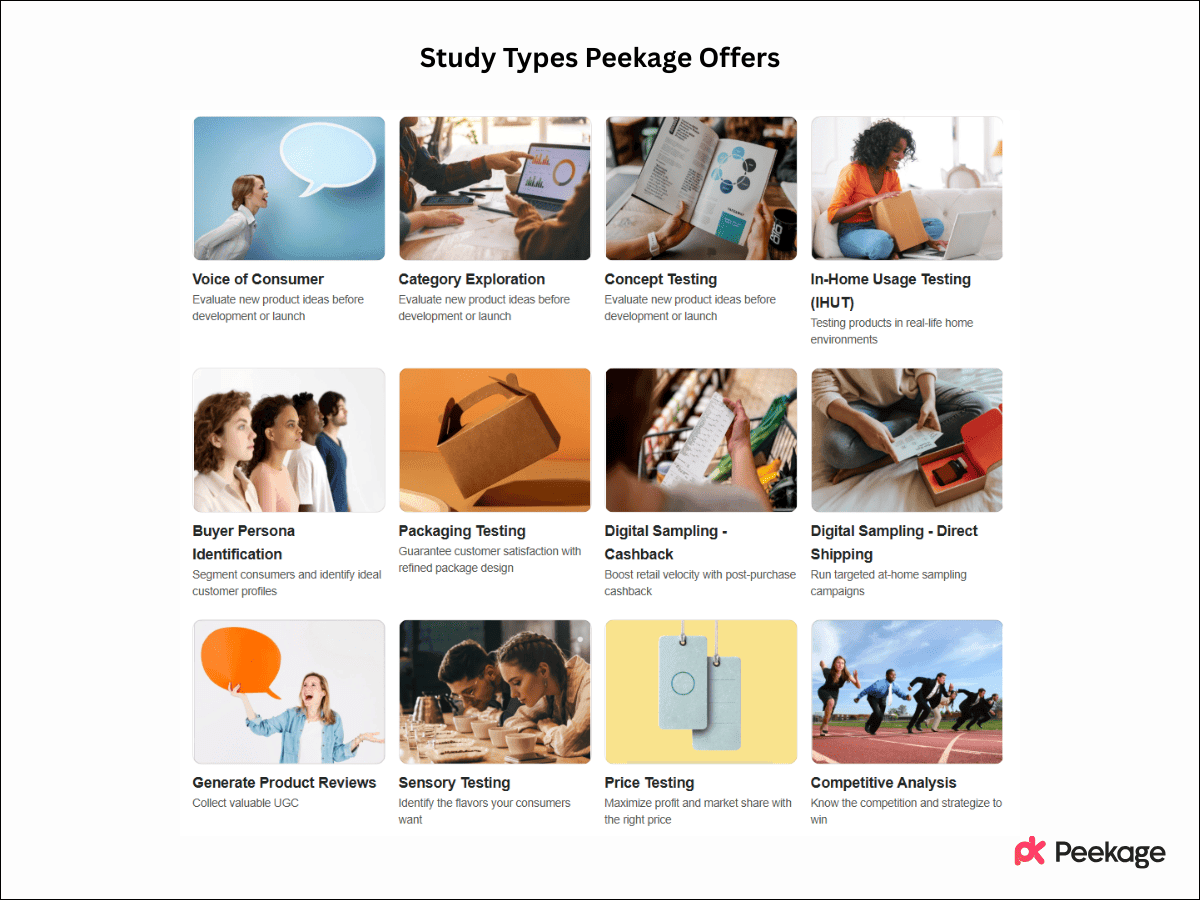
Step 3: Pick Your Study Type in Peekage
Choose the study type that matches your objective, then structure it for comparative evaluation. The study type sets the context, while the comparative approach defines how respondents evaluate multiple concepts within the same experience. The way you frame the comparison, whether direct side-by-side or sequential exposure, will influence how respondents make trade-offs.
Step 4: Build Your Panel Using 200+ Attributes
Use Peekage to target the right audience for your study. Define demographic, behavioral, and geographic criteria to ensure relevant feedback. Sample size should be sufficient to detect meaningful differences between concepts. Peekage's panel includes over 200 targeting attributes, and pre-screening allows you to further refine your audience if needed.
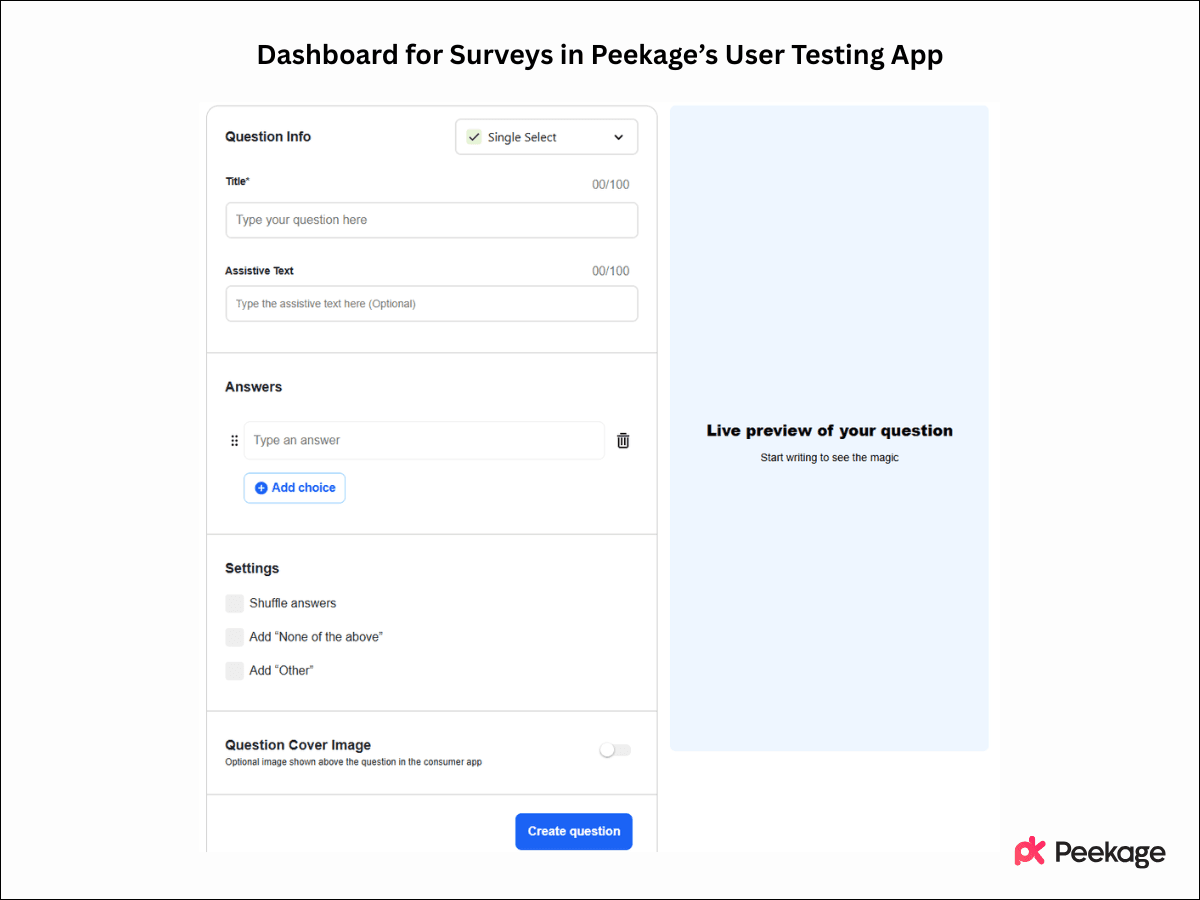
Step 5: Design Your Survey or Review the One Built by AI
Design your survey with correct concept testing questions to capture both individual concept performance and direct comparisons. This can include rating questions, as well as forced-choice or preference questions between concepts. You can start with Peekage templates or use AI-generated surveys, just make sure to review them to ensure consistency and alignment with your objectives.
Step 6: Send for Peekage Review and Launch Your Campaign
Before launching, submit your study for Peekage review. The team checks that concepts are presented fairly, the survey structure supports valid comparisons, and everything is set up for reliable results. This process typically takes 1–2 days. Once approved, you can launch your campaign. Peekage's execution AI manages recruitment and data collection, while the quality agent ensures clean data. You can monitor responses through the live dashboard, with most studies completed within 2–5 days.
Step 7: Analyze Results and Take Action
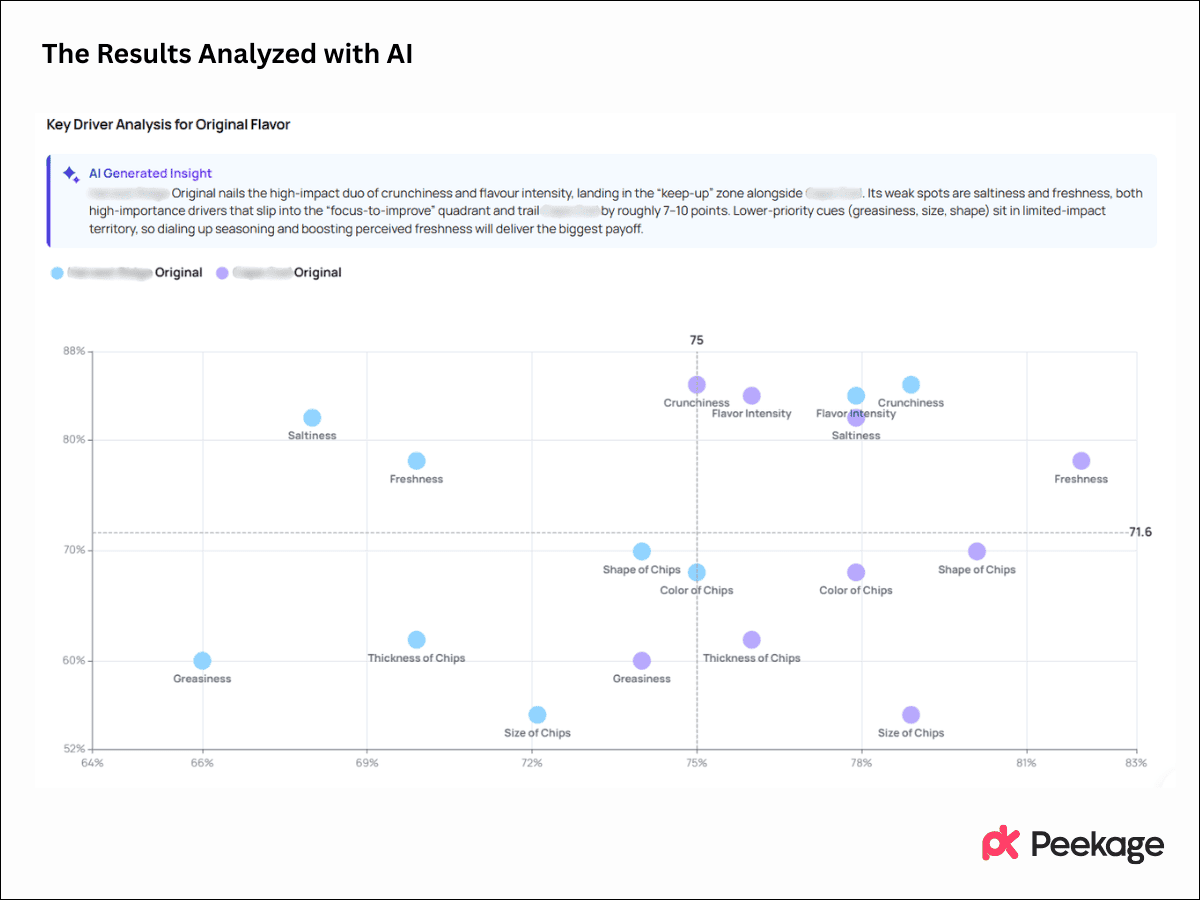
Comparative concept testing results show not only how each concept performs individually, but also how they rank against each other. Peekage presents this through rankings, score comparisons, and preference data, making it easy to identify the strongest option. The AI assistant highlights key differences, winning concepts, and areas where performance gaps are meaningful, then makes suggestions based on the analyzed data.
An Example of Comparative Concept Testing for CPG Brands with Peekage
What Our Client Needed
A premium sparkling water brand was preparing a packaging refresh for their flagship line and had narrowed the options to three design directions: a minimalist white-forward design, a bold color-blocked design, and a botanical illustration design. Internal stakeholders were split, with marketing leaning one way and the design team another. The team had four weeks before they needed to lock production, and they needed a direct head-to-head read from real category buyers, not another round of internal debate, to pick a winner.
What We Did
We ran an online comparative concept test with a nationally representative sample of premium sparkling water buyers. Participants were shown the three packaging designs side by side, simulating how shoppers compare products on a shelf. The study combined quantitative ratings across key metrics such as overall appeal, purchase intent, premium perception, shelf stand-out, and brand fit, along with forced-choice comparisons and open-ended feedback to capture both measurable preferences and emotional reactions to each design.
What We Found
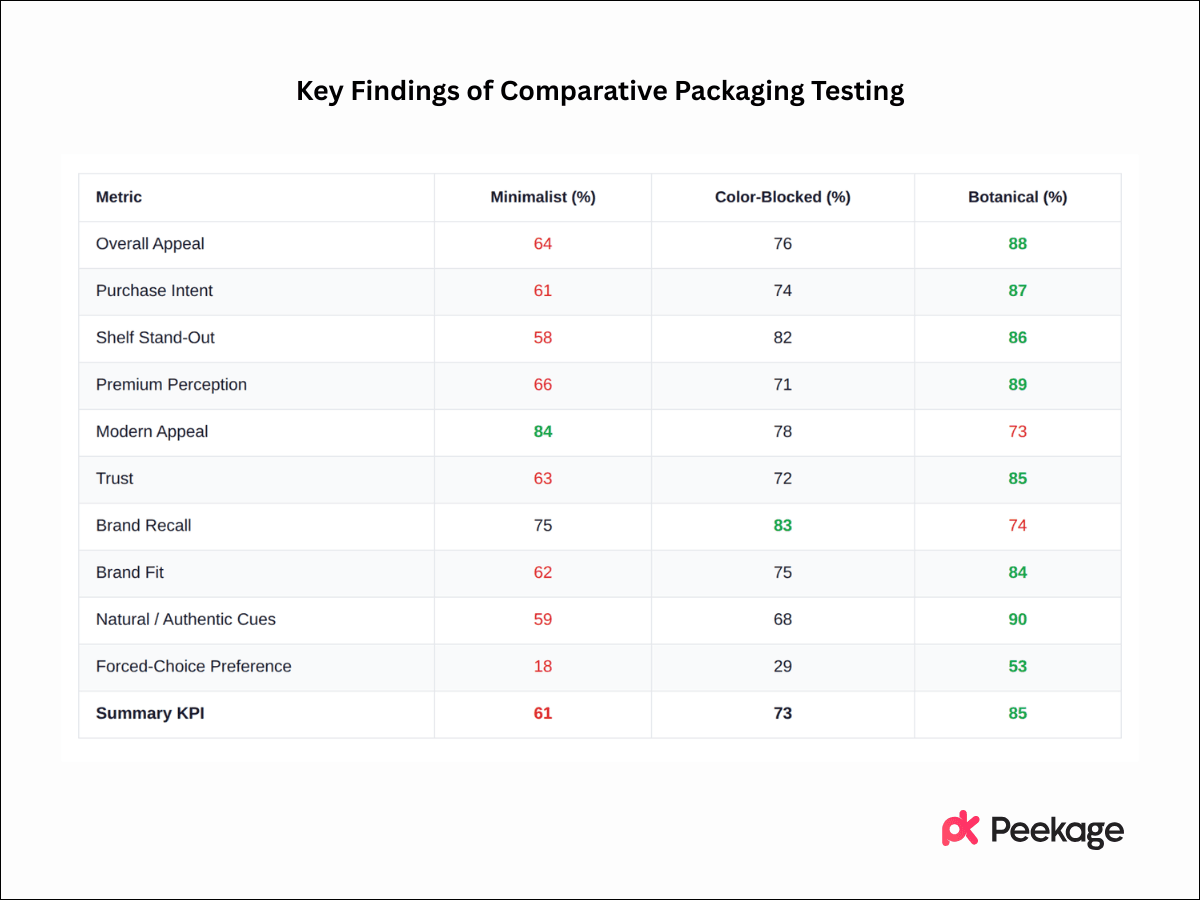
The results showed that the botanical illustration design clearly outperformed the other directions across most key metrics, including purchase intent, overall appeal, premium perception, and shelf stand-out. Consumers responded strongly to its natural, ingredient-led visual cues and refined color palette, which reinforced both quality and trust perceptions. While the color-blocked design performed slightly better on brand recall and the minimalist design scored higher on modern appeal, the botanical illustration design delivered the strongest overall consumer response, making it the most promising direction for final production.
Conclusion
In a category where 70 to 80% of new grocery products fail, comparative concept testing gives CPG brands a structured way to reduce risk before committing production dollars. The process follows a clear sequence: define a specific goal, select differentiated concepts, recruit the right audience, design a focused survey, collect data fast, and act on what consumers tell you.
Brands that test early tend to be 1.5 to 2x more likely to succeed at launch. That's not a small edge.
For CPG teams who want to run comparative concept tests without a traditional research agency's timeline or budget, Peekage's consumer insights platform puts study design, consumer recruitment, product fulfillment, and AI analysis in one place.