
An in-home usage test (IHUT) lets consumers try a product at home and share feedback based on their experience. For pet products, there are two sides to that experience: the pet's response and the owner's opinion of the product's quality, convenience, and value.
That distinction matters in a competitive market. U.S. pet industry spending reached $158 billion in 2025, but 22% of pet owners spent less on their pets that year, according to the American Pet Products Association. When budgets are tighter, brands need to understand whether their products meet both pets' needs and owners' expectations.
This article covers which pet products are suitable for IHUTs, how to run a study, which metrics and questions to use, and how to choose a consumer product testing platform.
What Types of Pet Products Can You Test With an IHUT?
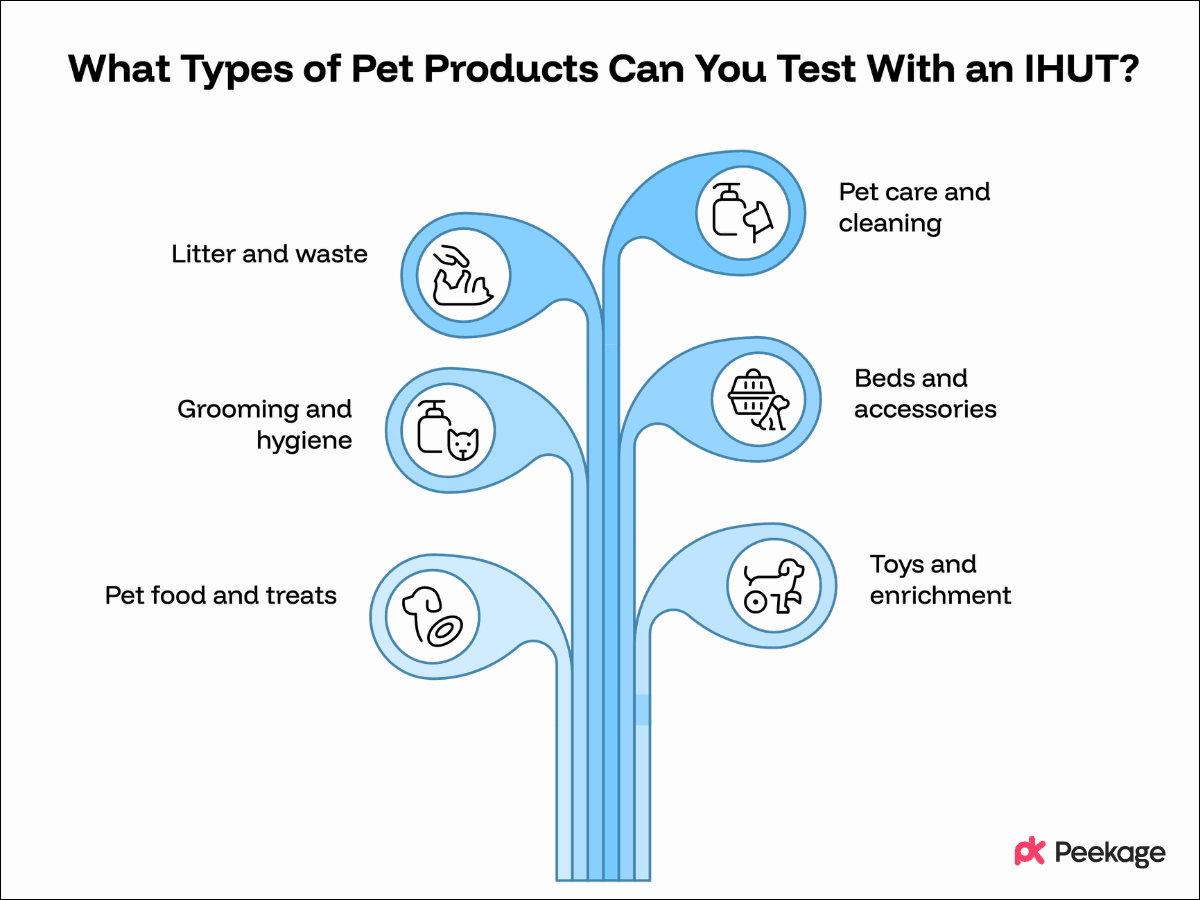
IHUTs can be used for a wide range of pet products, from food and toys to grooming supplies and accessories. The metrics depend on how the product is used and what the brand needs to learn.
- Pet food and treats: Evaluate pet acceptance, aroma, texture, feeding behavior, portioning, and packaging convenience. Owners can report whether their pets eat the product willingly and how easily they can store and serve it. Products should pass the necessary safety checks before being sent to participants.
- Toys and enrichment products: Observe how often pets engage with a toy, whether interest continues over time, and how well the product holds up during normal use. Owners can also report on durability and any safety concerns they notice during supervised play.
- Grooming and hygiene products: Test shampoos, conditioners, wipes, and similar products for ease of use, scent, rinsing, perceived results, and how well pets tolerate the grooming routine.
- Beds, carriers, and other accessories: Assess fit, comfort, durability, cleaning requirements, and convenience. Recruiting pets of different breeds and sizes may be important when evaluating products intended for a broad audience.
- Litter and waste management products: For litter, waste bags, and related products, owners can evaluate odor control, clumping, tracking, ease of cleanup, and overall convenience during regular use.
- Pet care and cleaning products: Stain removers, odor sprays, and cleaning solutions can be assessed for ease of application, residue, scent, perceived effectiveness, and suitability for use in homes with pets. Product instructions and safety precautions should be clear to participants.
For every category, it helps to distinguish the pet's response from the owner's experience. A pet may accept a food or use a bed comfortably, while the owner may have concerns about price, packaging, cleaning, or convenience. Capturing both perspectives gives brands a more complete picture of how a product performs at home.
How Do You Run an IHUT for Pet Products?
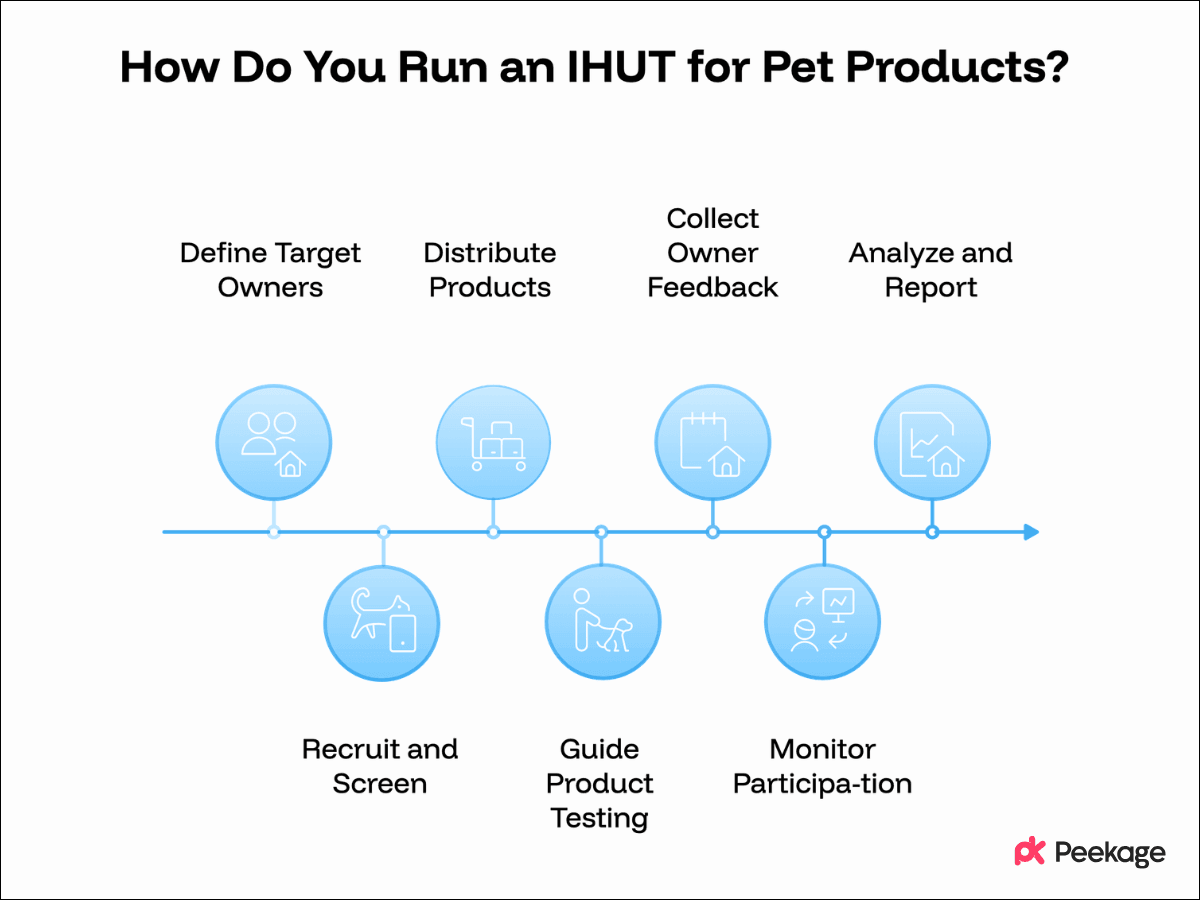
Running an IHUT for pet products involves seven steps, from defining the right participant profile to analyzing feedback from both pets and their owners. Each step should reflect how the product is used and what the study needs to measure.
Define Your Target Pet Owners
Start by defining the household, the owner, and the pet you want to include in the study. Pet characteristics may include species, breed, size, age, and the number of animals in the household. Owner criteria may cover current brands, purchasing habits, and feeding or care routines.
These details help you recruit households that reflect the product's intended audience. For example, a chew designed for young dogs may require a different participant profile from a litter product intended for multi-cat households.
Recruit and Screen Participants
Use a screening questionnaire to confirm that potential participants meet the study criteria. Questions may cover household demographics, current product use, pet characteristics, and willingness to follow the testing instructions.
Recruiting participants for IHUT can take place through consumer panels, existing customer lists, email, or social media. It is also worth accounting for possible dropouts when setting recruitment targets, particularly for studies that run for several weeks.
For pet products, check that participants have the right type of pet and can follow the test instructions. If a household has multiple pets, ask which animals will take part in the study. Clear instructions help participants know what to do before the product arrives.
Distribute Products to Participants
Before shipping, confirm that the product has passed the necessary safety checks. Laboratory testing and an IHUT serve different purposes: safety assessments help establish whether a product is suitable for testing, while the home study captures how pets and owners experience it.
Each testing kit should include the product, clear usage instructions, relevant safety information, and contact details for questions or problems. Instructions should explain how to use the product, what to observe, and how to record feedback.
If participants test more than one product, vary the order to avoid influencing their opinions. Use plain packaging when needed to prevent brand names from affecting their feedback.
Guide Owners Through Product Testing
Owners need straightforward instructions on how to use the product, what to observe, and when to submit feedback. The protocol should match the product category and research objective.
For pet food, two common approaches are:
- Single-bowl acceptance test: The pet receives one food, and the owner records observations such as whether the pet eats it and how much is consumed.
- Two-bowl preference test: The pet is offered two foods side by side, and the owner records which food the pet approaches or consumes more readily.
Other products require different observations. For example, a toy study may track engagement and durability, while a bed study may focus on whether the pet uses the product and how comfortably it fits into the household.
Safety instructions are essential throughout the test. Owners should supervise use where appropriate, follow the product directions, and report any adverse reactions or safety concerns promptly.
Collect Feedback From Pet Owners
Collect feedback close to the time of use to help owners record specific observations rather than relying entirely on memory. Short surveys or diary entries can capture feeding behavior, product acceptance, ease of use, and any problems that arise.
When a household tests multiple products, ask owners to record feedback for each product separately. This helps reduce confusion when comparing experiences across the testing period.
Photos and short videos can provide useful context alongside ratings and written responses. For example, a video may show how a pet interacts with a toy, while a feeding diary may document whether the pet approaches a bowl, eats the food, or leaves some uneaten.
Combining rating scales with a few focused open-ended questions gives researchers both measurable responses and explanations for those ratings.
Monitor Participation and Responses
Check participation throughout the study rather than waiting until fieldwork ends. Start, midpoint, and final check-ins can help identify missing responses, delivery issues, difficulties following instructions, or products that pets refuse to use.
Review incoming data for gaps and inconsistencies. If a participant misses a diary entry or reports a problem, follow up while there is still time to clarify the response or resolve the issue.
For longer studies, recruit extra participants in case some drop out. If you replace anyone, follow the same process each time and account for how much testing each participant completed.
Analyze and Report the Results
Analyze pet responses alongside owner feedback. A pet may readily eat a food, for example, while the owner dislikes its smell, finds the packaging inconvenient, or considers it too expensive. Looking at both perspectives helps brands understand product acceptance and the likelihood of repeat purchase.
The analysis should reflect the research objectives and relevant product metrics. Compare results across meaningful groups, such as pet age, breed, size, or household type, where the sample supports those comparisons.
A clear report should begin with an executive summary of the main findings, followed by detailed results, consumer comments, limitations, and practical recommendations. Explaining how the findings relate to the original research questions makes the report easier to use for product development and launch decisions.
What Metrics Should You Measure in a Pet Product IHUT Study?
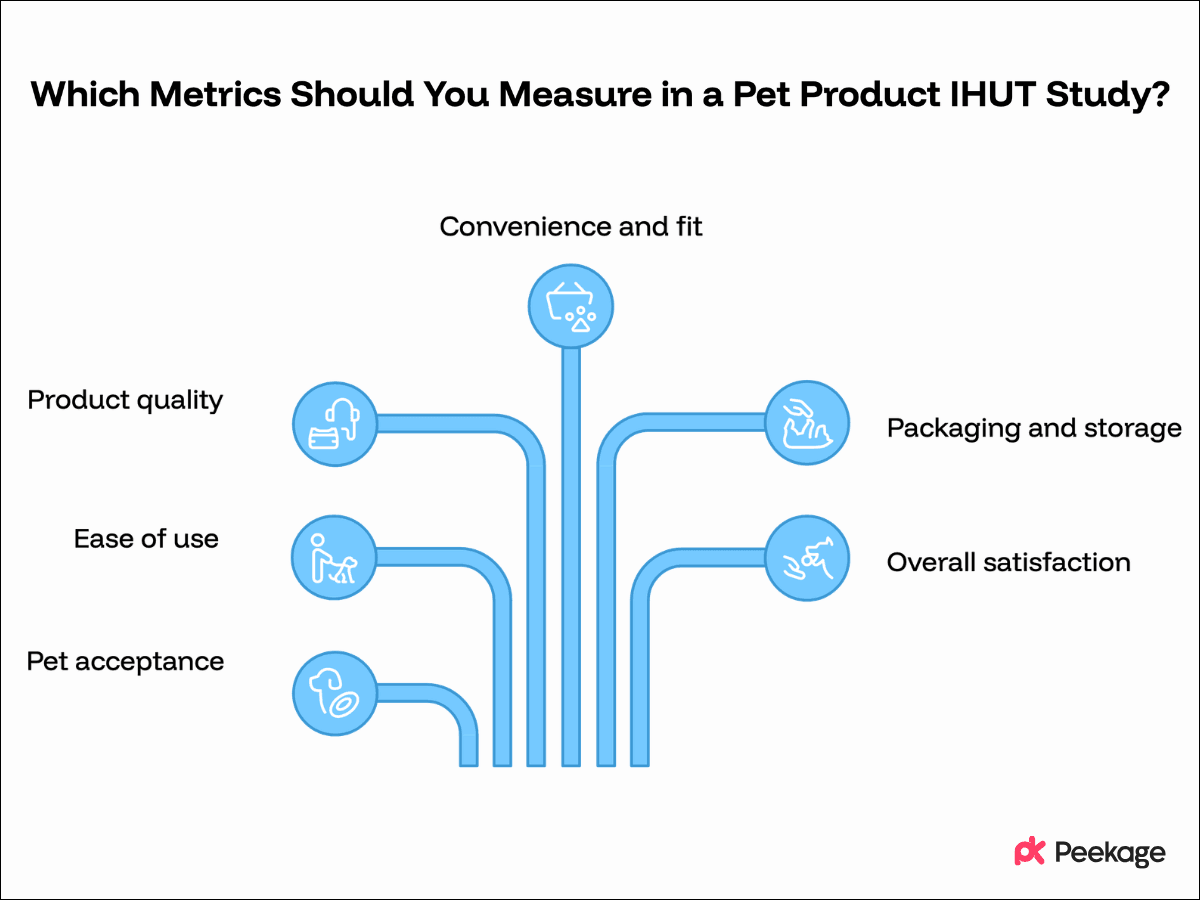
The right metrics depend on the product and the study objectives. Most pet product IHUTs assess both the pet's response and the owner's experience.
- Pet acceptance and interest: Measure whether pets eat, play with, or use the product. Depending on the category, this may include food consumption, toy engagement, or how often a pet uses a bed or accessory.
- Ease of use for pet owners: Assess how easy the product is to serve, apply, assemble, or use as intended. Clear instructions and manageable setup can also affect the overall experience.
- Product quality and durability: Evaluate how well the product holds up during normal use. For food, this may include texture and freshness; for toys and accessories, it may cover wear, damage, and durability.
- Convenience and fit with daily routines: Find out how easily the product fits into feeding, grooming, walking, cleaning, or other regular activities. Consider whether it remains practical for households with multiple pets.
- Packaging and storage: Assess how easy packaging is to open, reseal, dispense, and store. For products affected by environmental conditions, owners can also report any changes they notice during storage.
- Overall satisfaction and purchase intent: Measure owner satisfaction, perceived value, likelihood to buy or repurchase, and willingness to recommend the product.
What Questions Should You Ask in a Pet Product IHUT?
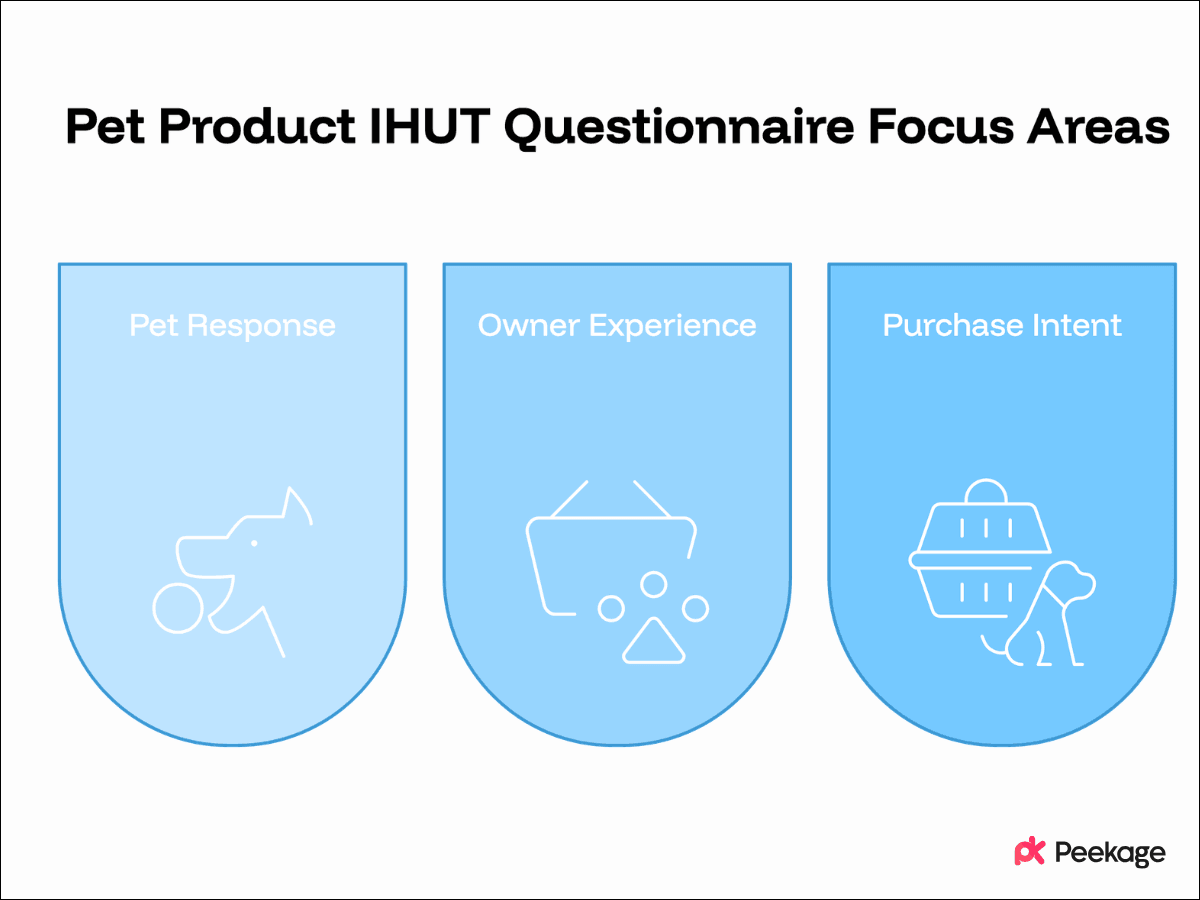
A pet product IHUT questionnaire should capture three things: how the pet responds, how the owner experiences the product, and whether the product is worth buying.
- Pet response: "How did your pet react the first time they encountered the product?" "Has your pet's interest or use changed since the start of the test?" For food, you could ask how readily the pet ate it. For toys, ask how often the pet played with it.
- Owner experience: "How easy was the product to use as instructed?" "Did you experience any problems during testing?" "What, if anything, would you change about the product?"
- Purchase intent: "How likely are you to buy this product at its expected retail price?" "How does it compare with the product you currently use?" "Would you recommend it to another pet owner?"
Use rating scales to measure responses consistently and open-ended questions to understand the reasons behind them. Keep each survey focused on the questions relevant to that stage of testing. Short, straightforward check-ins make it easier for owners to provide feedback throughout the study.
How to Choose the Right IHUT Research Partner for Pet Products
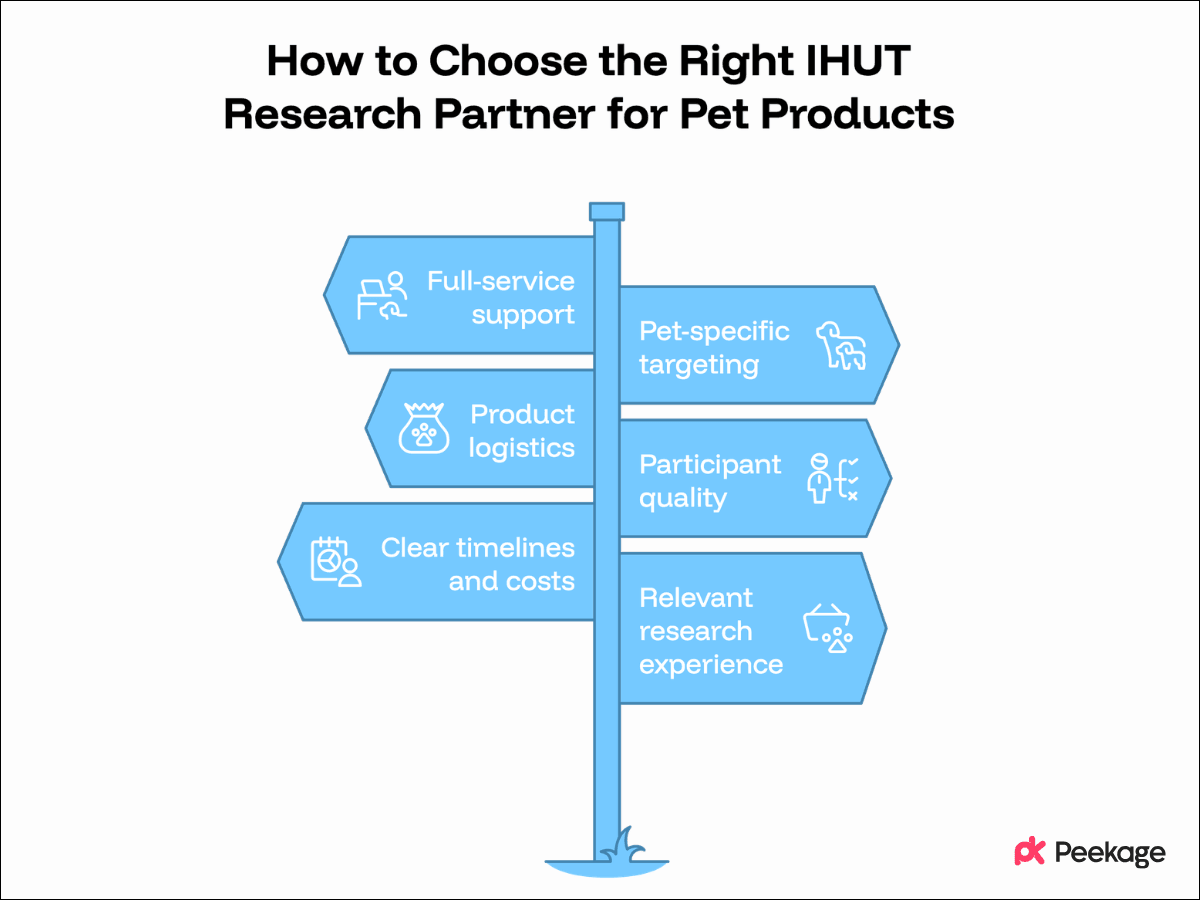
An IHUT product research partner should understand the needs of your target pet households and have the processes to manage the study from recruitment through reporting. When comparing providers, consider these factors:
- Full-service support: Look for help with participant recruitment, product distribution, feedback collection, and analysis.
- Pet-specific targeting: Check whether the provider can recruit households based on species, breed, size, age, number of pets, and relevant product usage habits.
- Product logistics: Confirm that the provider can handle your product's shipping requirements, including bulky accessories, fragile items, or temperature-sensitive food where needed.
- Participant quality: Ask how the provider verifies eligibility, checks participant details, and monitors engagement throughout the study.
- Clear timelines and costs: Request a breakdown of recruitment, shipping, fieldwork, and reporting costs, along with a realistic schedule for each stage.
- Relevant research experience: Ask for examples of studies involving similar pet products and how the findings helped brands make product decisions.
The right partner should be able to explain how it would recruit suitable households, manage the specific requirements of your product, and collect feedback that answers your research questions.
How Pet Brands Can Use Peekage for In-Home Product Testing
At Peekage, we help CPG brands test products with real consumers in their homes. For pet brands, we can customize an IHUT around the product, target audience, and research goals.
Screening criteria can focus on species, breed, age, size, dietary preferences, and current product usage to recruit relevant households. We can also adapt the questionnaire to the product category, whether you're testing food acceptance, treat preferences, toy engagement, grooming products, or the comfort and durability of pet accessories.
Our in-home product testing service supports the process from study setup and participant recruitment to product fulfillment and feedback analysis. This helps brands understand how pets respond to products and how owners assess factors such as convenience, quality, and value.
Planning an IHUT for a pet product? Talk to the Peekage team to discuss your product and testing requirements.