
Most IHUT problems start before the survey is even written. If the consumers taking part don't match your target market, the feedback you collect may look reliable in a spreadsheet but still lead you to the wrong conclusions.
An in-home usage test, or IHUT, sends a real product to consumers who use it in their own kitchens, bathrooms, and laundry rooms, then report back on their experience. Building a targeted consumer list helps you recruit people whose demographics, behaviors, purchase habits, and product needs align with what you're trying to learn.
Below, we'll walk through how to build the right consumer list for an IHUT, from defining the research goal and audience to choosing screening criteria, sizing your list, and finding consumers who actually qualify.
Define the Goal of Your IHUT Research Before Recruiting Participants
Your recruitment criteria should come directly from what you want the IHUT to help you learn.
- For a reformulation test, recruit people who already buy the current product and can compare it with the new version.
- For a new product, focus on consumers who match the audience you want to reach.
- For post-launch research, consider both repeat buyers and lapsed customers.
An IHUT testing platform can help you turn that research goal into specific audience criteria. You can then build a consumer list around the demographics, behaviors, and product experience that matter to your study. Vague goals lead to broad screening criteria, which can fill your sample with people who qualify on paper but don't provide useful feedback.
Who Should Participate in an IHUT Test? Consumers vs. Non-Consumers
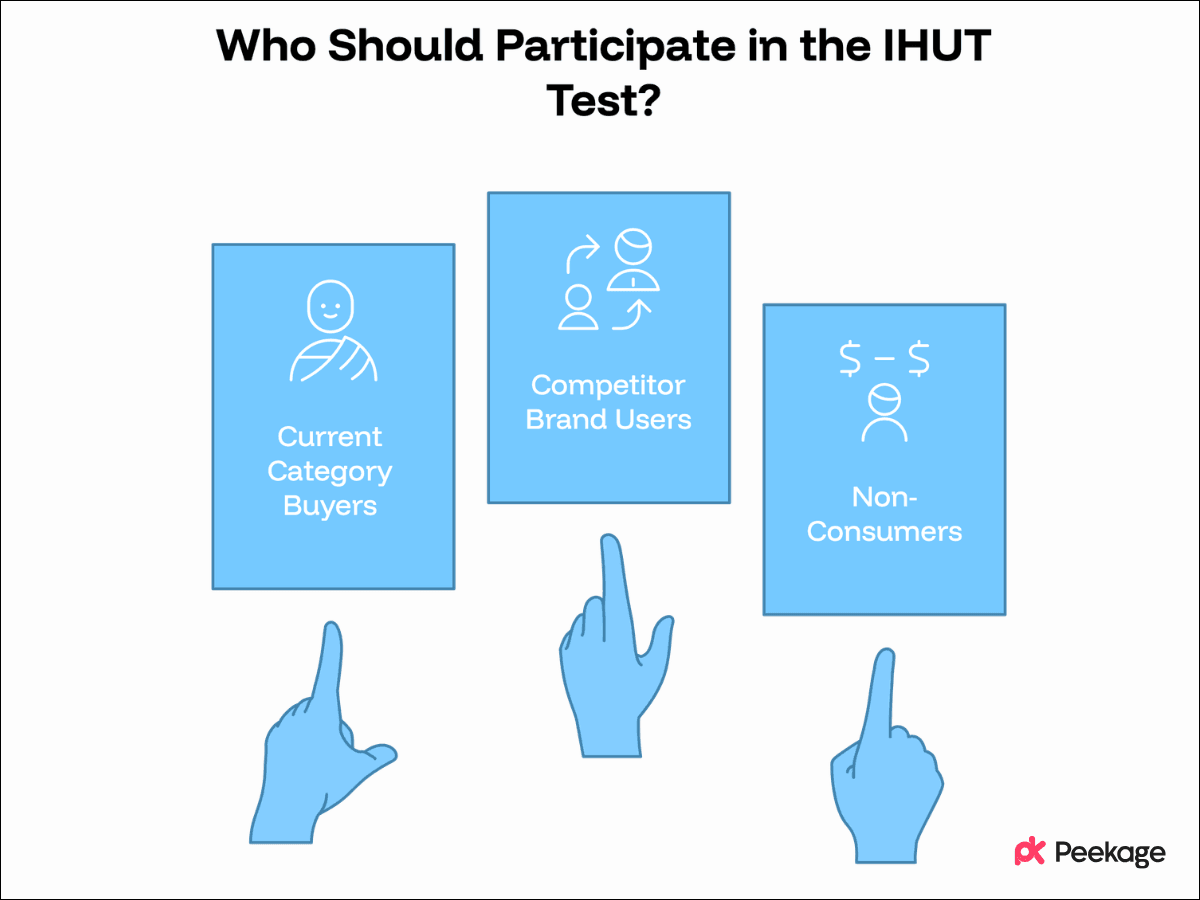
The right participants depend on what you want to learn. Current category buyers, competitor users, and non-consumers can each reveal something different about your product.
- Current category buyers already purchase and use products like yours. They can tell you how your product compares with what they know and whether they would buy it again.
- Competitor brand users buy the category but choose another brand. They can help you understand switching potential and where your product performs better or worse.
- Non-consumers don't currently buy the category. They can help uncover barriers to adoption, such as price, habits, lack of awareness, or unmet needs.
Your screening criteria should reflect the target buyer for the study. For example, a dish soap IHUT should target people who handle household cleaning purchases, while a kids' snack test should focus on parents who buy snacks for their children.
How to Define Your Target Consumer Profile for an IHUT Study
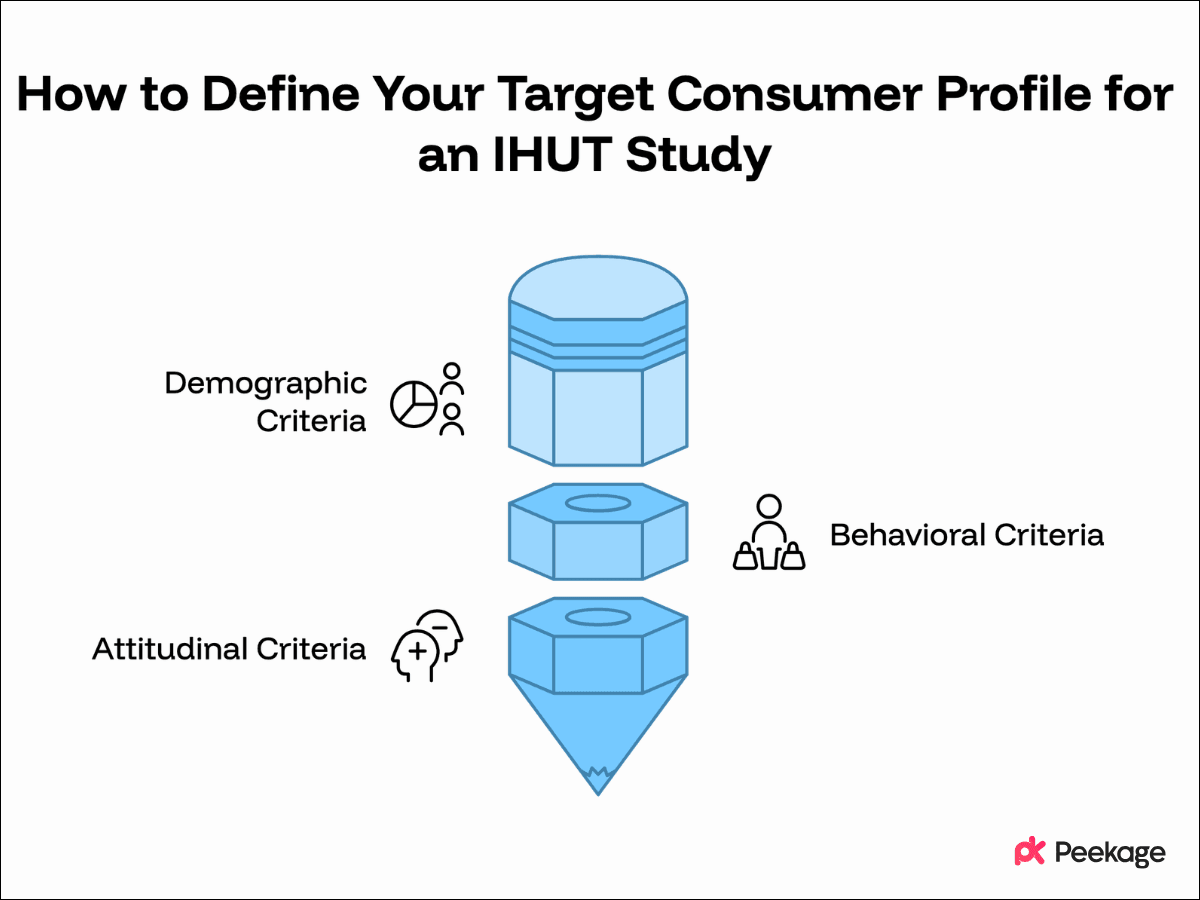
A strong target consumer profile looks at three things: who consumers are, what they do, and what matters to them. Demographics help narrow the audience, while behavioral and attitudinal criteria confirm whether they are actually relevant to the study.
Demographic Criteria for IHUT Participant Recruitment
Start with age, gender, household size, income, location, and life stage. This type of demographic segmentation helps you narrow your IHUT audience based on characteristics that matter to your product, such as location for a regional launch or household size for a family product.
Demographics are a useful starting point, but they should not be your only filter. Someone may fit your age and income requirements but have no experience with the product category.
Behavioral Criteria: The Most Important Recruitment Factors
Behavioral segmentation helps you identify consumers based on what they actually do, including purchase frequency, recent purchases, brands used, switching behavior, and how they use the product category.
For example, a tea study needs tea drinkers, while a study targeting potential switchers needs consumers who already buy competing brands. You should also distinguish between the person who purchases a product and the person who uses it when those roles are different.
Attitudinal Criteria: Finding Consumers Who Match Your Product Positioning
Attitudinal criteria help you find consumers whose priorities align with your product. These might include price sensitivity, interest in new products, ingredient preferences, sustainability, or convenience.
For example, a clean-label product may need consumers who actively check ingredients, while a premium product may be better suited to consumers who prioritize quality over price. Adding these criteria helps ensure your IHUT participants reflect the audience you actually want to understand.
How Many Consumers and Non-Consumers Should You Include in an IHUT Sample?
There is no universal split. The right mix of category buyers, competitor users, and non-consumers depends on your research goal and the consumers you need to represent.
For example, in a 200-person IHUT, you could recruit 140 to 160 current category buyers and use the remaining 40 to 60 participants to study competitor users or non-consumers. If you're testing a reformulation, you may want almost all participants to be current users. If you're testing a new category or looking for adoption barriers, a larger non-consumer group may make more sense.
Use quota sampling to control the mix. Proportional quotas mirror the target population, while non-proportional quotas intentionally include more people from a specific segment so you can compare groups reliably.
Keep subgroup sizes in mind when building your consumer list. If you divide a 200-person IHUT across too many segments, each group may become too small to produce useful insights. It's usually better to focus on fewer segments with enough participants than spread the sample too thin.
What Makes a Consumer Right for an IHUT?
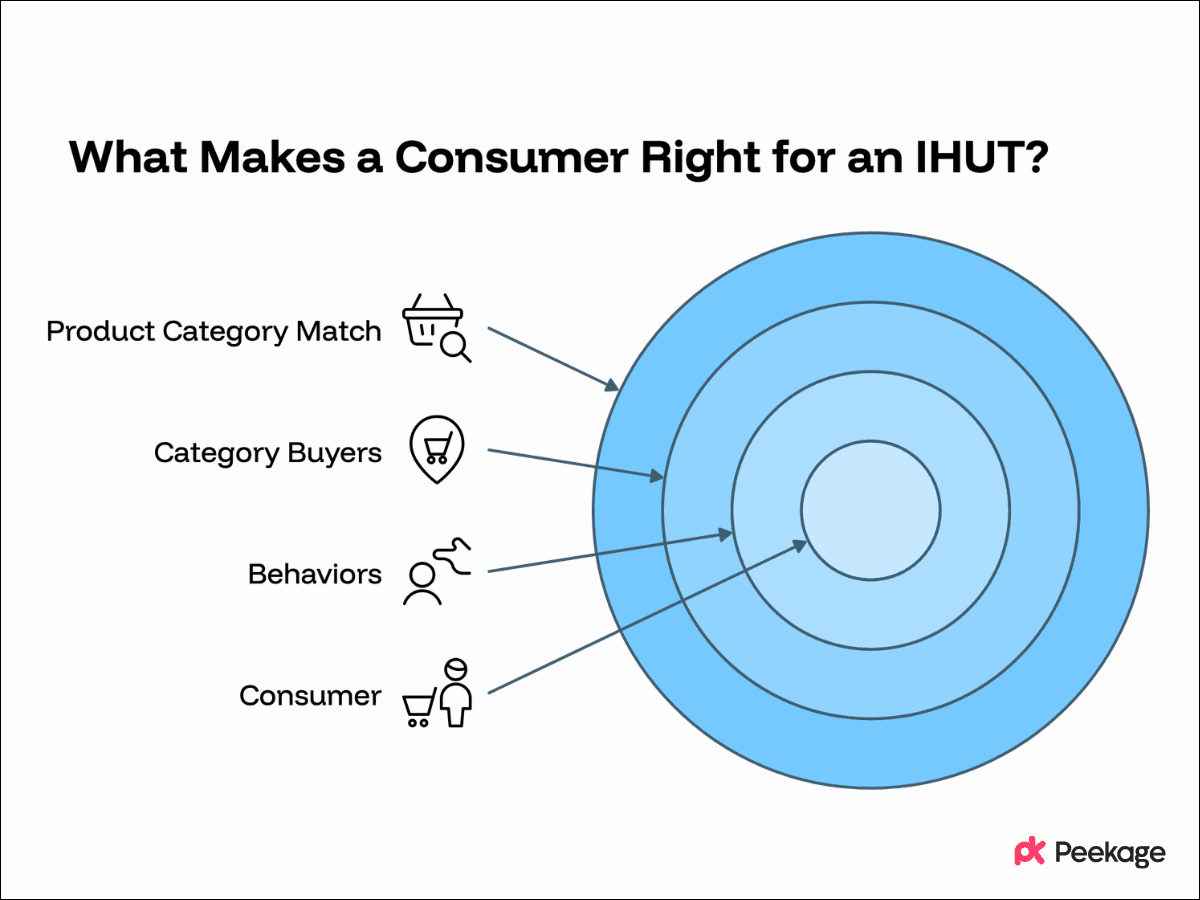
- Match Participants to the Product Category. Demographic similarity doesn't always mean category relevance. A 35-year-old parent in your target ZIP code who never buys frozen entrees may not provide useful feedback on your frozen entree.
- Prioritize Real Category Buyers and Users. Consumers who regularly buy or use the category can give more relevant feedback because they have real experience to compare against. Consider purchase frequency and recency when building your list.
- Define the Behaviors That Matter to Your Study. Usage frequency, purchase habits, and household role should reflect your research goal. A reformulation study may need frequent users who will notice a change, while a trial-focused study may benefit from light users or category switchers.
- Decide Whether to Include Current Customers and Non-Customers. Optimization studies often focus on current customers, while expansion studies may need non-customers to understand what prevents them from entering the category.
How to Create IHUT Screening Criteria for Participant Recruitment
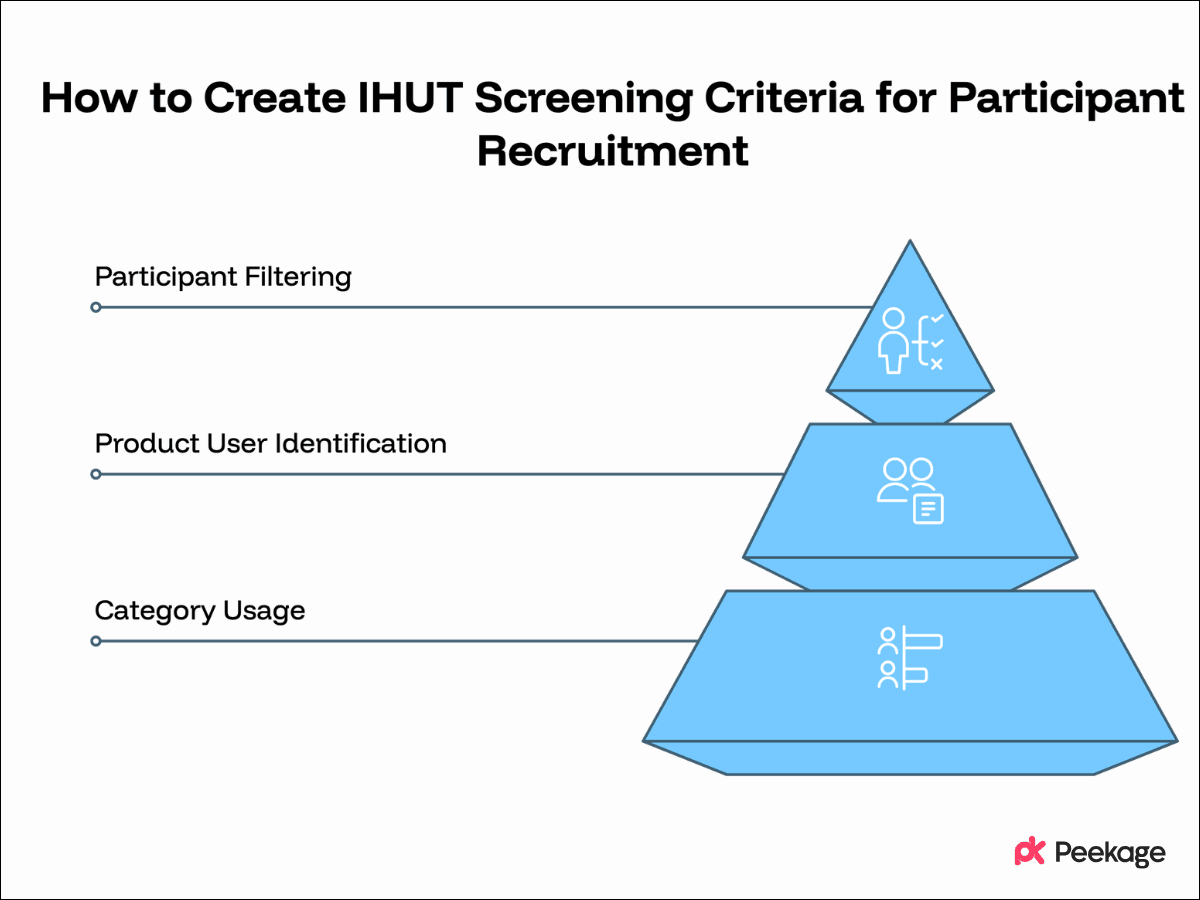
A good screener confirms that consumers match your target audience before they join the IHUT. Focus your questions on the behaviors, experience, and characteristics that matter to the study.
- Screen for Category Usage and Purchase Behavior. Ask how often consumers buy or use the category, when they last purchased it, and which brands they use. Recent and regular users are usually more relevant than people with limited category experience.
- Identify Qualified Product Users. Confirm how consumers use the category and what role they have in the household. For household products, for example, the person who buys the product may not be the person who uses it.
- Filter Out Poor-Fit Participants. Exclude professional survey-takers, people with contradictory answers, and participants who have recently completed similar product tests when that could affect their responses. Consistency checks can also help confirm that participants meet the criteria they reported.
Sample Screening Questions for IHUT Recruitment
- How often do you purchase [category]?
- When did you last purchase [category]?
- Which brands of [category] have you purchased recently?
- Who usually buys [category] products in your household?
- Who usually uses [category] products?
- Have you participated in a product test in the past 6 months?
Where to Find Consumer and Non-consumer Participants for In-Home Usage Tests
You can build an IHUT consumer list from several sources, but each gives you a different level of reach, targeting, and screening effort.
- Your CRM or customer database: A good option for current customers who already use your product or category. It is less useful when you need non-customers or new audiences.
- Market research panels: Give you access to broader audiences with existing demographic and behavioral profiles, although the depth of targeting varies by provider.
- Social media and brand communities: Useful for niche audiences and enthusiasts, but participants usually require more screening to confirm they fit the study.
- Retail intercepts: Let you reach real category shoppers, but recruitment is tied to specific locations and can be harder to scale.
- Consumer product testing platforms: Pre-screened panels make it easier to find consumers based on demographic, behavioral, and product-use criteria without starting recruitment from scratch.
For targeted IHUTs, Peekage can help brands find the right consumers without starting recruitment from scratch. Brands can define their audience, add custom screening questions when they need more specific qualifiers, and recruit participants who meet the requirements of the study.
How Peekage Supports Brands in the In-Home Usage Testing Process
Building a targeted IHUT list can take significant time when you need consumers with specific demographics, behaviors, or product experience. Peekage helps brands find and recruit those consumers through its consumer panel.
Peekage gives brands access to 5+ million consumers and 200+ targeting attributes, including age, location, income, dietary preferences, shopping habits, and product-use behaviors. Brands can also add up to 15 custom screening questions when the available criteria don't cover a specific requirement.
Once the audience is defined, Peekage supports the rest of the IHUT process, including product fulfillment, survey setup, feedback collection, and AI-powered analytics that help identify key patterns and insights in the results.
If you're planning an IHUT and need to reach a specific consumer audience, contact Peekage to see how the platform can support your study from audience targeting through results.