Have you ever had a brilliant product idea, only to discover later that it didn't resonate with your target audience? If so, you're not alone. Many businesses face this challenge.
But what if you could peek into your customers' minds and gather customer insights before investing in development? What if you could validate your ideas and refine your concepts before committing resources? That's where concept testing comes in.
In this comprehensive guide, we'll explore how concept testing can dramatically increase your chances of product success, save you from costly mistakes, and help you create products your customers will love. Whether you're a startup founder or a seasoned product manager, mastering concept testing could be the difference between your next big win and your next big disappointment.
What is Concept Testing?
Concept testing is the process of evaluating consumer response to a product idea before it hits the market. It helps brands understand whether their concept resonates with their target audience and identifies areas for improvement. By gathering feedback early, companies can make data-driven decisions that reduce the risk of product failure.
A concept is different from a finished product. It can be a written description, a mockup, a packaging design, or even a positioning statement. The goal is to validate whether an idea solves a real problem and whether people care enough to buy it.
Concept testing sits within concept testing market research. Brands use it to reduce risk, prioritize ideas, and validate assumptions before committing resources to production.
Why Is Concept Testing Research Fundamental for Product Success?
Concept testing is crucial because 95% of new products fail, often due to a lack of alignment with real customer needs and desires. Each failure represents wasted time, money, and missed opportunities that could sink a business.
The real value is strategic. Testing reveals which product features matter most, which messaging presents better, and where positioning falls flat. Brands use these insights to refine formulations, adjust claims, and rework packaging before launch.
By implementing concept testing, companies can ensure their product ideas match the target market, leading to several key benefits:
- Reduces risk: By testing ideas early, you can avoid costly mistakes and focus on those with the highest potential.
- Improves product-market fit: Feedback from your target audience helps refine concepts to better meet customer needs and validate market potential.
- Saves time and resources: Identifying winning concepts early optimizes the development process and resource allocation.
- Enhances decision-making: Data-driven customer insights support more informed choices about product features, positioning, and marketing strategies.
- Guides iteration: Consumer feedback can inform product improvements throughout the development cycle.
- Provides competitive intelligence: Testing can reveal how your concept compares to existing solutions in the market.
- Identifies potential challenges: Early testing can uncover potential obstacles or concerns that might affect product adoption.
- Aligns stakeholders: Concept testing results can help create consensus among team members and investors.
What Are the Main Methods Used for Product Concept Testing?
There are several approaches to concept testing, each with its own strengths and use cases. Here are some of the main ones:
| Type of Concept Testing | Description | Strengths | Best Used For |
|---|---|---|---|
| Monadic Testing | Participants evaluate a single concept in isolation without any comparison to other concepts. | Eliminates bias from comparison, simple analysis | Focused assessment of individual concepts |
| Sequential Monadic Testing | Participants evaluate multiple concepts one after another, each in isolation. | Combines depth of monadic testing with some comparative insights | Understanding relative performance without direct comparison |
| Comparative Testing | Participants compare two or more concepts side by side. | Direct preference insights, clear comparisons | Identifying the most preferred concept among alternatives |
| Protomonadic Testing | Combines elements of monadic and comparative testing; participants evaluate each concept individually before making comparisons. | Comprehensive insights, balances depth and comparison | In-depth evaluation followed by preference determination |
| Concept Screening | Evaluates a large number of concepts quickly to filter out less promising ones. | Efficient, handles large volumes of concepts Early-stage testing to narrow down options | Early-stage testing to narrow down options |
| MaxDiff Analysis | A survey method where respondents select the most and least important or appealing options from a set. | Provides precise, unbiased rankings of preferences. | Prioritizing features, benefits, or concepts to guide product or marketing decisions. |
What’s The Concept Testing Process Like
To conduct effective concept testing, follow these key steps:
- Define your objectives
- Identify your target audience
- Develop your concepts
- Choose your testing method
- Create your survey or discussion guide
- Recruit participants
- Conduct the test
- Analyze the results
- Make data-driven decisions
Let's dive deeper into each of these steps:
1. Define Your Objectives
Before starting, clearly outline what you hope to achieve through concept testing. Are you looking to:
- Validate a new product idea?
- Compare multiple concepts?
- Refine existing product features?
- Understand pricing sensitivity?
Having clear objectives will guide your entire testing process.
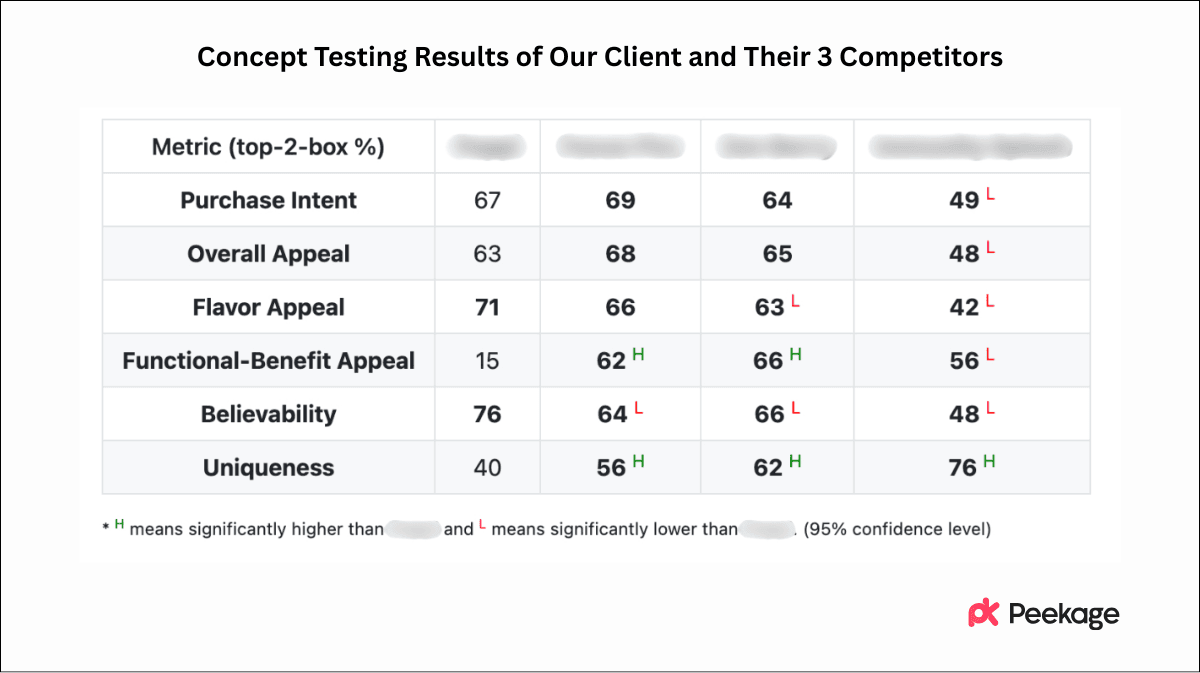
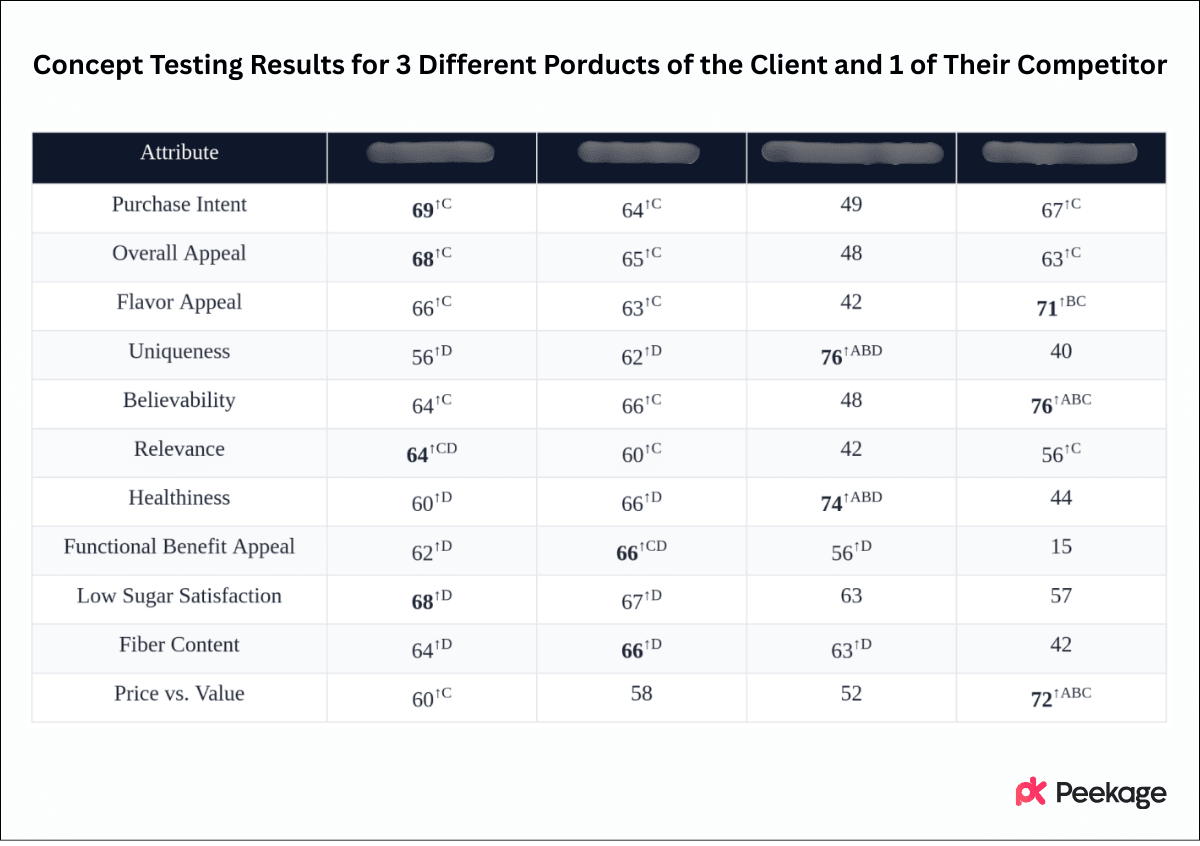
Example: Our client needed to determine whether any of the three new drinks could match or outperform their competitor’s top-selling drink across key metrics, such as purchase intent and overall appeal, based on feedback from U.S. beverage shoppers.
2. Identify Your Target Audience
Who is your ideal customer? Define your target demographic, psychographic, and behavioral characteristics. This ensures you're gathering feedback from the right people most likely to use your product.
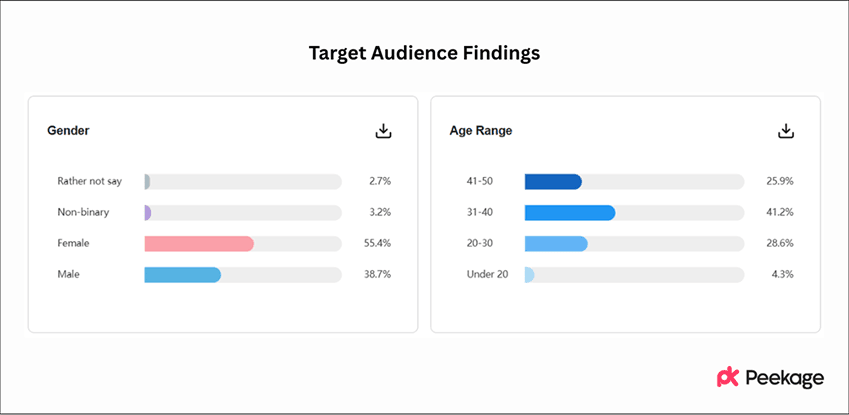
Example: Initially, our client was not sure about the demographics of their target audience. As a result of our research, we found that their product was most popular with adults aged 31-40 and especially appealing to women.
3. Develop Your Concepts
Create clear, concise descriptions of your product ideas. These should include:
- Key features and benefits
- Visual representations (sketches, mockups, or prototypes)
- Proposed pricing (if relevant)
- Unique selling propositions
Remember, the goal is to communicate the essence of your idea effectively.
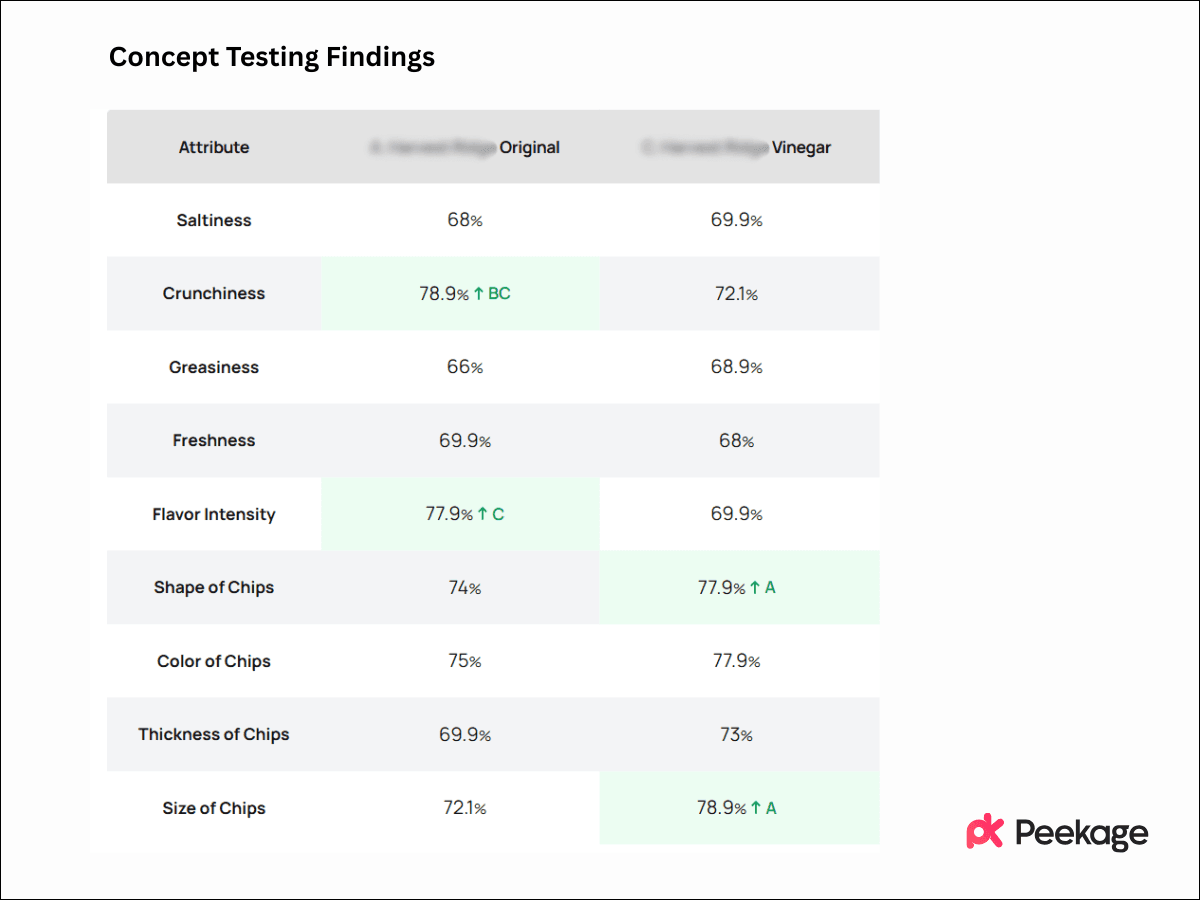
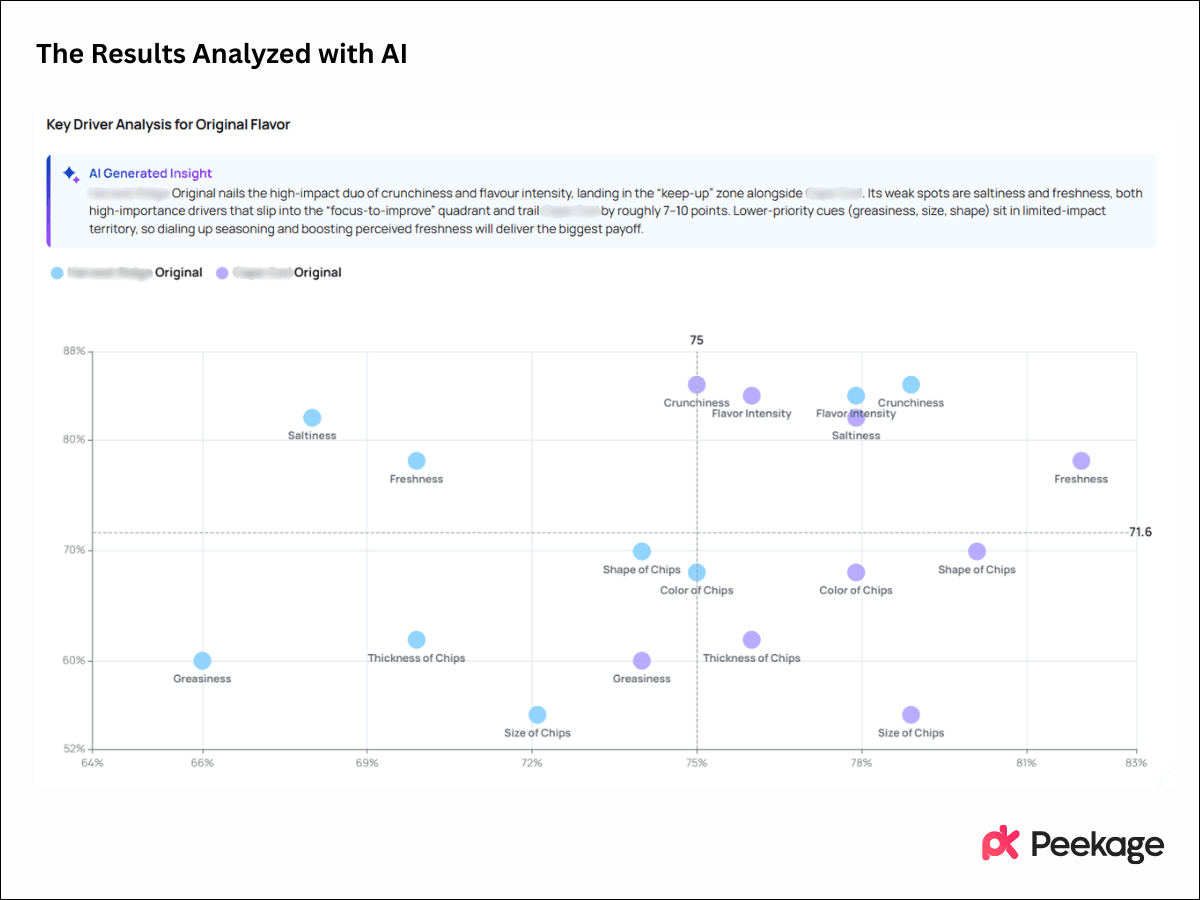
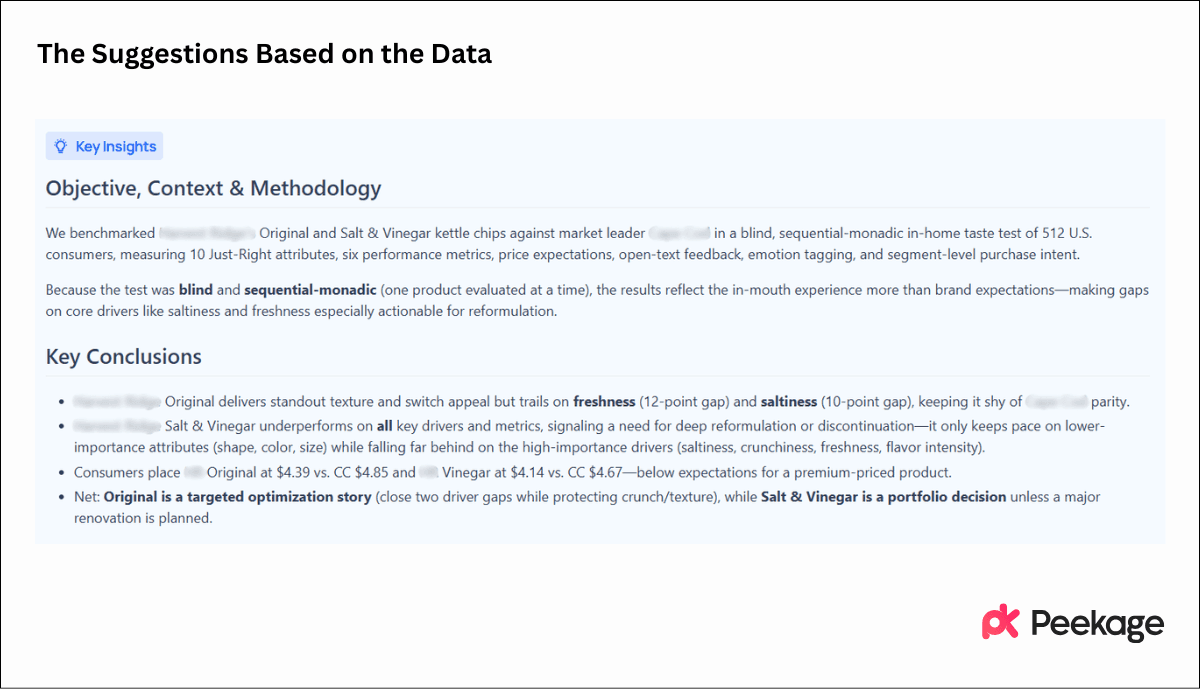
Example: We ran blind in-home usage tests for one of our clients’s crackers, tracking taste, texture, freshness, and other sensory attributes while collecting purchase intent, emotional feedback, and pricing expectations. The tests revealed that the Original flavor scored higher on crunchiness and purchase intent compared to Vinegar.
4. Choose Your Testing Method
Select the most appropriate testing method based on your objectives and the nature of your concepts. For example, if you're comparing multiple ideas, comparative testing might be ideal. If you're refining a single concept, monadic testing could be more suitable.
Example: To find out the performance of our client’s 3 new concepts, we used a sequential monadic approach. The respondent evaluated all four concepts - three new functional sodas of our client and a strawberry lemon flavored drink of their competitor - with the order of presentation randomized and no physical tasting involved.
5. Create Your Survey or Discussion Guide
Develop a set of questions or topics that will help you gather the consumer insights you need. Consider including:
- Overall appeal
- Purchase intent
- Perceived value
- Uniqueness
- Relevance to customer needs
- Areas for improvement
For quantitative surveys, use a mix of closed-ended (e.g., rating scales) and open-ended questions. For qualitative discussions, prepare a guide with key topics and potential follow-up questions.
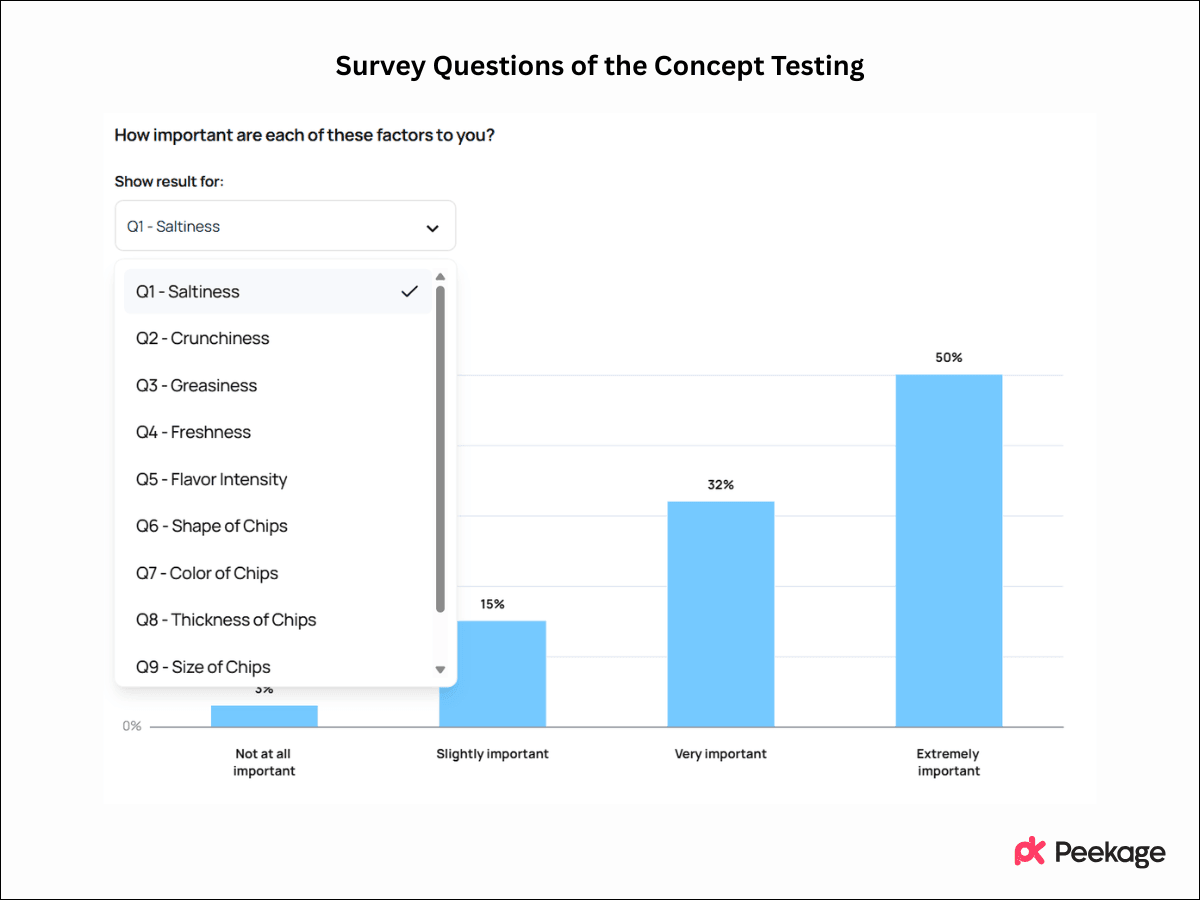
Example: When testing our client’s crackers with a new flavor, our AI measured a few drivers such as saltiness, greasiness, crunchiness, and likelihood to recommend others, along with open-ended questions about potential concerns and more.
6. Recruit Participants
Find participants who match your target audience profile. You can do this through:
- Customer databases
- Social media
- Market research panels
- Specialized recruitment agencies
Platforms like Peekage can be particularly useful for reaching consumers willing to participate in research campaigns from the comfort of their homes.
Example: When testing a new cracker flavor for our client, we recruited snack lovers who regularly consume crackers, reaching them through social media groups.
7. Conduct the Test
Administer your survey or facilitate your discussions. For online surveys, use a reliable platform that can handle your sample size and question types. For in-person or virtual discussions, ensure you have a skilled moderator to guide the conversation.
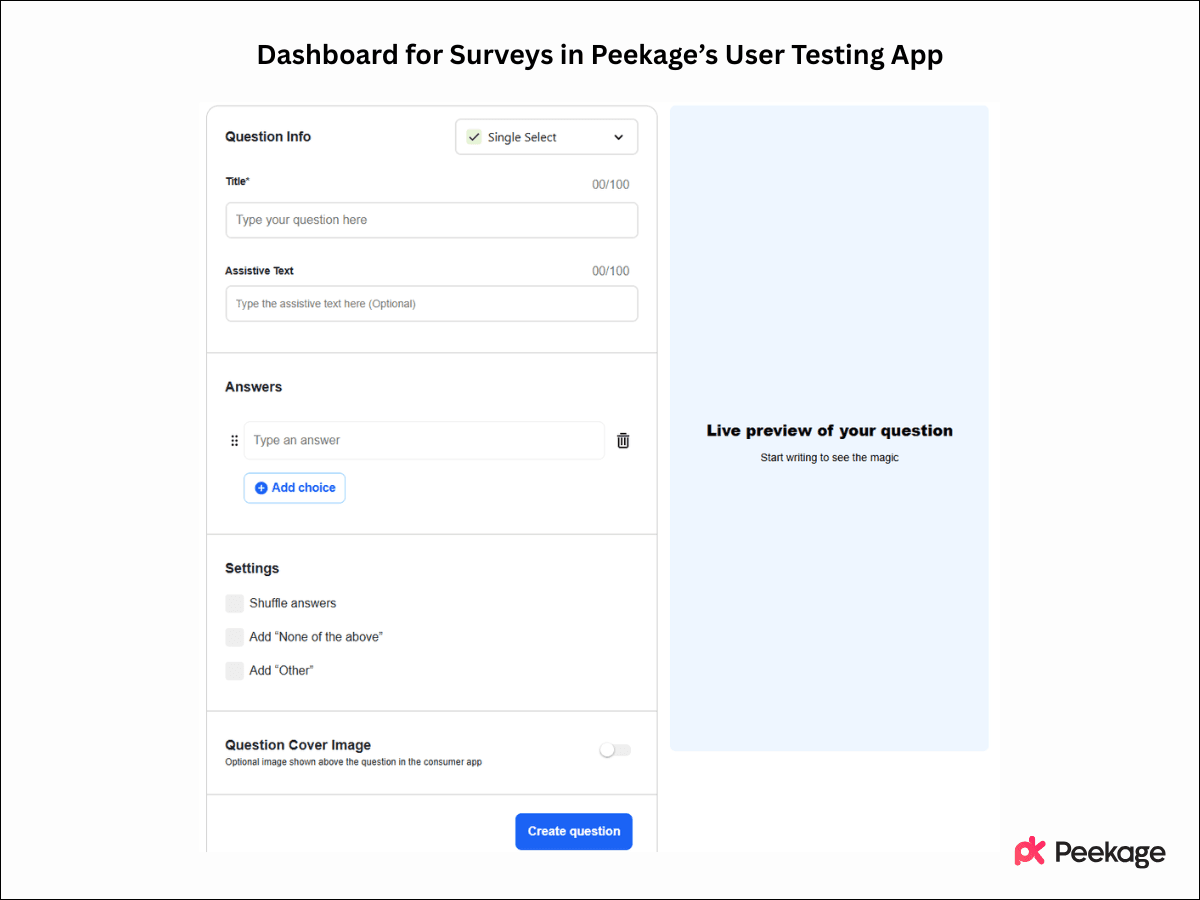
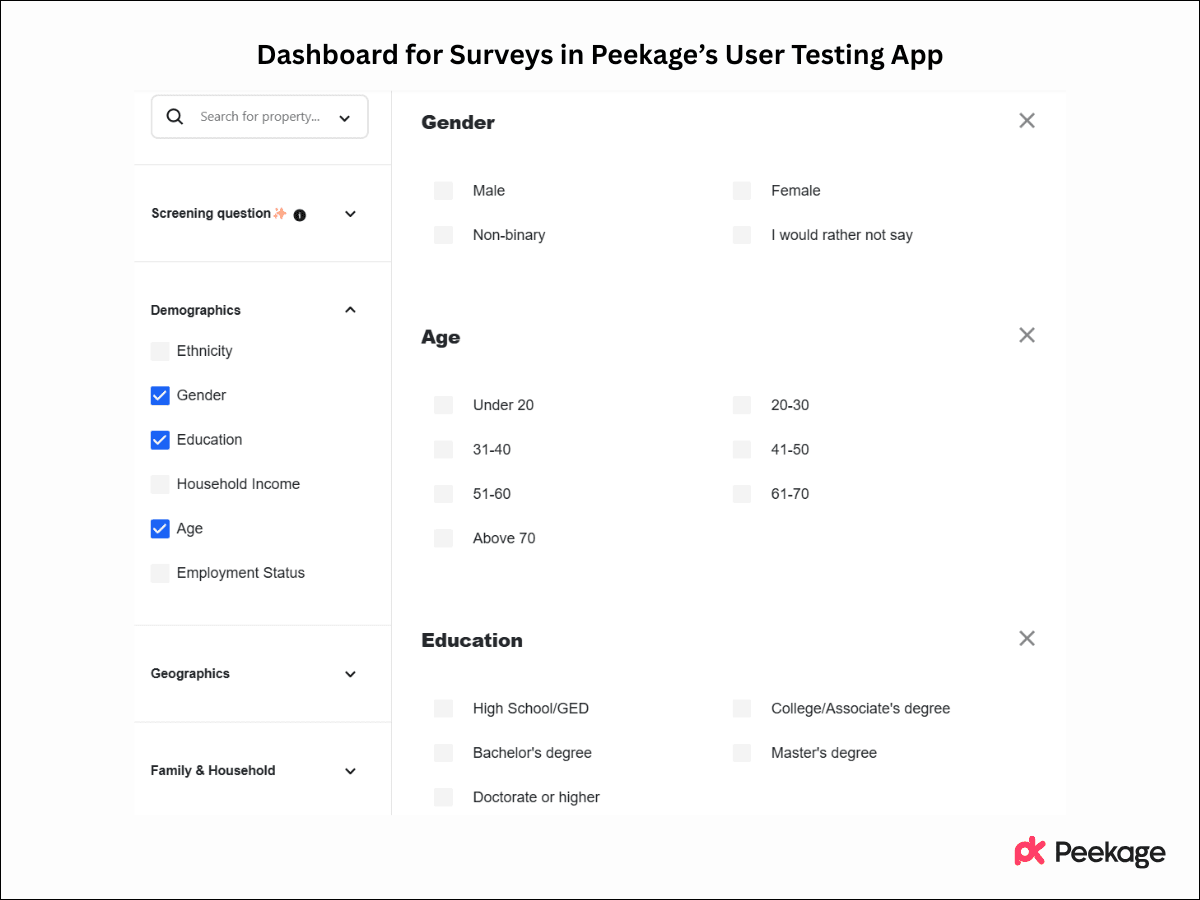
For example, Peekage uses AI to help users with automated survey design and panel recruitment for conducting smart concept tests. The users have a chance to either utilize that functionality for their campaigns or work directly with our team.
8. Analyze the Results
Once you've collected your data, it's time to dig into the insights. Look for:
- Overall trends and patterns
- Differences between demographic groups
- Unexpected findings or surprises
- Areas of strong positive or negative feedback
Use statistical analysis for quantitative data and thematic analysis for qualitative responses.
Peekage uses AI-powered analysis to transform raw data into reliable and high-quality insights you can confidently act on.
9. Make Data-Driven Decisions
Based on your analysis, decide how to move forward with your concepts. This might involve:
- Selecting the most promising concept for further development.
- Refining concepts based on feedback.
- Abandoning ideas that didn't resonate with your audience.
- Identifying new opportunities or unmet needs.
Example: After analyzing the data, Peekage delivers actionable recommendations to refine the product, leaving the final implementation decision to the client.
What Can Be Tested as a Concept
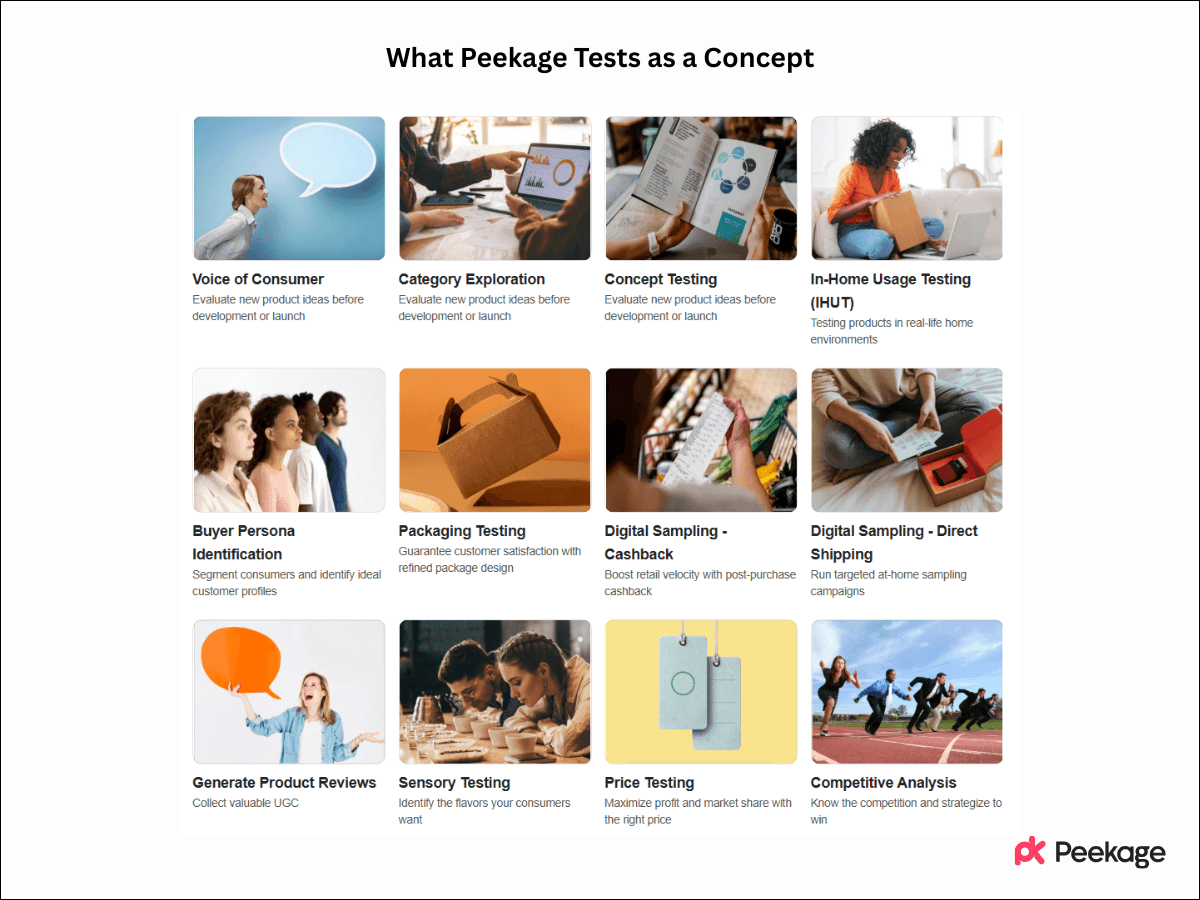
Concept testing covers more than just product ideas. Brands test design elements, messaging, positioning, and even pricing perceptions.
- Product ideas – Concept testing checks if the idea solves a real need or appeals to the target audience before full development.
- Features – Evaluates which features are most important or desirable to users, helping prioritize development.
- Packaging designs – Assesses whether the design communicates the product clearly and attracts attention.
- Branding and Positioning Testing – Evaluates whether the brand identity, value proposition, and positioning are clear, differentiated, and aligned with the target audience’s expectations.
- Claim / Efficacy Testing – Assesses whether product claims are credible, compelling, and persuasive, and whether they effectively communicate the promised benefits.
- Services – Determines if the service meets customer needs and adds perceived value.
- Promotions – Looks at whether offers or bundles are compelling enough to influence purchase behavior.
- Pricing – Price-value perception comes up in concept testing; it checks if the perceived value justifies the price.
Peekage supports concept testing across multiple dimensions beyond just product ideas. Using data-driven testing methods, Peekage enables brands to evaluate product concepts, feature preferences, and packaging designs to understand what captures attention and delivers clear value.
It also helps refine brand messaging and positioning by measuring how well messages align with brand identity and connect emotionally with consumers. In addition, Peekage allows brands to test advertising concepts and pricing perceptions, uncovering whether consumers feel the price matches the perceived value.
How is Concept Testing Used in New Product Development?
Concept testing is a crucial step in the new product development lifecycle, serving as a critical checkpoint that allows companies to mitigate risks and make informed decisions. Key benefits include:
Risk Reduction and Increased Success Rates
Product concept testing significantly reduces the risk of failure and financial loss. By evaluating consumer response early in the development process, companies can:
- Identify potential issues
- Make necessary adjustments before investing heavily in production and marketing.
Statistics show why you need concept testing:
| Statistic | Percentage |
|---|---|
| New product failure rate | 80-90% |
| Success rate for product launches | 15% |
Cost-Effective Decision Making
By identifying potential issues early, concept testing helps companies:
- Avoid costly mistakes
- Allocate resources efficiently
- Reduce time-to-market
- Improve overall product quality
Competitive Advantage
Concept testing provides insights into consumer preferences and market trends, allowing companies to:
- Differentiate their products
- Target the right audience
- Develop effective marketing strategies
- Stay ahead of competitors
Market Validation and Consumer Alignment
Concept testing ensures market need and helps:
- Align products with consumer expectations
- Refine features based on feedback
- Optimize positioning and marketing strategies
Iterative Improvement
Concept testing supports an iterative approach to product development, allowing for:
- Multiple rounds of testing and refinement
- Incorporation of user feedback throughout the development process
- Continuous improvement of the product concept
Stakeholder Alignment
By providing concrete data and insights, concept testing helps:
- Align various stakeholders (e.g., marketing, R&D, management)
- Facilitate informed decision-making across the organization
- Build consensus on product direction
By integrating concept testing into the product development workflow, companies can increase the chances of launching successful products and maintaining a competitive edge in the market.
How Many Concepts Should You Test Before Moving Forward?
The ideal number of concepts depends on the development stage and your goals. Early on, test more concepts to explore possibilities. Later, test fewer to refine execution.
Testing too many concepts tires respondents and reduces the quality of feedback. Most brands test 3-5 concepts in a single round. Anything beyond that requires sequential monadic or idea screening to maintain data quality.
Take into consideration that more concepts doesn't always mean better decisions.
What Metrics Actually Matter in Concept Testing
The right metrics depend on what the concept needs to prove. No single number tells the full story.
Purchase Intent
Purchase intent measures likelihood to buy, usually on a 5-point scale. High intent signals commercial viability, but it doesn't predict real behavior perfectly. People overstate intent in surveys.
Purchase Repeat
Purchase repeat reflects whether consumers see themselves buying the product again after trying it. It signals satisfaction and long-term potential beyond initial trial.
Purchase Frequency
Purchase frequency estimates how often consumers expect to purchase the product. It helps gauge ongoing demand and overall revenue potential.
Relevance
Relevance asks whether the concept solves a problem or meets a need. It's about problem-solution fit. A concept can score high on intent but low on relevance if it's solving the wrong problem.
Concept Appeal
Concept appeal measures the overall attractiveness or likability of the idea. It captures the emotional response and whether the concept resonates with consumers.
Uniqueness
Uniqueness measures differentiation. Does the concept stand out from competitors? Low uniqueness means the concept blends in, which makes it harder to justify shelf space or premium pricing.
Believability
Believability measures trust and credibility. Can consumers believe the claims? If uniqueness is high but believability is low, the concept feels like hype.
Note that winning concepts balance multiple metrics: each reveals a different dimension of performance. The best decisions weigh them together within the context of brand strategy and portfolio fit.
Tools and Platforms to Support Concept Testing
Modern concept testing is more accessible than ever thanks to user-friendly platforms. These tools help you deploy surveys, run live tests, and gather qualitative insights without the need for an in-house research team.
Popular tools include:
| Platform | Unique Feature | Best Use Case |
|---|---|---|
| Peekage | Consumer insights with survey follow-up | Physical product testing |
| Google Forms | Free and fast survey tool | Early-stage feedback |
| UsabilityHub | Quick concept testing for visuals/copy | Campaign pre-launch testing |
| PlaybookUX | Remote video interviews | Deep qualitative insights |
Choosing the right platform depends on whether you need scale, speed, or depth of insight. It's often best to combine tools to cover both quantitative metrics and qualitative context.
How CPG Teams Decide Which Concept Wins
Choosing a winning concept involves more than picking the highest score.
Balancing Data with Brand Strategy
Numbers are important, but strategy matters just as much. The concept with the highest purchase intent doesn’t always come out on top. Often, teams choose an idea that scores a bit lower but fits better with the brand’s long-term goals. This means thinking about how it complements other products and whether it helps move the brand in the right direction.
Portfolio Fit and Feasibility
It’s not just about the concept itself, it’s about where it sits in the lineup. Launching a product that competes with your own best-sellers can do more harm than good. And even if a concept tests well, it won’t work if the supply chain, manufacturing, or budget can’t handle it. Feasibility is key to making sure a good idea actually becomes a successful product.
Stakeholder Alignment
Concept testing gives everyone a shared view of what customers really want. When stakeholders see the same data, decisions happen faster, and debates are easier to settle. Having the consumer’s voice in the room helps everyone get on the same page.
Beyond balancing scores, portfolio fit, and stakeholder alignment, Peekage helps teams turn insights into actionable decisions. Using AI, it analyzes the concept testing report to highlight patterns, trade-offs, and potential opportunities that may not be obvious at first glance.
Based on this analysis, Peekage provides clear, data-driven recommendations on which concepts have the strongest potential and how they align with brand strategy, feasibility, and portfolio goals. The executive snapshot included in our report summarizes these insights visually, giving stakeholders a quick, shared view of the results and suggested next steps that help teams make confident decisions faster and more collaboratively.
Best Practices for Concept Testing
To get the most out of your concept testing efforts, keep these best practices in mind:
- Present concepts clearly and concisely: Ensure concepts are easily understandable for participants.
- Optimize survey length: Keep surveys focused and brief to maintain response quality.
- Frame questions neutrally: Avoid leading or biased inquiries to get authentic responses.
- Ensure statistical significance: Use a sufficient sample size representative of your target audience.
- Offer participation incentives: Offer rewards to boost response rates and diversity.
- Consider competitive context: Evaluate your concept against existing market solutions.
- Iterate based on insights: Use feedback to refine concepts between testing rounds.
- Employ mixed methods: Combine quantitative and qualitative approaches for comprehensive understanding.
- Time strategically: Test early enough to influence development, but with well-formed ideas.
- Maintain objective perspective: Be open to both positive and negative feedback for constructive improvement.
- Segment your audience: Test with different user groups to understand varied perspectives.
- Use visual aids: Incorporate images or prototypes to enhance concept understanding.
- Conduct follow-up interviews: Gain deeper insights from selected participants after initial testing.
- Analyze results thoroughly: Look for patterns and unexpected findings in the data.
- Involve cross-functional teams: Include diverse perspectives from marketing, product, and design teams in the testing process.
What are the Common Challenges in Concept Testing and The Solutions Peekage Offers?
Concept testing is a crucial step in product development, but it's not without its challenges. Here, we explore some common pitfalls and provide strategies to overcome them:
- Biased Sampling Challenge: Selecting a sample that doesn't accurately represent your target market.
Solution: We suggest diverse recruitment methods and implement quotas to ensure demographic representation. - Leading Questions Challenge: Phrasing questions in a way that influences respondents' answers.
Solution: Peegake’s AI automated survey dashboard designs questions using neutral language and has multiple team members review questions for bias. - Confirmation Bias Challenge: Interpreting results to confirm preexisting beliefs about the concept.
Solution: You can add diverse stakeholders in your campaign setting and actively seek out contradictory evidence. - Overreliance on Quantitative Data Challenge: Focusing solely on numeric data while ignoring qualitative insights.
Solution: Peekage offers a mixed-method - Qualitative and Quantitative research․ - Timing Issues Challenge: Conducting tests too late in the development process to make meaningful changes.
Solution: We suggest integrating concept testing early and throughout the product development lifecycle.
The Future of Concept Testing
As technology evolves, so do the methods and tools shaping concept validation. What was once considered innovative is quickly becoming the standard. In fact, most of the trends outlined below, such as AI insights and real-time feedback systems, are already integrated into the Peekage platform.
- Virtual and Augmented Reality: These technologies allow for more immersive concept testing experiences, particularly useful for physical products or environments. 71% of customers say they would shop more frequently if they could use AR to try products before purchasing.
- AI and Machine Learning: Advanced analytics can help identify patterns and insights from large datasets more quickly and accurately.
- Real-Time Feedback System: Tools that allow for instant feedback collection and analysis are becoming more prevalent, enabling faster iteration cycles.
- Mobile-Optimized Methods: With the increasing use of smartphones, mobile-optimized concept testing methods are becoming essential.
- Behavioral Data Integration: Combining stated preferences from surveys with actual behavioral data can provide a more complete picture of consumer reactions.
- Predictive Modeling: Advanced statistical techniques can forecast potential market performance based on concept testing results.
- Emotion Recognition: AI-driven tools can analyze facial expressions, voice tones, and text sentiment to gauge emotional responses to concepts.
- Gamification: Incorporating game-like elements into testing can increase engagement and yield more authentic responses.
- Cross-Platform Testing: Evaluating concepts across multiple digital platforms to account for varying user experiences.
- Neuroscience Applications: Using brain-scanning technologies to directly measure cognitive and emotional responses to concepts.
Conclusion
Concept testing is a crucial step in the product development process that can save companies time, money, and resources. By gathering valuable feedback early on, businesses can refine their ideas, minimize risks, and increase the chances of market success.
Effective concept testing requires careful planning, the right methodologies, and a willingness to iterate based on results. Remember, the goal isn't just to validate your concept, but to gain insights that will help you create products that truly resonate with your target audience. Embrace concept testing as an ongoing practice, and you'll be well-equipped to bring innovative, user-centered products to market.