You’ve invested months developing your CPG product concept, but there’s one step that often separates “just okay” products from the ones consumers truly love.
Prototype testing puts an early version of your product, whether its packaging, formulation, or product format, in front of real consumers before you commit to full-scale production. Think of it as a dress rehearsal before your product hits store shelves.
Most successful product development processes include some form of prototyping and early testing. The reason is simple: identifying issues during the development stage is far less expensive than fixing them after launch, when packaging is printed, inventory is produced, and products are already in the market.
In this guide, we’ll walk you through what prototype testing means for CPG brands, the different methods you can use to test product and packaging prototypes, and how to run tests that give you clear and actionable insights before launch.
What is Prototype Testing for CPG Brands and When to Use It?
Prototype testing for CPG brands means putting an early version of your product in front of real consumers to see how it performs before you launch it at scale. Instead of testing finished products already on store shelves, you’re testing early samples, such as packaging mockups, product formulations, or physical prototypes, to understand how consumers react.
The goal is simple: identify what works, what confuses people, and what needs improvement before committing to full production, large inventory orders, or major marketing investments.
CPG prototypes usually fall into three main categories. Early-stage prototypes might be simple packaging mockups, label designs, or basic product samples used to test core ideas. Mid-stage prototypes include refined packaging, improved formulations, or functional samples that are closer to the final experience. High-fidelity prototypes look and feel almost identical to the finished product, final packaging, near-final flavor or texture, and realistic branding.
Here’s where many brands get confused: concept testing asks “Should we launch this product?” Prototype testing asks “Have we designed this product the right way?” At this stage, the idea has already been validated. Now the focus is on refining the product experience, how it looks, feels, tastes, or functions for the consumer.
When Should You Conduct Prototype Testing?
The best time to start prototype testing is early in the product development process, when you’re experimenting with packaging concepts, flavor profiles, textures, or product formats. Testing at this stage helps uncover issues before expensive manufacturing decisions are made.
You should also test again during product refinement, when packaging design, ingredients, portion sizes, or usability elements are being finalized. This ensures that the product improvements actually resonate with consumers.
Finally, run a last round of testing before launch to validate the near-final product. This step helps catch any issues with packaging clarity, taste expectations, usability, or purchase appeal before the product hits the market.
With Peekage, brands can test product prototypes quickly and efficiently. Whether you're evaluating packaging designs, product samples, or near-final versions, you can recruit target consumers, gather feedback, and get actionable insights in just a few days.
What Are the Types of Prototype Testing Methods for CPG Brands?
Product Use Testing
This method evaluates how consumers interact with a product in real life. Participants receive a product prototype, such as a snack, beverage, skincare item, or household product, and use it as they normally would. Researchers observe factors like ease of use, taste, texture, effectiveness, or overall satisfaction. This type of testing helps brands understand whether the product delivers the experience consumers expect before full production.
A/B Testing (Packaging or Product Variations)
A/B testing compares two versions of a product element to see which performs better with consumers. For CPG brands, this might involve testing two packaging designs, label layouts, flavor variations, scents, or product names. Different groups of consumers evaluate each version, and the results show which option drives stronger appeal, clarity, or purchase intent.
First-Impression and Shelf Impact Tests
For CPG products, the first few seconds of consumer attention are critical, especially in retail environments. First-impression testing shows consumers a product package briefly and asks what they noticed, remembered, or understood about the product. Shelf impact tests simulate how a product appears among competitors to evaluate whether the packaging stands out and communicates the product’s value clearly.
Examples of Prototype Testing with Peekage
What Our Client Needed
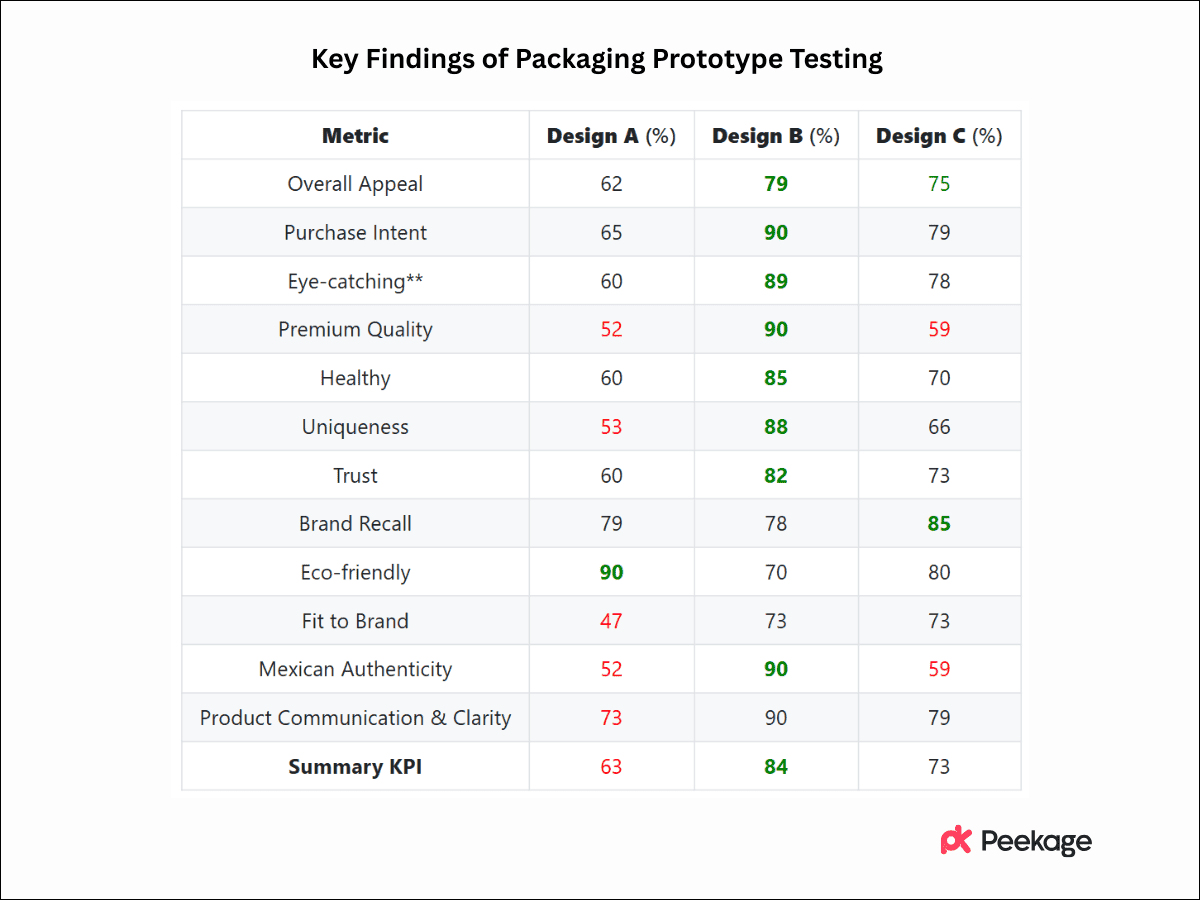
Our client wanted to evaluate early packaging prototypes for a potato chip product to determine whether one of two redesign concepts should replace the current pouch. The goal was to identify which packaging design would perform best with consumers in terms of shelf appeal, purchase intent, brand perception, and product communication before committing to a final production design.
What We Did
We conducted an online prototype packaging test with a nationally representative sample of category users. Participants were shown the current packaging and two prototype redesigns side-by-side, simulating how shoppers compare products on a shelf. The study combined quantitative ratings across key metrics such as overall appeal, purchase intent, eye-catching design, premium quality, and trust, along with forced-choice comparisons and open-ended feedback to capture both measurable preferences and emotional reactions to each packaging prototype.
What We Found
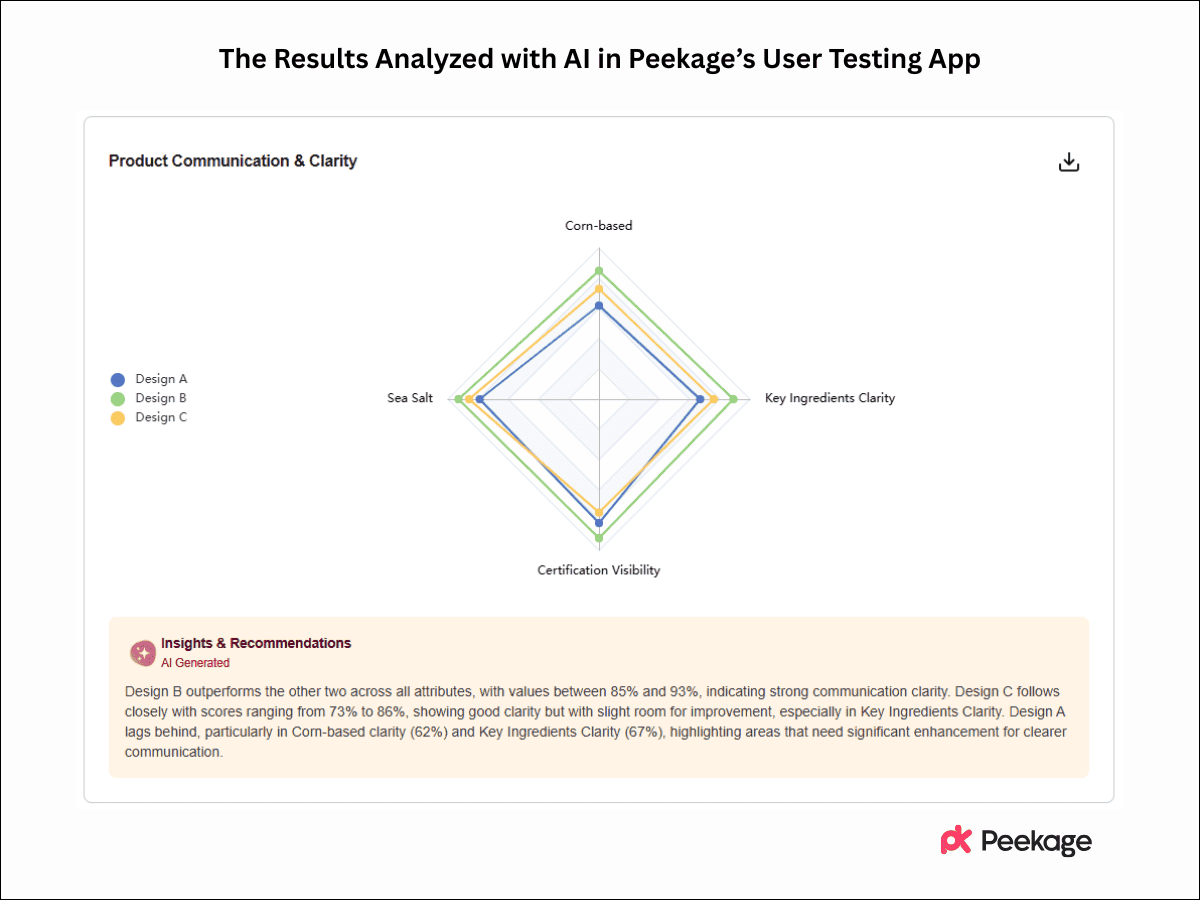
The results showed that Prototype B clearly outperformed the other designs across most key metrics, including purchase intent, overall appeal, premium perception, and communication clarity. Consumers responded strongly to its clear ingredient messaging, visible certifications, and culturally inspired design cues, which reinforced trust and quality perceptions. While another prototype performed slightly better in brand recall and the current design scored higher on eco-friendly perception, Prototype B delivered the strongest overall consumer response, making it the most promising packaging direction for final development.
What Are the Key Steps of Prototype Testing with Peekage?
Step 1: Define Your Research Objectives
Be clear about what you want to learn from testing your prototype and how it fits into your broader research. Prototype testing helps you understand how people interact with and respond to an early version of your product. Are you validating usability? Testing design elements? Gathering feedback before final production? Your objective will guide the type of study you run and the feedback you collect.
Step 2: Prepare Your Prototype
Create the versions of the prototype you want participants to evaluate. Make sure each prototype is functional enough to test your key assumptions. Keep consistency across variations, if one version looks more polished than another, it may influence results unfairly.
Step 3: Choose Your Study Type in Peekage
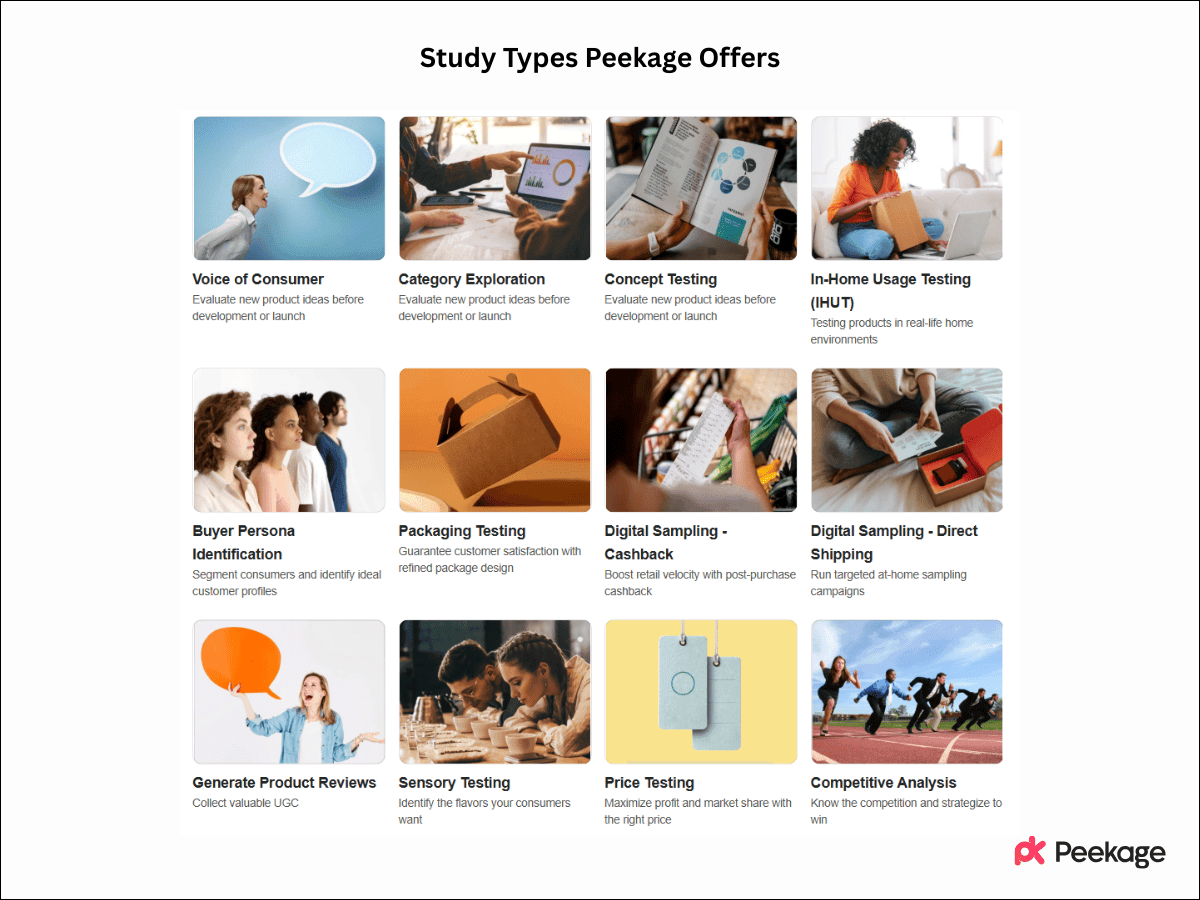
Select the study type that aligns with your testing goals. The study type defines the context in which participants will engage with your prototype, whether it’s usability testing, concept validation, or feature feedback. How you frame the task or questions matters, as it directly shapes how participants experience and evaluate the prototype.
Step 4: Build Your Panel Using 200+ Attributes
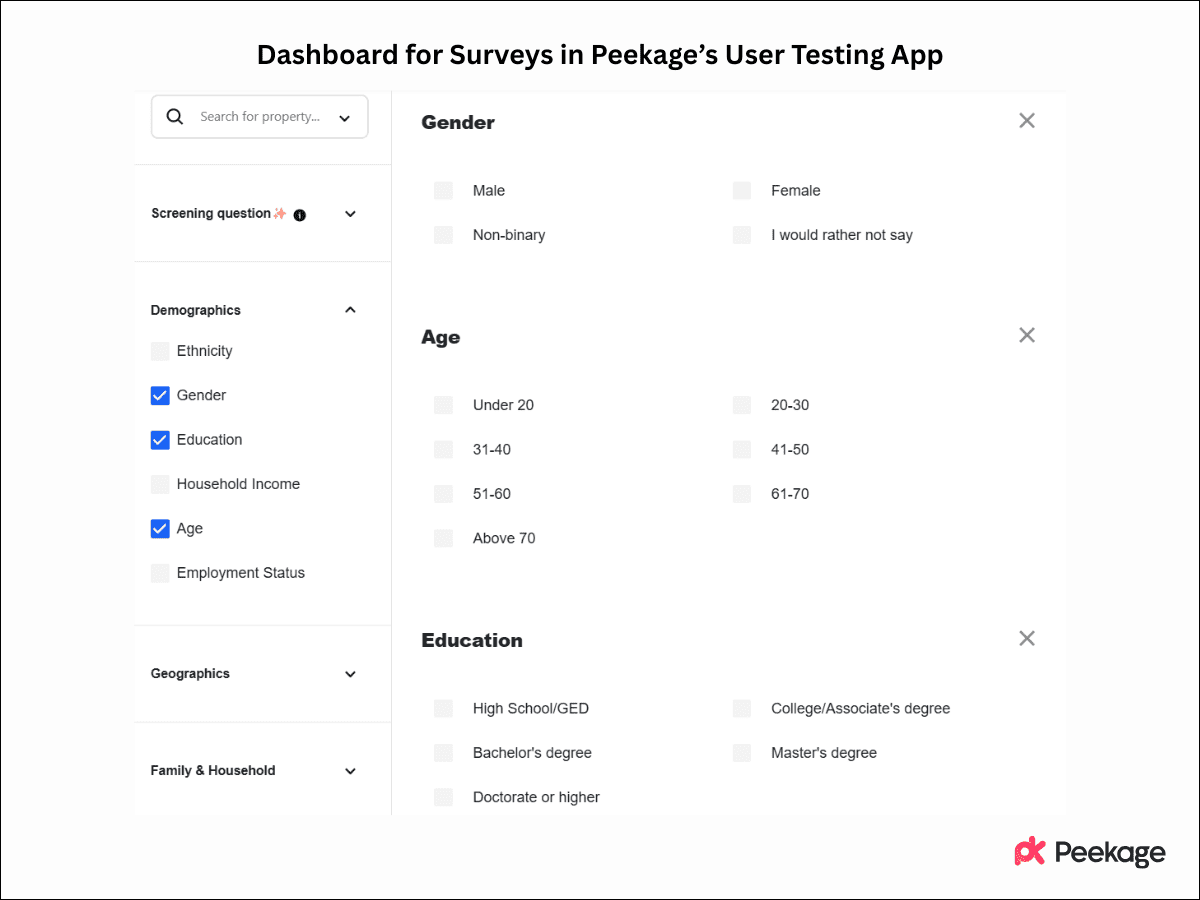
Use Peekage to target the right audience for your prototype test. You can define demographics, behaviors, and geographic criteria to make sure your feedback comes from relevant users. Sample size will depend on your study goals, but the focus should be on getting enough high-quality responses to identify patterns in behavior and feedback. Peekage’s panel includes over 200 attributes, allowing you to refine your audience, and pre-screening helps you narrow it down even further if needed.
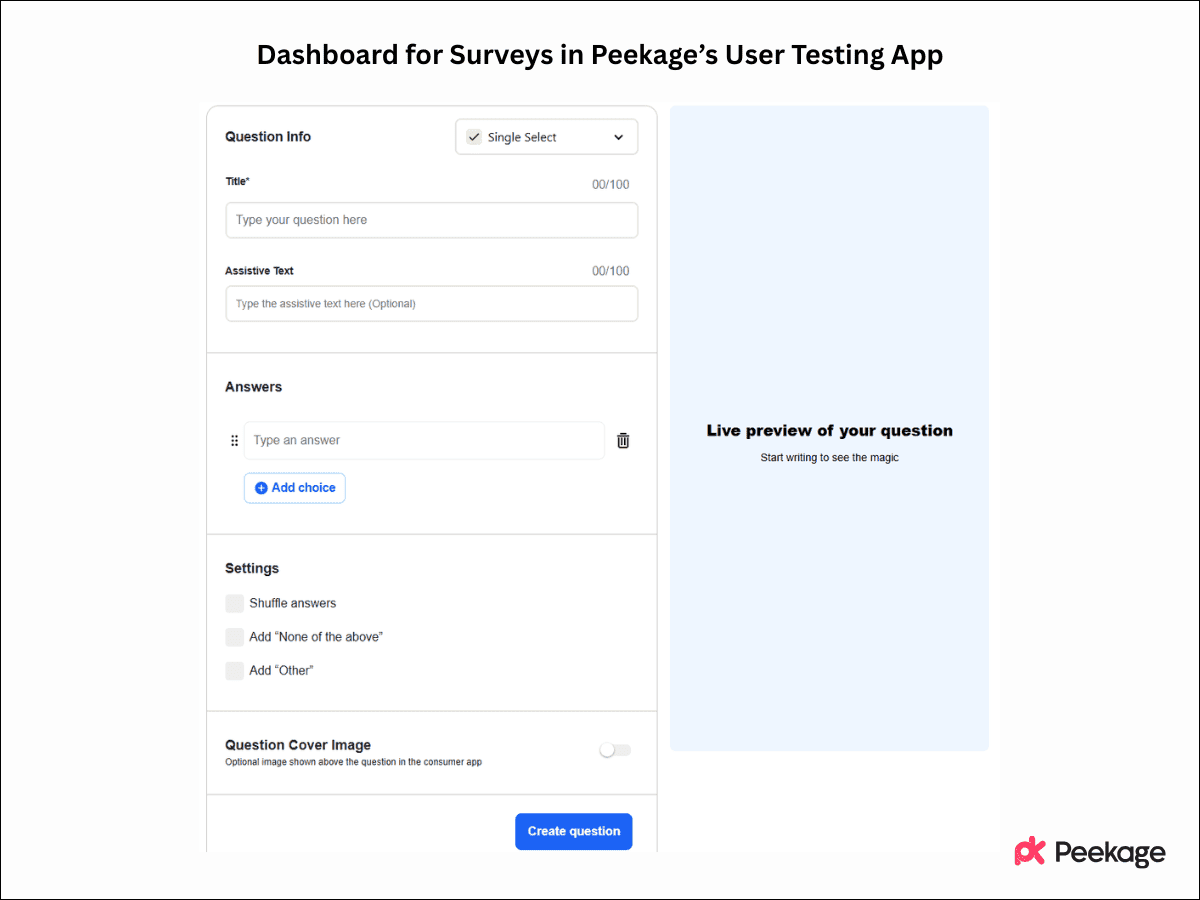
Step 5: Design Your Survey or Review the One Built by AI
Structure your survey to capture meaningful feedback on the prototype. This can include usability questions, satisfaction ratings, and open-ended responses to understand user reasoning. Keep the survey focused so participants stay engaged. You can start with Peekage’s templates to save time or use its AI-generated survey, just make sure to review it carefully to ensure everything aligns with your objectives and the prototype experience.
Step 6: Send for Peekage Review and Launch Your Campaign
Before going live, submit your study for Peekage review. The team checks your setup, identifies any issues, and ensures the study is ready to generate reliable insights. This review typically takes 1–2 days. Once approved, you can launch. Peekage’s execution AI handles recruitment and data collection, while the quality agent filters out low-quality responses. You can track incoming data through the live dashboard, with most studies completed within 2–5 days.
Step 7: Analyze Results and Take Action
Prototype testing results come in the form of user feedback, behavioral insights, and performance metrics. Peekage organizes this into clear visualizations, segment comparisons, and downloadable reports. The AI assistant highlights key findings and suggests next steps, what to improve, what works well, and where further testing might be needed.
The goal is to turn feedback into decisions, refining your prototype before moving to full production or launch.
Ready to Test Smarter?
Prototype testing helps CPG brands avoid costly mistakes by identifying problems before full production or launch. Instead of relying on guesswork, you can make decisions based on real consumer feedback about your product, packaging, or concept.
With Peekage, you can create and run consumer surveys directly from an intuitive research dashboard. Upload your product concepts or packaging designs, build your survey, and collect feedback from the right audience, all in one place. Once responses are collected, Peekage’s AI analyzes the data and highlights key insights and recommendations, helping you quickly understand what consumers like and what needs improvement.
This streamlined process keeps your team aligned with clear reports, actionable insights, and data-backed recommendations, allowing you to refine your product with confidence.